
$26 million pledged by couple to strengthen food banks, after‑school programs and children’s hospitals to mark their nuptials
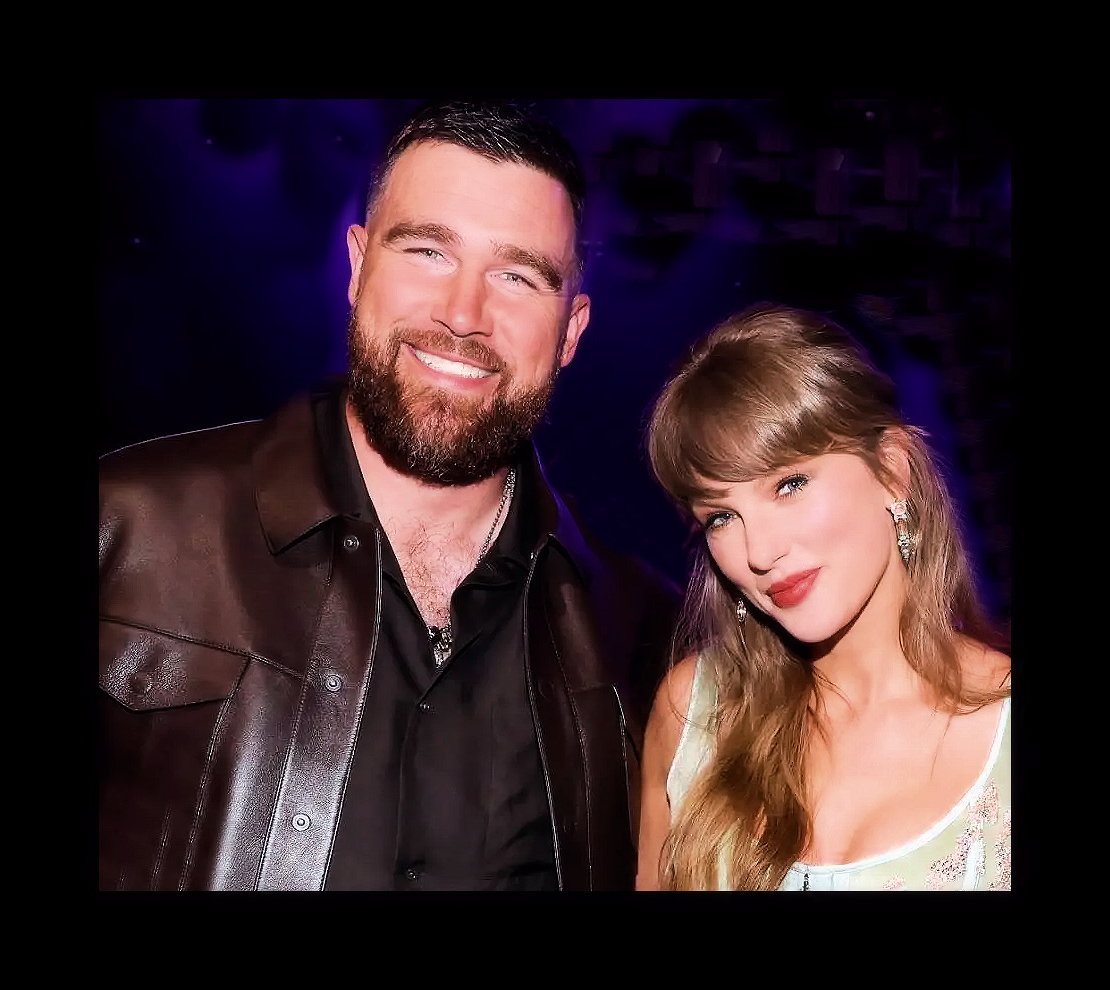
Taylor Swift and Travis Kelce have marked the start of their wedding week not with exclusive parties or luxury favors but with a sweeping, $26 million philanthropic gesture directed to at least 20 charities across the United States, spanning food security, after‑school education, children’s health care, and animal welfare.
The collective donation underscores how the singer and the NFL star are using a highly choreographed cultural moment—their reported wedding in New York City—to channel attention and resources toward communities that have long figured into their personal and professional narratives.
According to a representative for the couple, the $26 million commitment is being distributed among nine food banks, seven educational and after‑school organizations, three children’s hospitals, and one national animal protection group.
While neither Swift nor Kelce has released individual grant amounts—an approach that keeps the focus on the overall impact rather than on a leaderboard of beneficiaries—several organizations have disclosed seven‑figure gifts, most notably City Harvest in New York City, which received $1 million to bolster its efforts to rescue surplus food and deliver it to families across the five boroughs.
“This donation is a love letter to New York, and a bold commitment to our efforts to ensure that no New Yorker goes hungry,” City Harvest CEO Jilly Stephens said in a statement, casting the gift as both symbolic and urgently practical in a city where food insecurity remains stubbornly high even as celebrity money and media attention swirl around Madison Square Garden ahead of the wedding.
The geographic footprint of the giving reads almost like a map of the couple’s own trajectory. In New York City, where they are widely reported to be marrying at Madison Square Garden over the July 4 weekend, organizations like City Harvest, Food Bank For New York City, New York Cares, Education Through Music, Answer The Call, Musical Mentors, and After‑School All‑Stars’ New York chapter stand out as beneficiaries.
Each plays a distinct role: Food Bank For NYC and City Harvest anchor the city’s food‑rescue and pantry network, and New York Cares mobilizes volunteers across hundreds of community projects.
Education Through Music and Musical Mentors brings music instruction into under‑resourced classrooms.
Answer The Call supports families of first responders killed in the line of duty, and After‑School All‑Stars provides structured programming for children who might otherwise lack safe, enriching spaces once the school day ends.
For these organizations, the timing of the gifts—arriving just as summer demand rises and public attention tends to drift toward holidays and entertainment—could prove as consequential as the headline‑grabbing dollar figure.
Beyond New York, the couple’s philanthropy reaches into regions where Swift and Kelce have longstanding ties.
In Kansas City, where Kelce plays tight end for the Chiefs, donations have gone to Harvesters—The Community Food Network and Children’s Mercy Hospital, reinforcing support for both food security and pediatric care in the metro area.
Harvesters serves Northeast Kansas and Northwest Missouri as the primary regional food bank, distributing millions of pounds of food each month through partner pantries, while Children’s Mercy is an anchor institution for children’s specialty care, from oncology to cardiology.
In Rhode Island, a state closely associated with Swift’s Watch Hill mansion and her longstanding Fourth of July gatherings, the Rhode Island Community Food Bank confirmed a $1 million gift that will help supply 137 member agencies across the state with food in the months ahead.
The Boston Globe reported that the Rhode Island grant is part of a coordinated package of donations to both local and national food programs, including Feeding America and Harvesters.
The couple’s philanthropic map also traces back to Swift’s roots in Tennessee and her more recent ties to Los Angeles.
The Store in Nashville—co‑founded by musician Brad Paisley and his wife Kimberly—received support as part of the wedding‑week initiative, continuing Swift’s pattern of backing efforts that provide free, dignified grocery access for families experiencing temporary hardship.
In Los Angeles, the Los Angeles Regional Food Bank joins the list of grantees, reinforcing a network that supplies food to hundreds of pantries and community organizations across the county.
Helping Harvest in Reading, Pennsylvania, and the Rhode Island Community Food Bank broaden the reach further, capturing the Northeast corridor, where Swift has spent significant time both personally and professionally.
While the representative announcement framed the organizations as part of a national portfolio of giving, the pattern suggests a deliberate choice to privilege cities that have played an outsized role in the couple’s careers and public personas.
Education and youth development emerge as a second major pillar of the $26 million allocation.
Dolly Parton’s Imagination Library, which mails free books to children from birth to age five and has become a staple of early‑literacy efforts in hundreds of communities, is among the national organizations benefiting from the couple’s wedding‑adjacent philanthropy.
Also on the list is Grammy in the Schools, an initiative of the Recording Academy that supports high school music education through grants, curricula, and performance opportunities—an obvious fit for a global touring artist whose own career began in her teens.
Education Through Music and Musical Mentors deepen the focus on arts‑based learning in New York City, while After‑School All‑Stars’ chapters in New York and Cleveland deliver structured, free programs that combine academics, sports, and arts for students from low‑income communities.
Taken together, these grants reinforce a broader narrative Swift has been building for years: that access to arts education and safe after-school environments is not a luxury but a necessity that can shape long-term opportunity.
Health care—specifically pediatric and adolescent medicine—forms the third core of the donation portfolio.
The couple’s representative notes contributions to three children’s hospitals: Hassenfeld Children’s Hospital at NYU Langone in New York, Children’s Mercy Hospital in Kansas City, and pediatric cancer programs at Memorial Sloan Kettering Cancer Center.
While those institutions have not publicly detailed the exact amounts received, Variety and other outlets report that the funding will support a mix of charity care, research projects, and family support services, particularly for patients whose treatments stretch over months or years.
For hospitals that rely on philanthropy to sustain social‑work teams, child‑life specialists, and family housing, a high‑profile gift of this size can function as both a financial lifeline and a signal to other donors that pediatric needs deserve attention even when the public conversation is dominated by adult‑focused health issues.
Rounding out the list is a national animal protection organization: the ASPCA. The inclusion of a single animal‑welfare beneficiary—compared with multiple food banks and educational entities—might appear modest, but it fits within Swift’s longstanding inclination to quietly support animal‑rescue and pet‑adoption infrastructure, a cause that resonates with many of her fans.
For the ASPCA, the visibility of a gift tied to what is arguably the most talked‑about celebrity wedding of the year offers an opportunity to remind supporters that cruelty‑prevention, rescue, and advocacy work are year‑round commitments that require sustained funding, not just one‑off bursts of attention around crises.
Notably, the couple’s announcement and subsequent coverage by outlets such as Variety, Rolling Stone, People, and The Washington Post have kept the philanthropic message front and center, even as speculation about wedding details—from date and venue to guest list—continues to drive clicks.
A representative statement quoted by several outlets is strikingly plain: “This week, Travis Kelce and Taylor Swift donated $26 million to charities across the United States. They include the following…” followed by the list of organizations.
There is no branded campaign name, no appeal for fans to match their giving, and no mention of corporate partners—a contrast to the kind of integrated marketing that often accompanies celebrity philanthropy tied to major life events.
For observers of charitable giving, the choice suggests that Swift and Kelce are more interested in leveraging their platform to elevate existing institutions than in architecting a new foundation or philanthropic vehicle in their own names, at least for this particular moment.
The context of the donation is impossible to separate from the couple’s broader public standing.
Swift arrives at her wedding week as arguably one of the most influential pop stars in the world, with a global touring operation, blockbuster albums, and an intensely loyal fan base that has already demonstrated its willingness to engage on issues ranging from voter registration to disaster relief when prompted.
Kelce, for his part, is fresh off another NFL season with the Kansas City Chiefs and has become a staple of sports and entertainment media, blurring the line between athlete and celebrity.
By broadcasting a collective donation of this magnitude, the pair is effectively resetting expectations for what high‑profile couples might do with the oxygen that surrounds wedding coverage: using it not only to celebrate their own story but also to amplify the work of food banks, teachers, doctors, and volunteers in cities that have shaped their identities.
The timing—just ahead of a reported Friday ceremony at Madison Square Garden—also invites comparisons with royal weddings and Hollywood unions that have featured charitable registries or special‑event campaigns.
In this case, however, the wedding‑adjacent giving is framed not as a request for guests to donate but as a pre‑emptive act by the couple themselves, one that may, in effect, serve as their own “wedding gift” to communities across the country.
As Boston 25 News and other outlets have noted, the $26 million figure towers above typical celebrity wedding philanthropy, placing Swift and Kelce’s initiative closer to institutional-scale grantmaking than to the symbolic donations that often accompany nuptials.
From a philanthropic standpoint, several dynamics bear watching. First, the multi‑city, multi‑issue nature of the portfolio—a mix of immediate relief (food banks), longer‑term opportunity (education and after‑school programming), and specialized health care (children’s hospitals)—reflects a holistic understanding of how poverty and opportunity intersect.
Second, the decision to support established organizations rather than launching a new branded initiative aligns with a growing trend among public figures who prefer to reinforce existing infrastructure rather than create parallel structures that may compete for attention and resources.
Third, the visibility of the gift could catalyze follow‑on donations from fans, corporate partners, and other high‑net‑worth individuals who watch celebrity philanthropy as a barometer of both social expectations and reputational risk.
For the organizations on the receiving end, the challenge now will be to translate a one‑time infusion of cash and publicity into sustained impact.
City Harvest, Food Bank NYC and the Rhode Island Community Food Bank have already positioned the donations as accelerants for their existing strategies—scaling up food purchases, expanding distribution, and shoring up services during a period when inflation and housing costs continue to squeeze families.
After‑School All‑Stars and the various music‑education initiatives will face decisions about whether to expand to new schools, deepen programming in current sites, or invest in staff and infrastructure that can carry work forward beyond the immediate glow of a celebrity wedding.
Children’s hospitals, which often operate on tight margins, may earmark funds for programs that can be difficult to sustain with clinical revenue alone, such as psychosocial support, family housing, or specific research trials.
In the absence of a formal statement from Swift and Kelce directly tying the donations to their wedding, the philanthropy stands on its own as a large‑scale act of collective generosity—a $26 million signal that, at least for this couple, the story of “happily ever after” includes making concrete commitments to cities and causes that extend far beyond the walls of Madison Square Garden.
Whether this becomes a template other celebrity couples adopt or whether it remains an outlier reflective of Swift and Kelce’s particular mix of influence, values, and visibility, the impact for the beneficiaries—families accessing food, children entering kindergarten with books at home, patients in pediatric wards, and animals pulled from neglect—will be felt long after the wedding coverage fades.