
$25 million gift from William Smilow aims to cure heart disease
William “Bill” Smilow says the reason is simple.
“Heart disease has touched my family personally,” he said this week, “which makes this mission genuinely meaningful to me.”
That reason now carries a $25 million gift.
The Smilow Foundation, which he leads as president and CEO, has given that sum to the University of Pennsylvania’s Perelman School of Medicine to establish the Smilow Center for Precision Therapeutics at Penn Medicine.
The center aims for what cardiology could hardly have imagined a generation ago. It wants to stop treating heart disease as a lifelong condition to be managed and start going after its root causes with gene editing and other precision therapies.
Smilow chose not to share the private details of his family’s experience with heart disease, and the announcement doesn’t add any.
He did offer a sense of purpose.
The new center, he said, “reflects our commitment to advancing the science needed to cure heart disease and spare future generations from its impact.”
As a Penn Medicine board member and a longtime partner of the institution, he added, “I am confident there is no institution better positioned than Penn to turn that vision into reality.”
Smilow is not new to Penn.
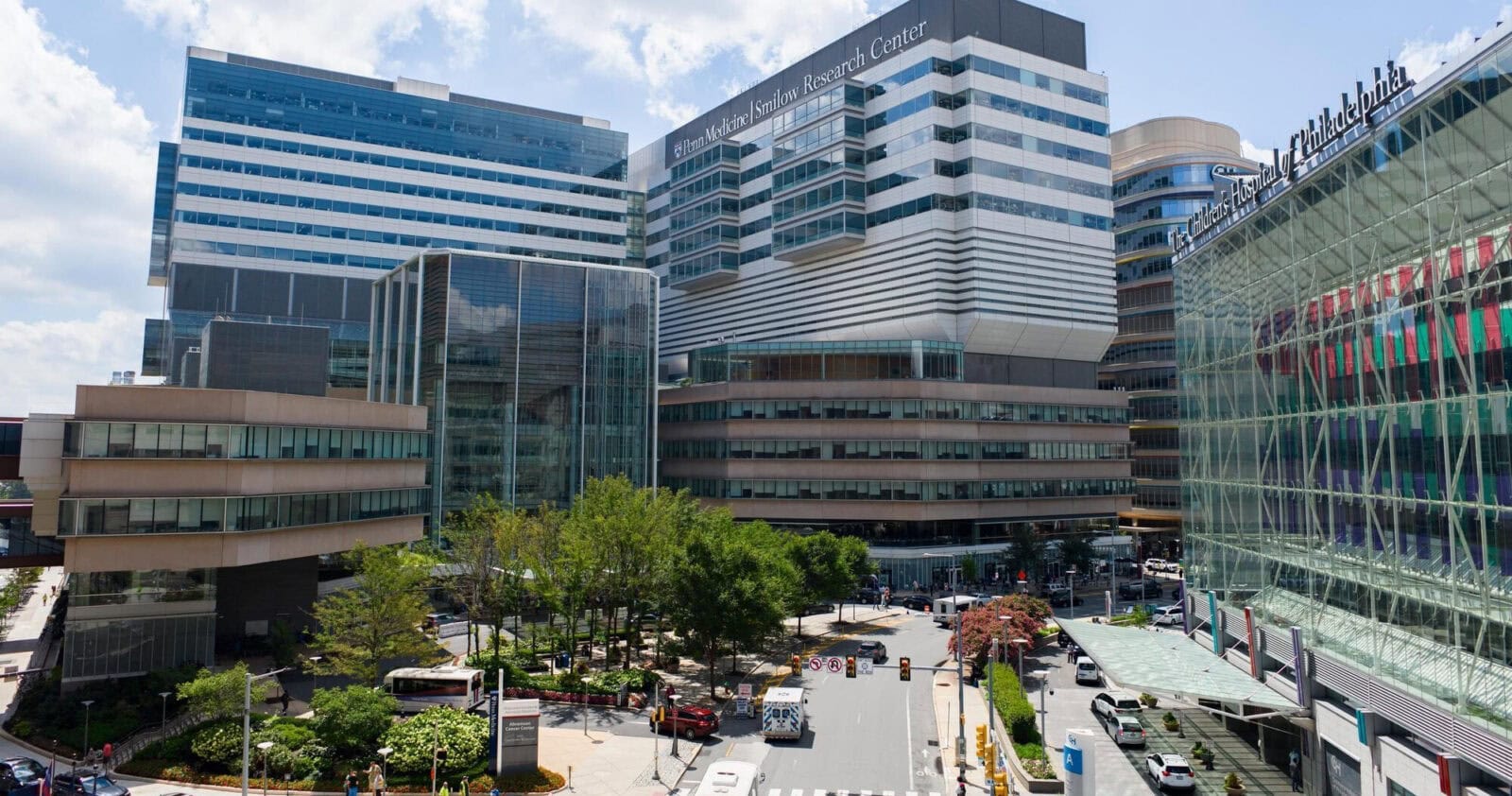
In 2012 he and his father, Joel Smilow, the former chairman and chief executive of Playtex, made a landmark gift that named the Smilow Center for Translational Research.
The building rises eight stories above the Philadelphia skyline, and each floor is the size of a football field.
More than 100 lead researchers and 900 staff work there.
That gift was among the largest in Penn Medicine’s history, and it was the family’s first in Philadelphia.
It also created the William Smilow Professorship in cardiovascular medicine. Back then, father and son said they believed Penn shared their philosophy of “making an immediate impact on peoples’ lives.” Bill Smilow put it in personal terms.
“My family feels a deep connection with both the communities where we live and the challenges that touch our lives,” he said.
That line still describes how he gives.
Before taking the helm of the family foundation, Smilow was the founder and president of Great Oak Holdings, and he lived in Chestnut Hill. He first saw what was happening in Penn’s labs through his seat on the Penn Cardiovascular Institute Leadership Council.
That seat turned into a deeper relationship. Today he also sits on the Penn Medicine Board, the Penn Orthopedics Leadership Council and the Penn Medicine Development Leadership Cabinet.
He learned about the science up close before he paid for its next chapter.
The science is moving fast.
Penn is one of the few places where the tools to cure heart disease, rather than just treat it, are already being built.
The new center will draw on the work of two of the university’s best-known scientists. Kiran Musunuru, the Barry J. Gertz Professor for Translational Research, has developed gene-editing therapies designed to lower cholesterol permanently.
A single treatment of that kind could greatly reduce the risk of heart attack and stroke. In 2025 Musunuru helped lead the Penn and Children’s Hospital of Philadelphia team that treated a baby named KJ with the world’s first personalized CRISPR gene-editing therapy.
The work earned him and his collaborator a place among TIME’s most influential figures in health.
Drew Weissman shared the Nobel Prize for the mRNA research behind the COVID-19 vaccines, and his technology is now a platform for delivering new medicines.
Together, CRISPR and mRNA give the Smilow Center its starting toolkit.
The center will be led by Thomas P. Cappola, chief of the Division of Cardiovascular Medicine. He already holds the professorship the Smilows founded 14 years ago, and his title is William Smilow Professor.
His research focuses on finding the mechanisms behind heart failure in human patients and turning those findings into better treatment.
The new center gives him a much larger mandate. It brings together researchers from cardiovascular medicine, physiology, systems pharmacology, bioengineering, radiology, and other fields, and it covers the whole path from discovery to first-in-human clinical trials to patient care.
The foundation’s support is meant to help these experts draw up a roadmap for bringing new treatments to patients for the first time.
Michael Parmacek, chair of the Department of Medicine, called the launch “a transformative moment for Penn Medicine and for the future of cardiovascular care.”
He said the center would do more than expand existing programs. It would “create entirely new scientific and clinical capabilities that accelerate discovery, attract world-class talent, and bring personalized therapies to patients with unprecedented speed and precision.”
Jonathan A. Epstein, dean of the Perelman School of Medicine, framed it as a reach for something “once considered impossible: curing previously debilitating forms of heart disease.”
Penn President J. Larry Jameson spoke most directly about the man behind the gift. Jameson was dean of the medical school when the Smilows made their first gift in 2012, so he has watched the relationship grow from the start.
“William Smilow has already contributed immeasurably to our remarkable success in translating scientific discoveries into treatments,” he said, “and this new gift is equally visionary.”
Kevin B. Mahoney, chief executive of the University of Pennsylvania Health System, said the center would help Penn “pioneer new approaches to treating, and ultimately curing, heart disease.”
The Smilow name has meant something in American medicine for decades. Joel and Joan Smilow underwrote the Smilow Cancer Hospital at Yale New Haven, which opened in 2009.
The family’s support also reached NYU Langone, Memorial Sloan Kettering, and the William S. Smilow Center for Marfan Syndrome Research at Johns Hopkins.
Joel Smilow was a son of greater Washington.
He once said he traced his generosity to childhood, watching his father, a government patent examiner, write small checks to one cause after another. Bill Smilow has kept that instinct and turned it toward his own city.
His giving also reaches well beyond the hospital. The Smilow Foundation is a founding donor of the Smilow Woodland TGR Learning Lab, a 30,000-square-foot education center for local students on the restored Cobbs Creek Golf Course in West Philadelphia.
Tiger Woods cut the ribbon in September 2025. Smilow sits on the boards of Woods’s TGR Foundation and the Cobbs Creek Foundation.
When he joined the TGR board, he said he wanted to give young people “opportunities to help students prepare for their futures.”
One gift supports a fourteen-year-old learning robotics a few miles from campus. The other is aimed at a patient who may someday get a single dose instead of a lifetime of pills. They come from the same belief: philanthropy is most useful where it meets people’s lives directly.
The new gift also brings Penn Medicine’s philanthropic total over the past two years to more than $200 million.
Figures like that are easy to read past.
Heart disease is the leading cause of death in the United States, and nearly every family knows it at close range.
Bill Smilow’s family is one of them, and that is why he has bet on a cure.