
$25 million gift from C.L. Best to university will accelerate its leadership in agricultural robotics, advanced sensing technologies, artificial intelligence, and sustainability
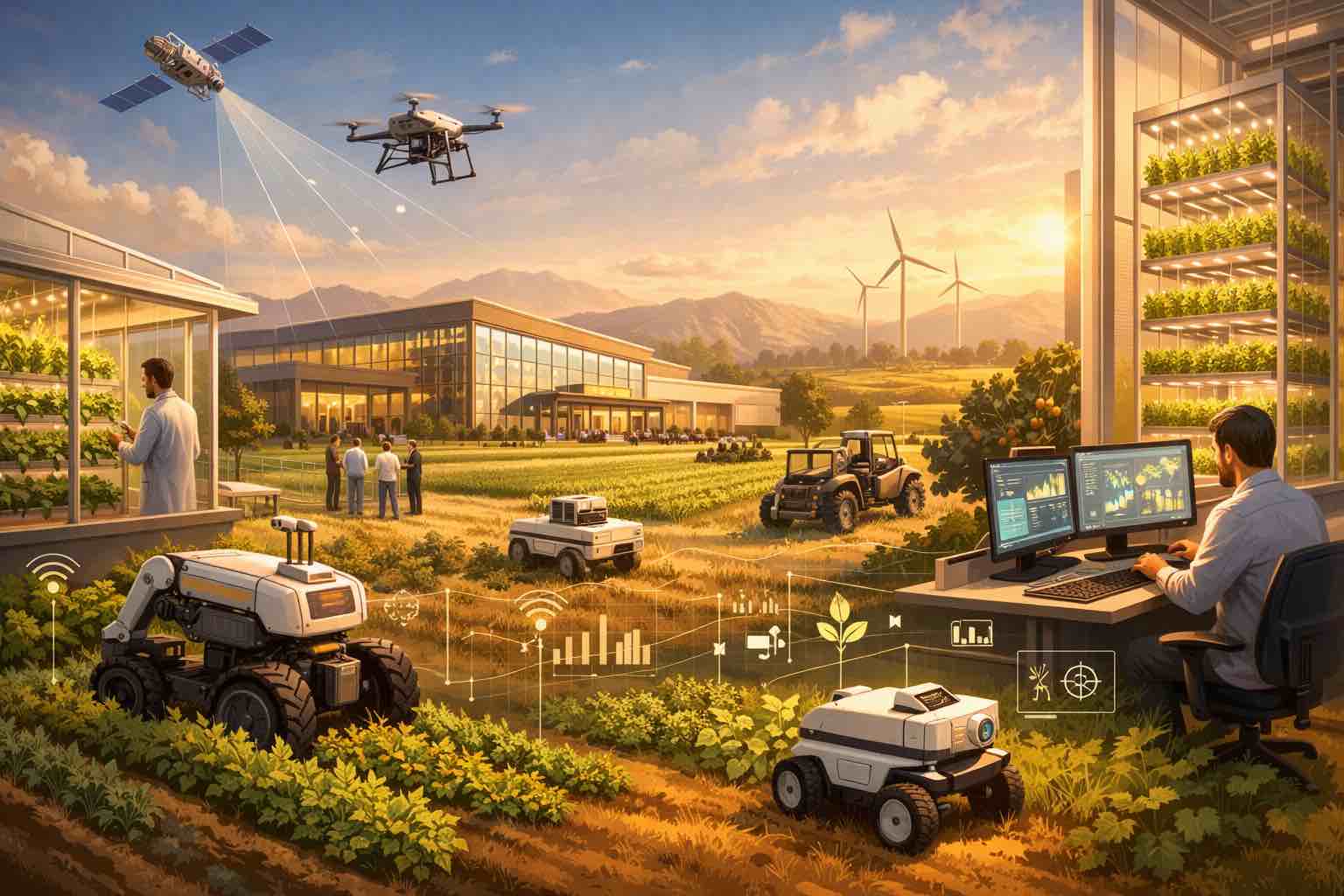
UC Davis is celebrating a transformative, more than $25 million commitment that will accelerate its leadership in agricultural robotics, advanced sensing technologies, artificial intelligence, and sustainability.
The investment is centered in the College of Agricultural and Environmental Sciences and is designed to give researchers and students the tools, facilities, and long-term support they need to push the boundaries of high-tech agriculture.
University leaders describe the funding as a generational opportunity to unite engineering, plant science, and environmental expertise around the shared goal of building smarter, more resilient food systems.
A significant portion of the gift will endow three new C.L. Best chairs in the Department of Biological and Agricultural Engineering, the first such positions in the department’s history.
These endowed chairs are structured to attract and retain top faculty in key areas of emerging agricultural technology while providing stable, permanent resources for ambitious long‑term research agendas. The three chair areas—agricultural big data analytics, robotics and cyber‑physical farming systems, and controlled environmental engineering—are meant to work in concert, bridging field operations, data science, and next‑generation production environments.
The C.L. Best Endowed Chair in Agricultural Big Data Analytics will focus on extracting insight from the ever‑expanding data streams now flowing from fields, orchards, and processing facilities. From satellite imagery and drone flights to soil moisture probes and machine telematics, modern farms generate vast quantities of information that are often underutilized.
By developing advanced models and decision‑support systems, the chairholder will help farmers optimize yields, anticipate disease and pest pressures, fine‑tune irrigation and fertilization, and better manage risk. The work is expected to integrate closely with plant breeders, agronomists, and economists to ensure that new analytical tools translate into real‑world value on the ground.
The C.L. Best Endowed Chair in Robotics and Cyber-Physical Farming Systems will advance the design and deployment of intelligent machines capable of operating autonomously or semi-autonomously in complex agricultural environments.
This includes field robots capable of precision weeding, pruning, harvesting, and crop monitoring; coordinated fleets of small machines that can replace a single large tractor; and integrated systems that enable human workers and robots to collaborate safely and efficiently. Researchers in this area will draw on artificial intelligence, computer vision, control systems, and human‑machine interface design, aiming to address labor shortages, improve safety, and increase the precision of field operations.
The third position, the C.L. Best Endowed Chair in Controlled Environmental Engineering, will concentrate on technologies for tightly managed growing environments such as high‑tech greenhouses and vertical farms.
These systems rely on sophisticated climate control, water recirculation, lighting, sensing, and automation to produce food with high resource efficiency and minimal environmental impact. UC Davis expects this chair to collaborate across horticulture, engineering, and energy systems to design facilities that use less water, emit fewer greenhouse gases, and can be tailored to urban or resource-constrained settings.
As controlled environments become more important for specialty crops and year‑round production, the research aims to keep California producers ahead of global competitors.
Complementing the endowed chairs is the C.L. Best Innovation in Agriculture Fund, which totals $12.5 million and supports students, faculty, staff, and facilities. The fund will provide scholarships and hands‑on research opportunities for students eager to work at the interface of agriculture and technology, ensuring a pipeline of talent that is comfortable in both the field and the lab. It will also back interdisciplinary research projects, seed funding for novel ideas, and upgrades to laboratories and testbeds where prototypes can be built, tested, and refined.
College leaders emphasize that this flexible pool of resources is crucial for moving promising concepts quickly from early experimentation to practical tools ready for adoption by growers.
A centerpiece of the vision is the Resnick Center for Agricultural Innovation, a major new facility now under construction along Hutchison Drive and slated to open in fall 2026.
Within the center, the C.L. Best Agricultural Innovation Robotics and Sensing Suite will serve as a dedicated hub for experimentation with robots, sensor networks, and AI‑enabled systems tailored to real‑world agricultural conditions.
The suite will allow teams to integrate unmanned aerial systems, ground‑based robots, LiDAR, hyperspectral sensing, and edge‑computing devices into complete “cyber‑physical” farming systems. By providing space for rapid prototyping and iterative testing, UC Davis intends to shorten the cycle from concept to field‑ready technology.
Administrators and faculty alike say the timing could not be more critical as agriculture faces converging pressures from climate change, water scarcity, regulatory shifts, and evolving consumer expectations. Robotics and automation can help address chronic labor shortages and reduce physical strain on workers, while advanced sensing enables precise targeting of inputs and minimizes waste.
Artificial intelligence and big data analytics promise better yield forecasts, early detection of stress and disease, and more resilient farming systems capable of withstanding climatic volatility. At the same time, sustainability imperatives require that these technological advances reduce environmental footprints, not increase them, a balance that UC Davis researchers say will be central to their agenda.
The university also underscores the global dimension of this initiative. While the work is rooted in California’s diverse, high-value crops, the underlying tools and frameworks are designed to be adaptable to smallholder systems, emerging markets, and regions with limited infrastructure.
Partnerships with industry, government agencies, and international collaborators are expected to be a hallmark of the program, connecting campus innovations with real‑world deployment across different scales and climates.
For students, this means exposure not only to cutting‑edge technology but also to the complex social, economic, and policy contexts that shape its adoption.
UC Davis leadership portrays the new investment as both a tribute to a long tradition of engineering innovation and a clear signal of where the next great advances in agriculture will come from. By aligning endowed academic positions, flexible innovation funding, and state‑of‑the‑art facilities, the university is positioning itself as a central node in the rapidly evolving ag‑tech ecosystem.
The expectation is that the discoveries, tools, and talent emerging from this effort will ripple outward—from test plots and laboratories in Davis to farms, processing facilities, and food systems around the world—helping agriculture meet the intertwined demands of productivity, profitability, and planetary health.