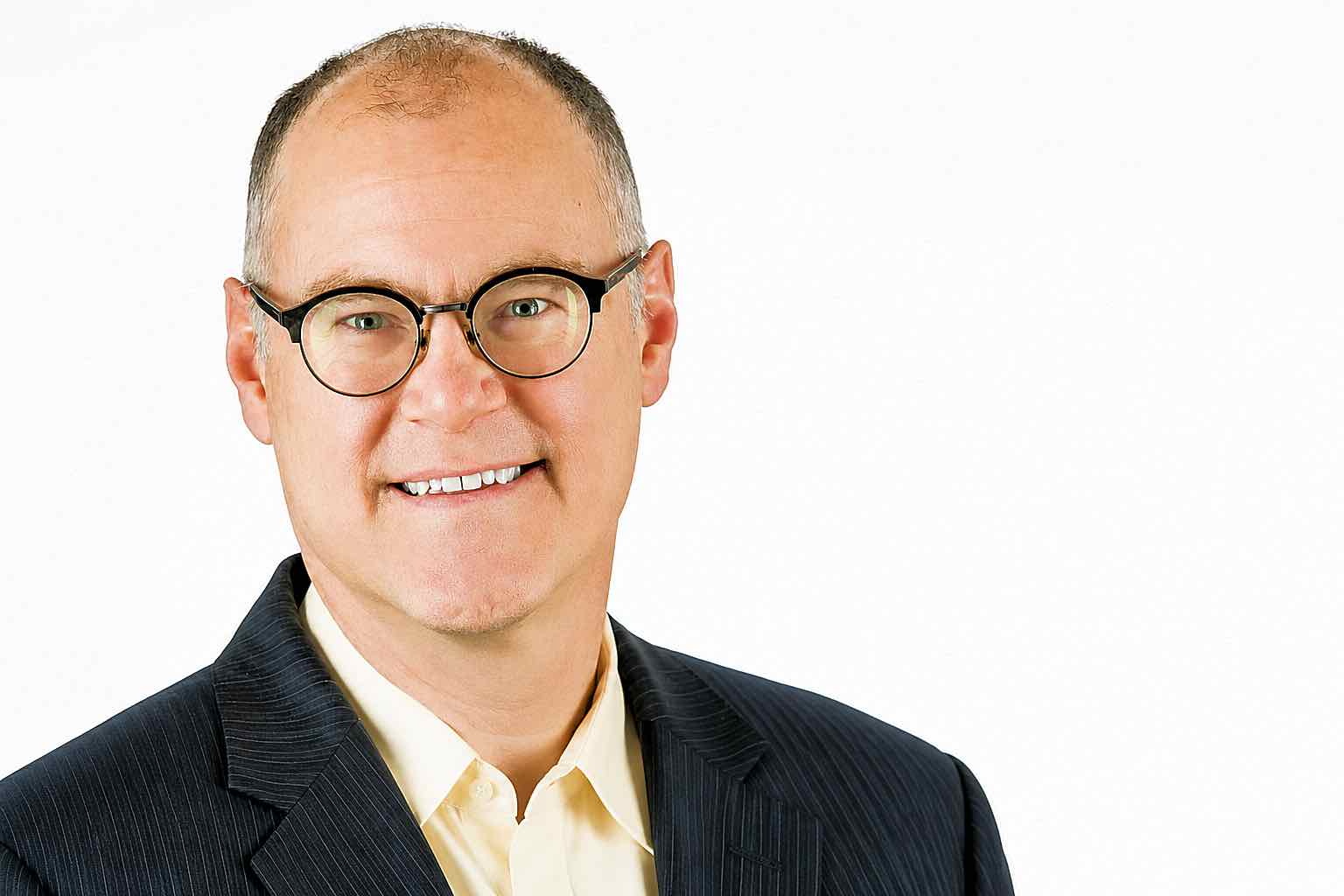
$200 million gift and Dr. Bill Lydiatt: a Cancer surgeon who gave up owning a hospital to redefine local health care
On paper, the story is about a hospital deal: Nebraska Medicine changing hands, an $800 million buyout, a $2.19 billion building project, and a $200 million gift.
In reality, it’s about a doctor who spent his life treating patients and has now decided that his legacy will be measured not by the number of surgeries he performed, but by the shape of the health system he leaves behind.
For most of his career, Bill Lydiatt’s world was intensely personal and close-up: the exam room, the operating theater, and the quiet conversations with families about a diagnosis and a plan.
As a head and neck cancer surgeon, he saw what it meant for people to put their trust in one hospital, one team, at the most frightening moment of their lives.
That experience never really leaves a clinician. It’s the lens through which he seems to view this entire deal.
When Clarkson Regional Health Services asked him to step into the CEO role, he didn’t inherit a sleepy charity. He inherited half‑ownership of Nebraska Medicine, decades of partnership with the University of Nebraska, and a governance structure that had grown up in another era of American healthcare.
On one level, his job was to keep the machinery running. On another, quieter level, he was wrestling with a question that doesn’t appear in the bylaws: whether the way Clarkson held power still aligned with how it wanted to serve patients.
The decision he ultimately pushed for was disarmingly simple to describe and remarkably hard to execute: stop being an owner and become a donor. Instead of clinging to a 50 percent stake and a pair of board seats, Clarkson would sell its share to the university, hand over the land and buildings, resign its membership—and then write a nine‑figure check to help build the next hospital.
There’s a kind of emotional risk in that move. You are voluntarily letting go of your formal authority in exchange for something more intangible: the belief that, with the right partners, your money can do more than your veto.
Behind closed doors, this wasn’t a spreadsheet conversation. It was about identity. Clarkson had grown up as a hospital rather than a foundation.
Many of the people around the board table had memories of the days when the Clarkson name didn’t mean “regional health services” so much as “this is where my child was born” or “this is where my father was treated.”
Choosing to step away from ownership meant accepting that the institution’s future would be defined differently. Lydiatt’s role in that was to translate those emotions into a new kind of confidence: not in Clarkson’s ability to run a hospital but in its ability to fuel one.
He wasn’t alone in that work.
Every CEO needs a counterpart who isn’t on payroll, someone whose name on the letterhead says, “This is our volunteer voice.”
At Clarkson, that person was board chair, Jim Landen.
Landen had to be persuaded that giving up control was not an admission of failure but a statement of trust—that after decades of partnership, the right way to honor Clarkson’s history with the university was to invest in its future.
Together, he and Lydiatt moved the conversation from “what are we losing?” to “what are we building?”
That question is where Project Health comes in. The planned $2.19 billion inpatient hospital isn’t just a set of renderings and a fundraising target.
For Lydiatt, it is a physical answer to a lifelong professional unease: the knowledge that the tools, spaces, and systems available when he started practicing medicine are not the ones patients will need in the decades ahead.
By anchoring the project with a $200 million gift, he and the Clarkson board aren’t just underwriting steel and glass.
They’re underwriting a promise—that future patients in Nebraska will walk into a hospital that feels as if it were designed for the diseases, technologies, and expectations of their time, not his.
There is also a quieter human dimension to ceding Clarkson’s formal role to the university and inviting the Omaha Community Foundation into governance.
For a clinician‑turned‑CEO, accepting that you won’t be the one in the room when tomorrow’s tough calls are made is an act of humility. It means trusting that public regents, academic leaders, and community philanthropists can hold the mission as tightly as you did.
It means believing that the people who sit where you once sat will carry forward the same concern for the patient in the bed, even if the org chart looks completely different.
And yet, for someone like Lydiatt, this may be the most natural kind of leadership: seeing that the moment has come to step back from the operating table and board table and give others the chance to build the thing you know is needed.
The gift is not a victory lap.
It is a hand‑off.
You can almost imagine the story he will tell about this decision years from now.
Not about the transaction value, but about two or three future patients he never meets whose care is shaped by a hospital that exists because Clarkson stopped insisting on ownership and started insisting on impact.
In the end, that’s what humanizes this entire saga: a doctor, a board chair, and a small circle of leaders choosing to measure their legacy in lives improved rather than seats retained.