
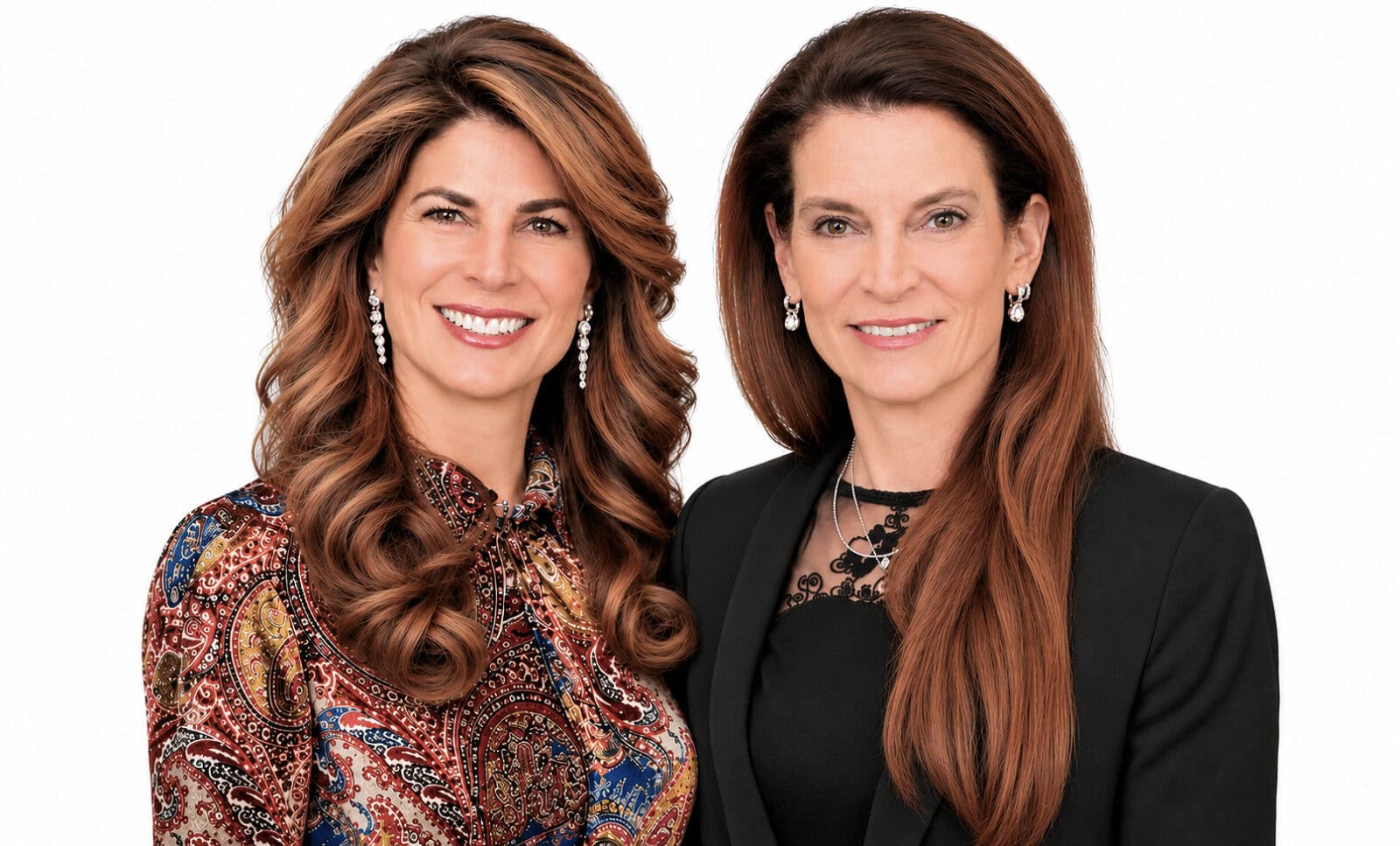
$20 million for memory: Andrea Goldrich Cayton and Melinda Goldrich honor their father with gift to museum
When Jona Goldrich was 14, his father sewed diamonds into his clothing and sent him and his younger brother out of Nazi-occupied Poland.
The boys walked four days through forested mountains to reach Hungary, carrying the only inheritance their parents could give: a chance to live.
More than eight decades later, his daughters have turned that inheritance into something lasting for millions.
Andrea Goldrich Cayton and Melinda Goldrich have committed up to $20 million to endow The Goldrich Cultural Center, the Los Angeles campus that houses the Holocaust Museum LA, the museum their father helped build.
The center calls it its largest donation in 65 years.
The sisters announced the gift at the center’s annual gala at the Beverly Wilshire Hotel.
They are giving $10 million now.
They will match every new pledge of more than $25,000 through the end of next year, up to another $10 million.
“In memory of those we lost, my sister and I have joined in this mission as a legacy to our father,” Andrea said.
“The ongoing education provided by this museum and campus is something we feel we must support.”
Melinda called the campus “a fulfillment of the dream that fueled every minute of our father’s life.” Chief executive Beth Kean said the gift “will ensure The Goldrich thrives for future generations.”
The endowment comes just months after the $70 million campus opened in Pan Pacific Park, roughly doubling the museum’s footprint.
It includes new galleries and classrooms, a 200-seat theater, and a rooftop garden facing the Hollywood Hills.
A pavilion holds a boxcar found outside the Majdanek death camp, and in a holographic theater visitors can ask survivors questions and hear their recorded answers. The museum once welcomed 75,000 visitors a year.
The new campus is built for 500,000, including 150,000 students, who are always admitted free.
Most students arrive knowing little about the Holocaust.
In Kean’s words, they come in as bystanders and leave as upstanders.
Founded in 1961 by survivors who met in an English class at Hollywood High School,
Holocaust Museum LA is the oldest Holocaust museum in the United States.
Jona Goldrich helped give it a permanent home.
He led fundraising for the Los Angeles Holocaust Memorial in Pan Pacific Park and started the park’s annual Yom HaShoah ceremony.
When the museum opened its permanent building in 2010, he negotiated a land lease with the city that took in extra parcels of the park.
He was sure the museum would one day need room to grow, and that foresight made today’s campus possible.
Kean remembers him pounding the table after board meetings and declaring, “I’m fighting against never forgetting.”
His life explains the fervor.
His parents and older brother were murdered in the camps. Jona reached Palestine, studied engineering at the Technion, and served in the Palmach before arriving in Los Angeles in the 1950s with $50 in his pocket.
He installed window screens, built his first apartment building at 29, and in 1959 founded Goldrich & Kest with fellow survivor Sol Kest.
The firm helped bring residential life to downtown Los Angeles and Marina del Rey.
It grew to more than 200 properties, including dozens of buildings for low-income families, where the company paid for free after-school and summer programs for children.
In 1987 he founded the Goldrich Family Foundation to fight disease, support education, promote social justice, and keep Holocaust remembrance alive.
He gave 10 to 15 percent of his personal income each year to educational, Jewish, and Israeli causes.
At Tel Aviv University, his family name is on an institute for Yiddish culture, a chair in international banking, a theater archive, and athletic centers.
His daughters have made his mission their own.
Their lead gift named the new campus.
At the USC Shoah Foundation, which holds their father’s recorded testimony, they were lead donors for the global headquarters and helped fund the holographic survivor testimony now featured at the museum.
Melinda established the Jona Goldrich Center for Digital Storytelling there and made a $5 million gift to name the Foundation’s new home in Washington, D.C. She now chairs its Board of Councilors.
“Holocaust education,” she has said, “was his mission and is now ours.”
The family has given just as generously to healing.
At Cedars-Sinai, the sisters created the Jona Goldrich Center for Alzheimer’s and Memory Disorders with a $10 million gift and $5 million in matching funds.
It is a fitting tribute to a man who spent his life defending memory. Andrea and her husband, Barry Cayton, later gave $30 million to create the Cedars-Sinai Cayton BRCA Center, the first of its kind in Southern California, for families facing inherited cancer risk.
“Our family has personally been affected by BRCA gene mutations,” Andrea said, “so we feel especially compelled to make a transformative mark.”
A boy who survived because his father planned for his future became a man who built homes, universities, and memorials for others.
His daughters now fund the classrooms, the science, and the endowment that will carry his work forward.
With every qualifying pledge now matched dollar for dollar, they are inviting all of Los Angeles to join them.
That is what Jona Goldrich always hoped for: a city that remembers together.