
$20 million donation to the opera from Richard W. Colburn
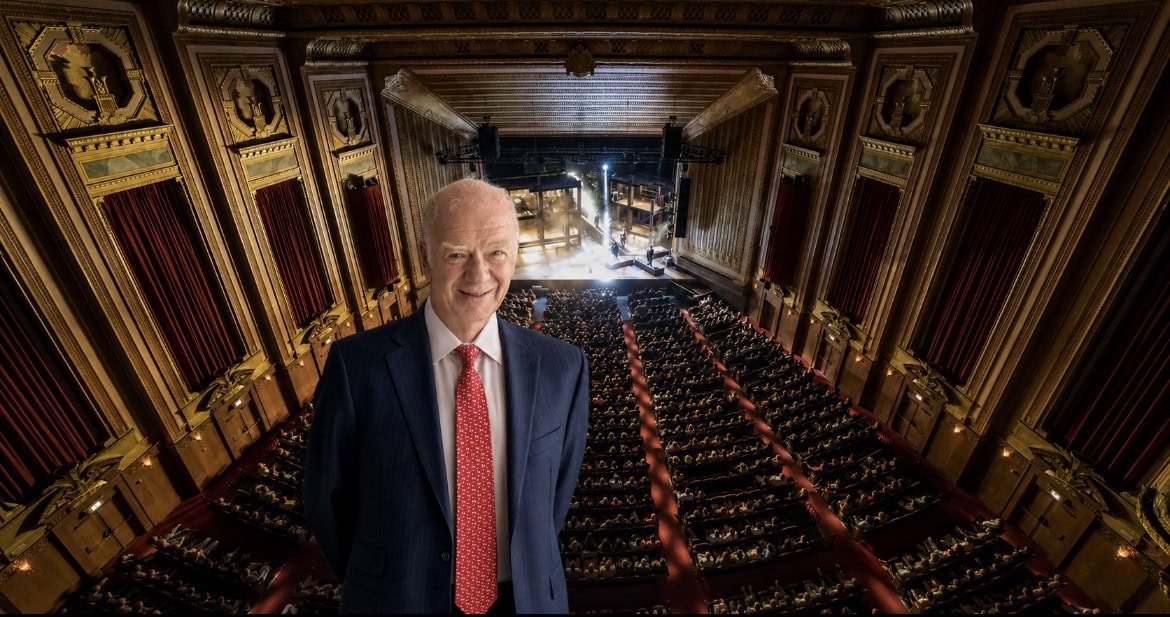
Lyric Opera of Chicago has secured one of the most consequential gifts in its recent history, a $20 million commitment from The Negaunee Foundation, the philanthropic vehicle of Chicago-based investor and civic patron Richard W. Colburn and his wife, Robin Colburn.
The contribution arrives at a moment when major American arts institutions are recalibrating both their financial models and their public missions, and it underscores the Colburns’ long-standing conviction that cultural organizations must be anchored as deeply in education and community access as they are in artistic excellence.
The gift is deliberately structured to reinforce both priorities.
Half will endow Lyric’s education platform in perpetuity, now to be known as the Negaunee Education Programs at Lyric Opera of Chicago, extending the company’s reach into classrooms, neighborhoods, and partner institutions across the city.
The remaining $10 million establishes a dedicated fund for Mozart performance, effectively underwriting an annual commitment to the composer’s work and enabling new productions as well as the revival of canonical stagings.
Together, the dual endowments reflect a characteristically disciplined approach to philanthropy—one that balances legacy-building with ongoing operational vitality.
For Colburn, whose career has been rooted in investment management and private capital, the logic of endowment-driven giving mirrors the principles that shaped his business life: durability, predictability, and long-term yield.
Through Negaunee—named after the Michigan town in the Upper Peninsula tied to his family history—he has quietly assembled one of Chicago’s more influential philanthropic portfolios, with a particular emphasis on music education, youth development, and the performing arts.
His involvement with Lyric Opera is both financial and institutional; he serves on the company’s Board of Directors and executive committee, roles that have given him a direct hand in shaping and underwriting strategy.
That dual engagement is a hallmark of the Colburns’ broader philanthropic pattern. Their giving has consistently favored institutions where leadership participation can amplify the impact of capital.
In Chicago, their support has extended to organizations such as the Merit School of Music, a nationally recognized training ground for young musicians, where access and affordability are central to the mission.
The couple has also supported the Music Institute of Chicago, reinforcing a regional ecosystem that nurtures talent from early instruction through pre-professional training—an arc that aligns closely with Lyric’s expanding education agenda.
Beyond music-specific institutions, the Colburns’ philanthropy has touched a wider civic landscape, including educational initiatives and cultural programming designed to broaden participation in the arts. Their approach tends to avoid splashy one-time gestures in favor of sustained commitments that build institutional capacity over time.
In that sense, the Lyric gift is less an outlier than a continuation at scale: a large but carefully targeted investment intended to stabilize and extend programs that already demonstrate measurable reach.
Within Lyric Opera itself, the education endowment is expected to accelerate partnerships with organizations such as Merit School of Music and introduce new collaborations, including work with the Music Institute of Chicago.
These relationships are designed not only to cultivate future audiences but also to create pathways for young performers, particularly those from underrepresented communities, to engage with opera as both an art form and a potential career.
The emphasis on family programming and in-school initiatives reflects a broader industry shift toward embedding arts education within community infrastructure rather than treating it as an ancillary offering.
The Mozart fund, meanwhile, speaks to Colburn’s parallel interest in preserving artistic standards and repertoire continuity.
By guaranteeing resources for annual Mozart productions, the fund effectively insulates a core component of the operatic canon from the financial volatility that can affect programming decisions.
It also opens the door to ambitious multi-year cycles, including the possibility of mounting the Mozart/Da Ponte trilogy with a level of consistency and production investment that might otherwise be difficult to sustain.
Lyric’s decision to honor Colburn with its Carol Fox Lifetime Achievement Award at its May board meeting formalizes a relationship that has evolved over decades.
Named for the company’s founder, the award recognizes individuals whose contributions have materially shaped Lyric’s trajectory. In Colburn’s case, the recognition reflects not only the scale of his giving but also the coherence of his vision: a belief that major cultural institutions must serve as both artistic leaders and civic educators.
In an era when arts funding is increasingly fragmented and dependent on a mix of public, private, and earned revenue, gifts of this magnitude carry outsized influence. Yet what distinguishes the Colburns’ philanthropy is not simply the size of their contributions but the strategic clarity behind them.
By anchoring their support in endowment structures and programmatic partnerships, they are effectively underwriting both the present and future of the institutions they choose to back.
For Chicago’s cultural sector, the implications are immediate and long-term. Lyric Opera gains a strengthened financial foundation for two of its most mission-critical areas, while the broader ecosystem of music education and performance benefits from deeper integration and sustained investment.
For the Colburns, the gift represents another chapter in a philanthropic narrative defined less by visibility than by continuity—an approach that, much like the art form they are supporting, depends on patience, discipline, and an enduring belief in the power of institutions to shape public life.