
$18 billion gift: Elon Musk and SpaceX pledge two shares to every American child, and Musk promises one more every year
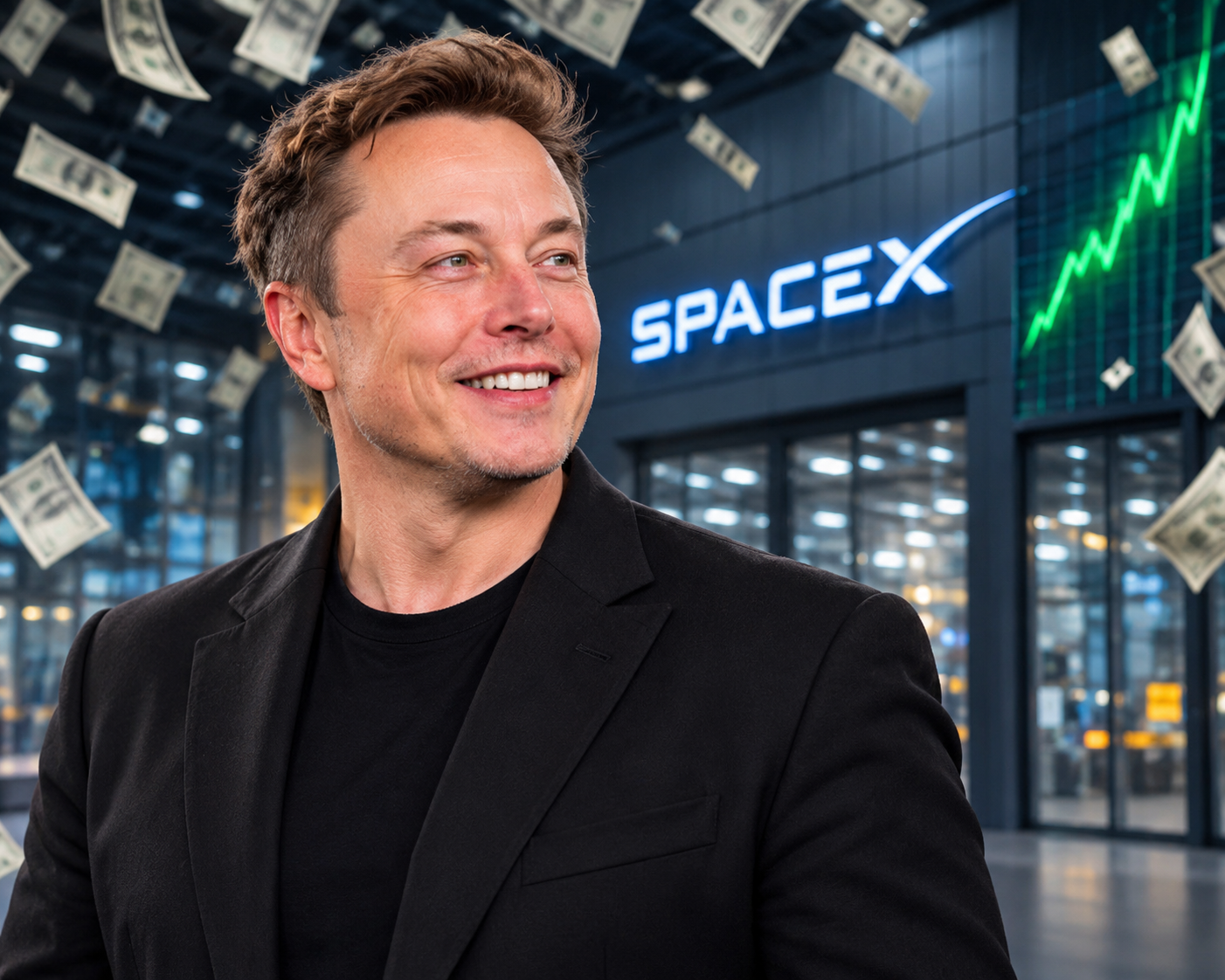
On the eve of Thanksgiving, Elon Musk gave the country something closer to an inheritance than a holiday gesture. SpaceX, the rocket, satellite and artificial intelligence company he founded with his own money more than two decades ago, said it will contribute one newly issued share of its Class A stock to every active Trump Account in the United States.
Musk then said he would personally match it, share for share. “Every child in America will receive two SpaceX shares,” he wrote on X, “one from the company and one from me personally.”
He wasn’t done. On Thanksgiving afternoon, answering an admirer who had asked people to “name a more awesome act of philanthropy,” Musk made the gift a standing commitment: “I will be donating another share of SpaceX to all kids in America every year.”
The numbers are extraordinary. SpaceX shares closed at $127.44 on Wednesday. Roughly 70 million Trump Accounts have been created, so the two-share gift comes to about $18 billion at that price, before counting a single future year.
Every eligible child would get about $255 in stock to start, and then a new share each year after that.
Few gifts in the history of American philanthropy have reached so many people at once.
Fewer still have handed ordinary children a direct ownership stake in the company their benefactor built.
The company’s share will move first, with SpaceX’s contribution scheduled to transfer next month.
Musk’s own share will follow when the lockup on his post-IPO holdings ends. “The share directly from me will be transferred when my lockup expires in June next year,” he wrote.
The announcement doubles the promise he made in October, when he posted, a little before four in the morning, “Next year, I will give one of my SpaceX shares to every kid in America. This will be the first of many.” Within weeks, “first of many” had already become two shares and then an annual tradition.
SpaceX explained its thinking in a single sentence: “SpaceX is building the infrastructure of the future and working to make life multiplanetary. We believe ownership of the company creating these systems should extend to the next generation of Americans for their long-term benefit.”
The idea is that children who will grow up with Starlink overhead, Starship rising from the Texas coast and Grok in their pockets should also own a piece of those systems.
The gift is built for the long run.
Trump Accounts, created under the 2025 tax law and opened to contributions on July 4, are tax-advantaged investment accounts for American children under 18 with a Social Security number. Children born from 2025 through 2028 receive a one-time $1,000 seed deposit from the Treasury.
Treasury rules issued in September allow the accounts to hold donated stock and generally prevent it from being sold until five years have passed or the year the child turns 17, whichever comes first. That means a child’s SpaceX shares can’t be spent on impulse. They stay in the account and grow along with the company.
Musk’s own early life explains a lot about why he would choose this kind of gift.
He was born in Pretoria, South Africa, in 1971 to a South African father and a Canadian mother.
He was the youngest and smallest boy in his class, and he lived in books, sometimes reading for ten hours a day.
When he ran out of books at the school library and the neighborhood library, he tried to persuade the librarian to order more.
When that didn’t work, he read the Encyclopaedia Britannica.
“You don’t know what you don’t know,” he later said of that habit.
His imagination was formed by science fiction.
He has credited Isaac Asimov’s Foundation series, Robert Heinlein’s The Moon Is a Harsh Mistress, Tolkien’s The Lord of the Rings and Douglas Adams’s The Hitchhiker’s Guide to the Galaxy, which taught him that finding the right question is often harder than finding the answer.
He taught himself to program on a Commodore VIC-20 at about ten.
At twelve he wrote a space-shooter game called Blastar and sold the code to a South African computer magazine for about $500.
He and his brother Kimbal sold homemade chocolate Easter eggs door to door in the wealthier parts of Pretoria.
They also planned to open a video-game arcade near their school, and the plan fell through only because the boys were too young to get a permit.
His childhood was not easy. He was badly bullied at school, once so severely that he was hospitalized.
At 17 he left South Africa alone with a Canadian passport, unwilling to serve in the apartheid-era military and drawn to the opportunities he believed North America could offer.
He landed in Saskatchewan with a second cousin. He tended vegetables and cleared grain bins on a farm in Waldeck, then took a job cleaning the boiler room of a lumber mill for $18 an hour.
He went on to Queen’s University in Ontario and then the University of Pennsylvania, where he earned degrees in physics and economics.
He enrolled in a physics graduate program at Stanford and left after two days, convinced that the internet could change society more than the laboratory could.
The man now giving away billions in stock started with very little.
While he and Kimbal were building their first company, Zip2, in a small rented office in Palo Alto, he slept on the office couch and showered at the YMCA.
Compaq bought Zip2 for $307 million.
His next venture, X.com, became PayPal, and when eBay bought it for $1.5 billion, Musk, then the largest shareholder, received about $175.8 million.
He then put most of that money into an idea almost no one believed in.
Musk had become involved with the Mars Society and wanted to land a small plant-growth greenhouse on Mars, partly to remind people what exploration could feel like.
Twice he went to Moscow to try to buy refurbished intercontinental ballistic missiles for the mission. Both times he came back without them.
So in 2002 he decided to build rockets himself, putting $100 million of his own fortune into SpaceX and naming himself chief engineer as well as chief executive.
The first three Falcon 1 launches failed.
By 2008 SpaceX could afford only one more attempt, and Tesla, which he was also funding, was close to collapse.
On September 28, 2008, the fourth Falcon 1 lifted off from a small island in the Pacific and reached orbit.
It was the first privately developed liquid-fueled rocket to do so.
That launch saved SpaceX, and SpaceX now stands behind the Falcon 9, Starship, Starlink, Grok and X. The company went public this summer in what was then the largest IPO in history, and Musk became the world’s richest person, with Bloomberg now estimating his net worth at about $820 billion.
Wealth hasn’t changed his habits much. He has said he has Asperger syndrome, which he revealed while hosting Saturday Night Live. He once said his main residence was a modest house of about $50,000 that he rented from SpaceX in Boca Chica, Texas, a short drive from the launch site. He is the father of more than a dozen children, and he has spoken often about the future that the next generation will inherit. His Musk Foundation, which supports science and engineering education, pediatrics, renewable energy, space exploration and safe artificial intelligence, held more than $14 billion at the end of 2024. The share pledge carries those causes directly to children across the country.
Musk is not giving alone. Gwynne Shotwell, SpaceX’s president and chief operating officer and his closest partner at the company for more than two decades, has separately committed more than 2 million of her own SpaceX shares with her husband, Robert. That gift is set to reach children’s accounts in December. “Robert and I are thrilled that our gift of over 2 million shares of SpaceX stock will be distributed to children’s Trump accounts in December,” she wrote.
Her first gift goes to 11- to 17-year-olds in ZIP codes where the median family income is $57,000 or less. A second gift is aimed at children in military families serving overseas, children in foster care, and children in lower-income counties near the couple’s home in Texas. She ended her announcement with “God Bless America.”
The SpaceX pledges join a growing wave of private giving to the accounts.
Michael and Susan Dell have pledged $6.25 billion to give $250 to children in ZIP codes where the median family income is $150,000 or less. Goldman Sachs, Bank of America, Charles Schwab and BlackRock have also made commitments. Friends and family have contributed more than $1 billion on their own, and total deposits across the program now exceed $9 billion.
Some details are still being worked out, including how many accounts will count as active when the company’s share arrives and how the annual gifts will be delivered.
But the main point is already clear.
Musk began as a boy who read the encyclopedia because he had run out of other books, and he arrived in Canada with little more than a passport and a willingness to clean a boiler room.
Now he is giving his company’s stock to every child in the country and promising to keep doing it each year.
He has spent his career asking people to think in decades and centuries, and this gift asks the same of a new generation of shareholders. Millions of American children will begin 2027 as owners of SpaceX.