
150 modern and contemporary works by Indigenous artists valued in the mid eight figures from Dr. Agnes Hsu‑Tang and Oscar L. Tang gifted to museum
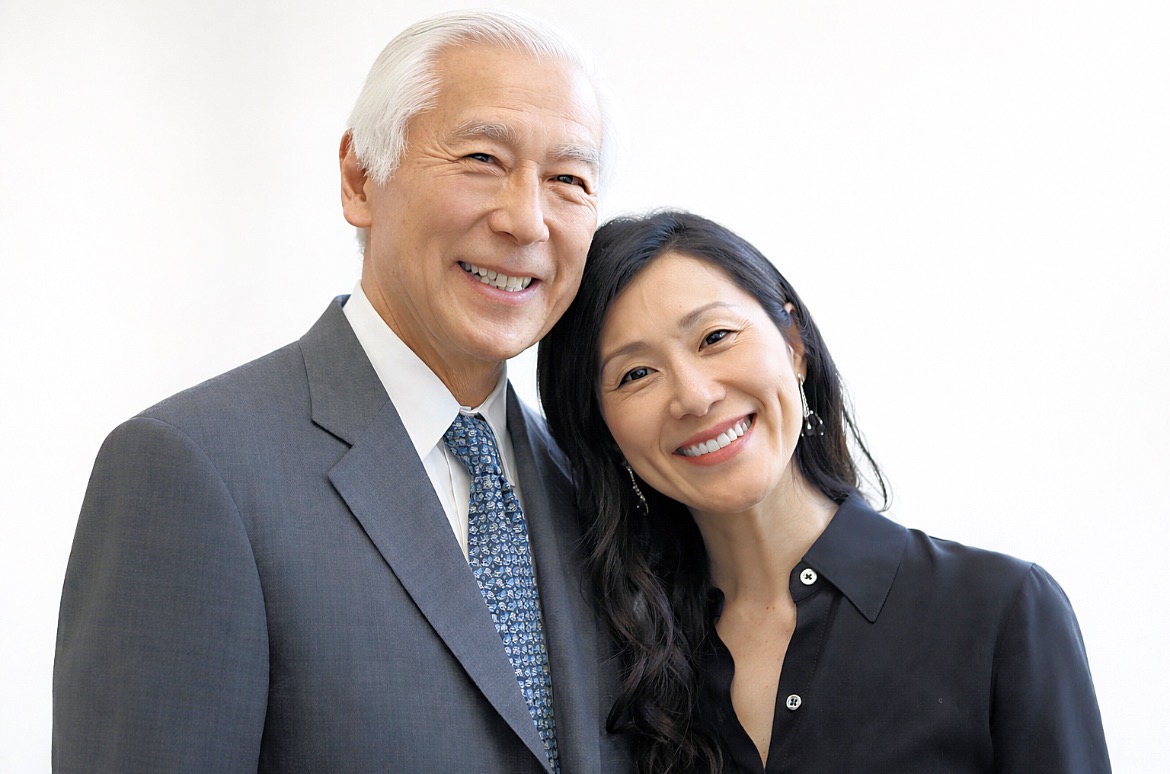
The New-York Historical Society is poised to mark the nation’s 250th birthday with a transformative act of cultural philanthropy: a landmark promised gift of more than 150 modern and contemporary works by Indigenous artists from board chair Dr. Agnes Hsu‑Tang and her husband, financier and philanthropist Oscar L. Tang.
While the museum is not disclosing a formal valuation, art advisors familiar with recent market prices for blue-chip Native American modernists and leading contemporary Indigenous artists estimate that a collection of this scale and depth could conservatively be worth in the tens of millions of dollars, placing the promised gift in the range of approximately $25 million to $40 million in today’s market.
For New-York Historical, which has been steadily reorienting its galleries to tell a fuller story of American democracy, the Tang gift represents both an assertion of institutional values and the arrival of a couple whose giving has already reshaped New York’s cultural landscape with more than $190 million in philanthropic commitments.
Timed to the nation’s approaching semiquincentennial, the promised works—part of the broader Hsu‑Tang Collection—will be unveiled to the public in the exhibition “House Made of Dawn: Art by Native Americans 1880 to Now, Selections from the Hsu‑Tang Collection,” on view from April 22 to August 2, 2026. The show takes its title from N. Scott Momaday’s 1969 Pulitzer Prize–winning novel and the Navajo invocation it echoes, and it is conceived as both an art historical project and a meditation on reconciliation at a moment when the story of the United States is being reconsidered through Indigenous perspectives. The promised gift encompasses works by more than 100 artists spanning nearly 150 years of artistic practice, from late 19th‑century pottery and weaving to cutting‑edge photography, glass, and mixed media. For Hsu‑Tang, who recalls being “awestruck” as a college student by Shiprock and Antelope Canyon on a cross‑country road trip inspired by Momaday, this long‑planned transfer of stewardship is meant to bring those landscapes of memory into the civic space of a New York museum.
The collection entering New-York Historical has been carefully assembled over years as part of the Hsu‑Tang Collection’s Native American focus, and its promised transfer will instantly make Indigenous modern and contemporary art a defining strength of the institution.
The gift includes important works by renowned ceramists Nampeyo of Hano (Tewa) and Maria Martinez (San Ildefonso), early modernists like Angel De Cora (Ho‑Chunk) and Hart Lone Wolf Schultz (Blackfeet), and pathbreaking painter‑intellectuals such as Zitkala‑Ša (Yankton Dakota), whose creative practices bridged literature, music, and visual culture. A rich group of works on paper by Awa Tsireh, Julian Martinez, Quah Ah Tonita Peña (San Ildefonso), Gerónima Montoya (Ohkay Owingeh), Tse Tsan Pablita Velarde (Santa Clara), Acee Blue Eagle (Muscogee), Archie Blackowl (Cheyenne), and the Kiowa Six documents the emergence of the so‑called “Flat Style,” which gained international recognition, including a celebrated showing at the 1932 Venice Biennale. Mid‑20th‑century modernist pioneers Oscar Howe (Yanktonai Dakota) and George Morrison (Ojibwe) appear alongside works by Jaune Quick‑to‑See‑Smith (Salish) and Emmi Whitehorse (Navajo), members of the Grey Canyon Artists collective that pushed Native modernism into new conceptual and painterly terrain in the late 1970s and early 1980s.
Together, these works offer New-York Historical an Indigenous modernist canon in miniature, one that can be woven through future narratives of American art and democracy in the institution’s galleries.
Contemporary voices are especially prominent in the promised gift, affirming the couple’s commitment to living artists and to Indigenous creativity as a vital force in American art today. The collection includes works by Fritz Scholder (Luiseño), N. Scott Momaday (Kiowa), Allan Houser (Apache), T.C. Cannon (Kiowa), Earl Biss (Crow), Linda Lomahaftewa (Hopi), Billy Soza War Soldier (Luiseño), Joy Harjo (Muscogee), Dan Namingha (Hopi), David Bradley (Chippewa), Anita Fields (Osage), Cara Romero (Chemehuevi), Diego Romero (Cochiti), Courtney Leonard (Shinnecock), Frank Buffalo Hyde (Onondaga), and many others associated with the Institute of American Indian Arts—artists who have propelled IAIA into a leading force in contemporary American art.
Media range from painting, sculpture, photography, and works on paper to textiles, baskets, ceramics, glass, precious metal, mixed media and rare books, reflecting the breadth of Indigenous material practices.
The exhibition will also mark the first time that major works by photography pioneer Lee Marmon (Laguna), including a rare first edition of his iconic 1954 image “White Man’s Moccasins,” have been shown in a New York museum, a benchmark in repositioning Native photographers within the broader history of American documentary and fine‑art photography.
Even before “House Made of Dawn” opens, New-York Historical has begun quietly introducing audiences to highlights from the promised gift, underscoring how quickly the Tangs’ stewardship is being translated into public access. A special preview installation now on view features Fritz Scholder’s incisive lithograph “Indian Contemplating Columbus,” an American flag crafted by an unrecorded Navajo weaver, and Cara Romero’s haunting photographic work “Dans L’ombre,” each work threading questions of patriotism, visibility, and historical memory through Indigenous experience.
The exhibition itself is curated by Wendy Nālani E. Ikemoto, a Native Hawaiian scholar who serves as vice president and chief curator, in consultation with Hsu‑Tang as collector. Ikemoto, whose previous projects at New-York Historical have placed Indigenous artists in dialogue with canonical American painters, will also integrate works from the promised gift into other installations and into “Democracy Matters,” a major exhibition planned for the new Tang Wing for American Democracy opening in 2026.
For New-York Historical president and CEO Dr. Louise Mirrer, the gift is an extension of Hsu‑Tang’s institutional vision as board chair, one that has already begun to reshape the museum’s programming. In 2023, the critically acclaimed exhibition “Kay WalkingStick / Hudson River School” set WalkingStick’s work alongside 19th‑century landscape painting, foregrounding Indigenous presence within the very genre that once symbolized the nation’s expansionist ambitions. The promised gift of the Hsu‑Tang Indigenous holdings formalizes that curatorial direction, embedding Native histories and artistic practices within the core story of the United States that New-York Historical tells. Mirrer has described the gift and its accompanying exhibition as a milestone, one that advances “an artistic and historical discourse that illuminates the integral role of Indigenous histories in the shaping of the United States.”
In that sense, the monetary value of the promised works, however significant, is matched by a symbolic value: a public commitment that the nation’s semiquincentennial will not be told as a story of the republic alone, but also of the Indigenous nations whose lands and lives frame its history.
The April 22 opening will be marked by public programming that signals the couple’s preference for dialogue as a complement to patronage. Chief curator Ikemoto will host a special conversation featuring artist Cara Romero, whose work is on view in the exhibition; Steven Gonzalez, representing the estate of Fritz Scholder; Dakota Hoska (Oglála Lakhóta), Curator of Native American and Global Indigenous Art at the National Gallery of Art; and Hsu‑Tang herself.
The panel is expected to address the current state of contemporary Indigenous art, the responsibilities of museums at a time of reckoning with colonial legacies, and the role of collectors as “temporary stewards,” a term Hsu‑Tang often uses to describe her and Tang’s approach to ownership.
As with other major initiatives at New-York Historical, the exhibition will be supported by a coalition of public and private funders, including the Saunders Trust for American History, the Evelyn & Seymour Neuman Fund, the New York City Department of Cultural Affairs, the New York State Council on the Arts, and media sponsor WNET, underscoring how the Tangs’ philanthropy often works in concert with broader civic investment.
For observers of cultural philanthropy, the promised gift to New-York Historical is the latest chapter in a giving story that has accelerated dramatically in recent years and now totals well over $190 million in commitments across New York’s leading institutions.
As of mid‑2020s reporting, the couple had already surpassed $190 million in philanthropic gifts, with a particular focus on art, music, and civic education, and the pace has only increased as their names have moved into the public spotlight. The best‑known of these gifts remains their $125 million pledge to the Metropolitan Museum of Art to fund the renovation of its modern and contemporary galleries, a historic capital contribution that led to the creation of the Oscar L. Tang and H.M. Agnes Hsu‑Tang Wing. That gift, the largest capital donation in the Met’s history, cemented Tang—already a trustee emeritus and one of the museum’s most generous benefactors—and Hsu‑Tang, a longtime visiting committee member and activist collector, as a power couple whose commitments can redefine an institution’s physical and intellectual infrastructure.
Their philanthropy extends far beyond the Met and New-York Historical, though both institutions sit at the heart of their public profile. The couple has donated $40 million to the New York Philharmonic, the largest endowment gift in the orchestra’s history, establishing the Oscar L. Tang and H.M. Agnes Hsu‑Tang Music and Artistic Director Chair and effectively underwriting a new era under conductor Gustavo Dudamel.
They have also pledged $20 million to New-York Historical to support the completion of its new Tang Wing for American Democracy, a 71,000‑square‑foot expansion scheduled to open in June 2026 that will house the “Democracy Matters” exhibition and other civics‑focused programming. Taken together, the $125 million Met pledge, the $40 million Philharmonic endowment gift, and the $20 million Tang Wing commitment constitute at least $185 million in highly visible capital and endowment support, with additional seven‑ and eight‑figure gifts, curatorial endowments, and collections transfers credited to the couple across multiple arts organizations.
The Tangs’ trajectory from relatively discreet benefactors to what one profile labeled “new donor royalty” reflects both changing norms in philanthropy and their own evolving sense of public responsibility. Tang, a retired financier and co‑founder of Reich & Tang, has long supported educational and cultural institutions, from Phillips Academy Andover to Asian art departments, often focusing on Chinese painting and cultural heritage. Hsu‑Tang, an archaeologist and art historian originally from Taipei, has advised UNESCO and the U.S. Cultural Property Advisory Committee on heritage protection and has championed underrepresented artists, including Chinese antiquities and Indigenous contemporary art. In interviews, she has described the couple as “activist collectors” and “temporary stewards,” framing their acquisitions as a bridge between past and future rather than as trophies of ownership. The decision to speak more publicly about their giving, they have said, is partly a response to rising anti‑Asian discrimination and a desire to assert their place—and that of Asian Americans more broadly—within the civic fabric of New York.
What distinguishes the Tangs’ recent philanthropy is not only its scale but its thematic coherence around democracy, representation, and cultural pluralism. The Met’s Tang Wing will house global modern and contemporary art in a space explicitly designed to “reflect the world we live in,” while New-York Historical’s Tang Wing for American Democracy will anchor exhibitions and educational initiatives that invite visitors to grapple with the complexities of the nation’s political experiment.
The landmark commitment of Indigenous art to New-York Historical further extends that agenda by insisting that any serious account of American democracy must contend with the histories, sovereignties, and cultural production of Native nations. Hsu‑Tang’s curatorial collaborations—such as the earlier “Kay WalkingStick / Hudson River School” exhibition and the integration of works like those in “House Made of Dawn” into broader narratives—suggest a philanthropy that is as much about intellectual and ethical reframing as it is about bricks, mortar, and acquisition budgets.
In the intimate terms the couple sometimes use, these projects stand in for the children they do not have together—legacy endeavors meant to outlive them, shaping how future generations will see themselves reflected in the city’s great cultural institutions. The promised gift of Indigenous masterworks to New-York Historical, valued by experts in the tens of millions but arguably priceless in its potential to shift the lens through which American history is told, is the latest expression of that legacy‑building.
As the semi quincentennial approaches and the Tang Wing for American Democracy nears completion, visitors walking into the museum on Central Park West will encounter a United States story that looks very different from the one that greeted audiences even a decade ago—one in which Shiprock, Antelope Canyon, “White Man’s Moccasins,” and a Navajo‑woven American flag all stand alongside canonical portraits and documents as essential records of the American experiment.