$15 million latest gift from Terri and Jerry Kohl is newest chapter in expansive philanthropic portfolio that stretches from world‑class performing arts institutions to community healthcare, education, and grassroots cultural programs
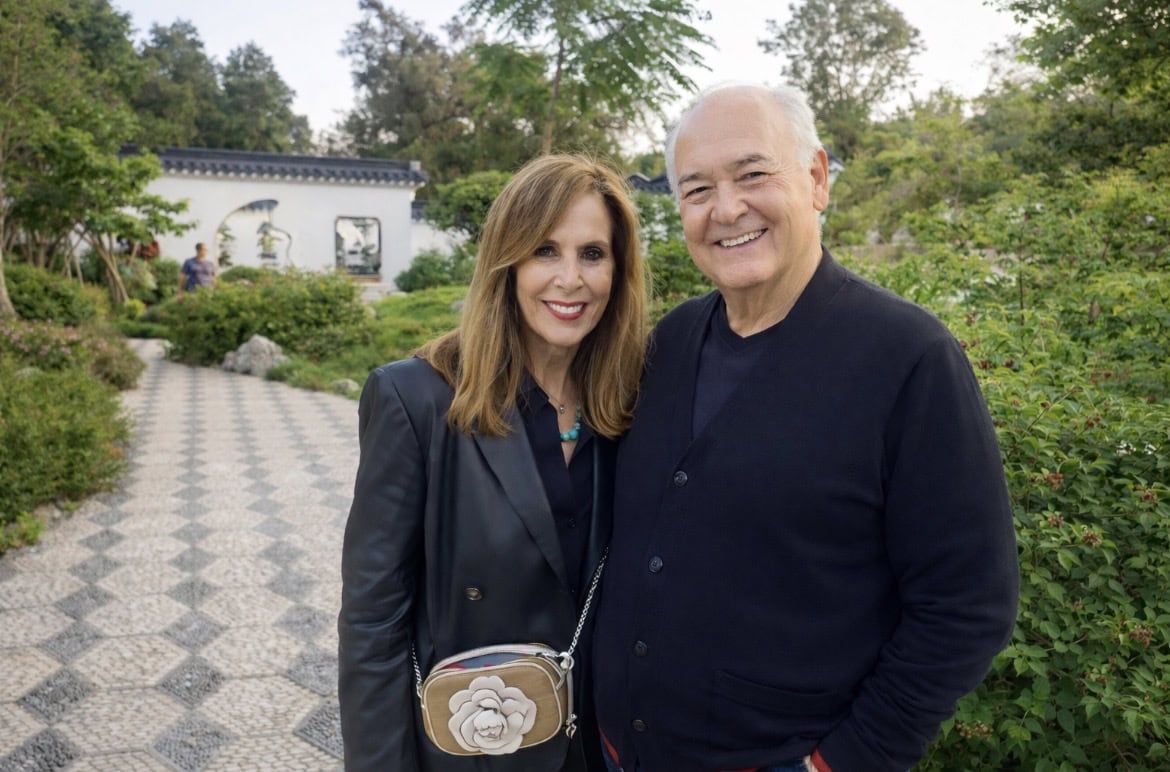
Terri and Jerry Kohl’s latest landmark gift to the Hollywood Bowl is the latest chapter in a quiet but expansive philanthropic portfolio that spans world‑class performing arts institutions to community healthcare, education, and grassroots cultural programs across Southern California and beyond.
Their $15 million commitment to the Terri and Jerry Kohl Artists Pavilion, now formally named by the Los Angeles County Board of Supervisors, underscores a long‑standing philosophy: use private wealth to strengthen public cultural life, especially during periods of economic strain and post‑pandemic recovery.
In Los Angeles County, the Kohls have become synonymous with sustained support for the performing arts and the civic infrastructure that surrounds it. At the Bowl, their lead gift is fueling a $25 million project to create a 7,500‑square‑foot single‑story pavilion designed by the architecture firm RIOS, providing flexible space for artists, patrons, and community events, with a full kitchen and configurable layouts for receptions, recitals, and off‑season gatherings.
Los Angeles County Supervisor Kathryn Barger has framed the project as both an artistic and social investment, emphasizing that the pavilion will help preserve the iconic venue as a “world‑class” destination while remaining a welcoming public space during “financially tough times,” and that the naming honor will carry the couple’s legacy forward for generations.
Under the motion approved by the Board of Supervisors this week, the Terri and Jerry Kohl Artists Pavilion will open in June 2026 as a performance and community hub, available at no cost for local gatherings coordinated through the Los Angeles County Department of Parks and Recreation, ensuring year‑round access that extends far beyond concert nights.
The motion also directs Parks and Recreation to collaborate with the Los Angeles Philharmonic Association on signage and commemorative materials, formally integrating the pavilion’s new designation into the Bowl campus and reinforcing the partnership between county government, a major cultural nonprofit, and private donors.
At a groundbreaking ceremony held in October 2025, Barger joined the Kohls, along with LA Phil and County Parks leadership, to celebrate the project’s dual role as an enhanced backstage and hospitality environment for artists and a new civic living room for Angelenos.
The Hollywood Bowl commitment follows a pattern of high‑impact gifts that have made the Kohls pivotal players in sustaining marquee cultural institutions through volatile economic cycles. In 2021, they provided LA Opera with a $5 million gift—among the largest in the company’s history—along with a challenge grant to bolster the orchestra as the organization emerged from pandemic shutdowns.
LA Opera leadership credited the donation with helping restore pre‑COVID employment and artistic capacity, while the Kohls described their motivation as rooted in a desire to protect the livelihoods of individual musicians whose careers had been “completely upended” by the crisis.
Their philanthropy also extends to institutions that anchor the region’s intellectual and horticultural life. At The Huntington Library, Art Museum, and Botanical Gardens, the couple has been involved for more than two decades, progressing from Society of Fellows members to major benefactors.
They have supported the construction of the Steven S. Koblik Education and Visitor Center, underwritten The Huntington’s Centennial Celebration, and recently committed $2 million to the renovation of the historic Rose Garden Tea Room, a gift that ties the preservation of a beloved social space to the organization’s broader educational mission.
Healthcare and community well-being are recurring themes in the Kohls’ giving. They have backed expansion at Huntington Hospital’s Heart and Vascular Center, strengthening regional capacity for advanced cardiac care and reinforcing the link between cultural philanthropy and local health systems.
Beyond large institutional gifts, the couple has supported programs like Power of Pink, which directs funds to breast cancer initiatives and reflects their interest in targeted health campaigns that intersect with community awareness and advocacy.
Education and next‑generation talent development are another consistent thread in their portfolio.
Through their family foundation and personal giving, the Kohls have supported the Pasadena City College Foundation—including a recent grant to purchase band uniforms—as well as schools and arts organizations in California, New York, and Texas.
Recent filings show grants to institutions such as Walden School and Oak Knoll Montessori School, along with support for contemporary art platforms like Los Angeles Nomadic Division, reflecting a mix of classroom‑based education, youth arts, and experimental cultural programming.
The vehicle behind much of this activity is the Jerry & Terri Kohl Family Foundation, a private grantmaking entity based in Wilmington, Delaware, that focuses on arts and culture, education, health, religion (with an emphasis on Judaism), and human services.
Recent data indicate that the foundation has distributed roughly $1.7 million in a single year, including a large donor‑advised contribution, while maintaining assets that approach or exceed the low‑seven‑figure range depending on the reporting year.
Notably, its key officers—including Terri and Jerry as directors and executive leaders, along with family members—serve without compensation, underscoring a hands‑on, volunteer‑driven approach to governance.
While their name is now etched into the fabric of the Hollywood Bowl, the scope of the Kohls’ philanthropy suggests a broader ambition: to reinforce the cultural and social ecosystem of greater Los Angeles by linking headline‑grabbing projects with quieter, infrastructure‑level commitments.
From underwriting orchestras and education centers to investing in hospital expansions and community festivals, their pattern of giving has helped a range of organizations weather economic and public‑health shocks while planning for long‑term growth.
With the Terri and Jerry Kohl Artists Pavilion now moving from blueprints to construction, that philosophy will soon have a new physical home—a space designed to welcome world-class performers and neighborhood residents alike and to stand as a tangible expression of the couple’s belief that arts spaces should remain accessible public commons.