$124 trillion in the U.S. alone: Katherine Lorenz says billionaires’ heirs want the money given away faster
As the largest wealth transfer in American history gets underway, the granddaughter of the Texas oilman who pioneered fracking says the children of the ultra-wealthy are done waiting.
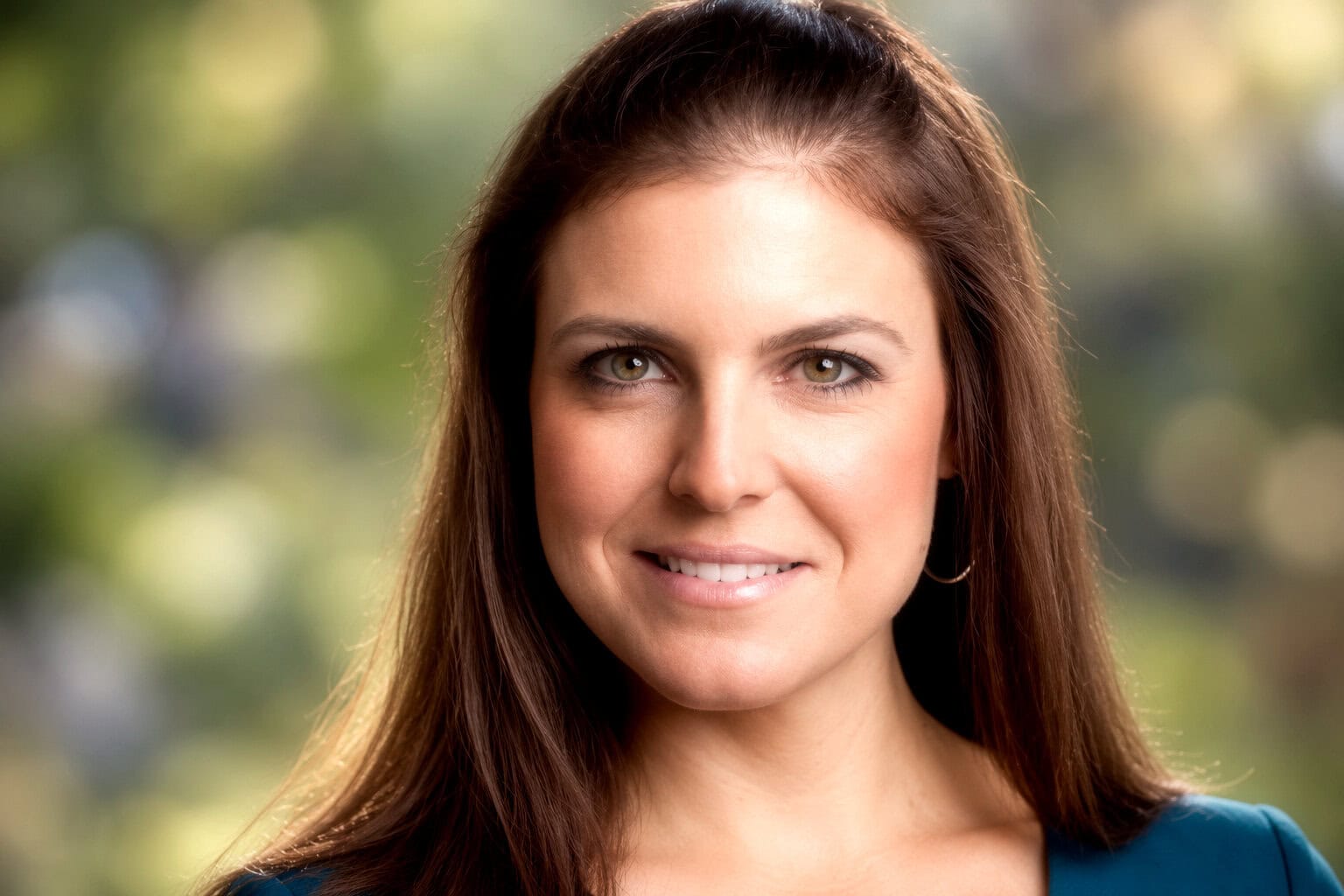
Katherine Lorenz keeps hearing the same conversation inside some of the world’s wealthiest families. A son or daughter, sometimes a grandchild, speaks plainly to the person who built the fortune.
“You made enough money, Mom and Dad,” is how Lorenz sums it up. “It’s time to give it away and to give it away faster.
She hears it because families trust her with it. Lorenz, in her late 40s, is president of the Cynthia and George Mitchell Foundation in Austin and leads the Giving Pledge Next Generation group, a network of the children and grandchildren of people who have promised to give away most of their wealth.
The pledge, started in 2010 by Warren Buffett, Bill Gates, and Melinda French Gates, now counts more than 250 signers. “I see more younger generation folks pushing on their parents to give more,” she said. “Many of them are ready to deploy the capital faster. Sometimes the barrier is the older generation.”
Researchers at the Milken Institute are hearing it too.
Melissa Stevens, who leads the institute’s philanthropy work, and her colleague John Schellhase interviewed 34 young philanthropists and their advisers for a report this spring called “Forward Together.”
They found a generation eager to try new ways of giving and ready to hand real decisions to the communities it wants to help.
Stevens believes the sector is heading toward a reckoning as those voices gain more say over the family checkbook.
“Wealth inequalities have never been greater than they are right now, and we have this sharper eye on the wealthy,” she said. “It has raised the stakes.”
The numbers explain the urgency. Billionaire wealth jumped more than 16 percent in 2025 alone, to a record $18.3 trillion. In the United States alone, an estimated $124 trillion will pass to the next generation by 2048, about $105 trillion to heirs and roughly $18 trillion to charity.
Nearly one in three Americans under 30 now say it is morally wrong to be “extremely rich,” compared with one in ten of those 65 and older.
The heirs also see themselves differently. “They’re not thinking necessarily of themselves as philanthropists,” Stevens said. “They’re thinking of themselves as angel investors, impact investors, change makers, and advocates.”
Many favor impact investing, advocacy, and venture-style giving, often on climate change, racial justice, and gender equity. For Lorenz, the shift is in the question being asked.
Keeping someone off the street tonight still matters, she said, but young donors want to know why so many people are unhoused in the first place. They are tired of putting “Band-Aids on a gaping wound.”
She comes by that impatience honestly. Her grandfather, George P. Mitchell, the Galveston-born son of a Greek immigrant, spent years proving that natural gas could be drawn profitably from shale, a breakthrough that changed the global energy map. He built The Woodlands north of Houston and in 2001 sold Mitchell Energy & Development for $3.1 billion.
What his granddaughter remembers most is a question he asked over and over: “If you can’t make the world work with 4 billion people, how are you going to make it work with 10 billion people? What are you going to do about it?”
Lorenz took it personally. After Davidson College, she spent six years in Oaxaca, Mexico, where she helped found Puente a la Salud Comunitaria, a nonprofit that works with rural Indigenous families to grow and protect their own food.
Those years humbled her. “You think you have the answer, and you come into communities and realize actually they have more answers than you have,” she said. “You learn more from them than they learn from you.”
Back in Texas, she simplified the family foundation’s grant applications and gave local communities more say.
Her grandfather signed the Giving Pledge in 2010, and she took charge a year later.
When he died in 2013, at 94, he left 10 children, 27 grandchildren, and the delicate task of honoring one man’s vision with dozens of voices at the table. The foundation has now given away close to $1 billion, largely for land, water, energy, and education.
“It doesn’t matter how much you professionalize, how many policies you put in place,” Lorenz said.
“In the end, I would just say family dynamics kind of trump all, in both good ways and bad ways.”
That is why she co-founded the Next Gen group in 2014 with 24 members.
Today it has about 300, ages 21 to 75, who meet for training, trade advice in WhatsApp chats, and work through problems as tender as dividing a family’s giving so siblings who disagree can each fund what they care about.
Time adds pressure.
Dozens of pledge signers have died before finishing their giving, and roughly 50 of those still living are over 80.
Some founders have already sped up.
Bill Gates announced in 2025 that he would give away virtually all of his fortune within 20 years, spending $200 billion and closing the Gates Foundation on December 31, 2045.
“I have decided to give my money back to society much faster than I had originally planned,” he wrote. Warren Buffett said last Thanksgiving that he was speeding up gifts of Berkshire Hathaway stock to the foundations run by his children, Susie, Howard, and Peter, so that they would be the ones to give away his estate.
MacKenzie Scott, whom Stevens calls “an exemplar of trust-based philanthropy,” gave away about $7.2 billion in 2025 alone and more than $26 billion since 2020, mostly with no strings attached. She may also be a glimpse of who leads next.
Women in the United States are expected to inherit about $47 trillion by 2048, and Stevens expects many to follow Scott’s example of “learning from, listening to, and creating with those communities.”
The push for speed also answers pointed criticism. As the pledge turned 15 in 2025, critics noted that the 32 original American signers who remain, billionaires, had seen their wealth grow 283 percent since signing, far faster than they were giving it away.
Increasingly, the pressure to close that gap comes from inside the families themselves.
Writing this year in the foreword to Glen Galaich’s book “Control: Why Big Giving Falls Short,” Lorenz described a generation that wants “to fundamentally reimagine the power dynamics of philanthropy.”
In conversation, she puts it more simply. “Giving away money is easy,” she said. “Making an impact is hard.”
Her grandfather spent his life asking what the world would do with 10 billion people.
His granddaughter is helping a new generation answer, and they would like to start now.