
$105.8 million gift from philanthropist Roberta “Bertie” Bialek Elliott to Center for Child and Adolescent Behavioral Health is paying visible dividends—in fuller treatment options for vulnerable teens, in more confident and globally literate graduates, and in institutions better equipped to meet the challenges of the next decade
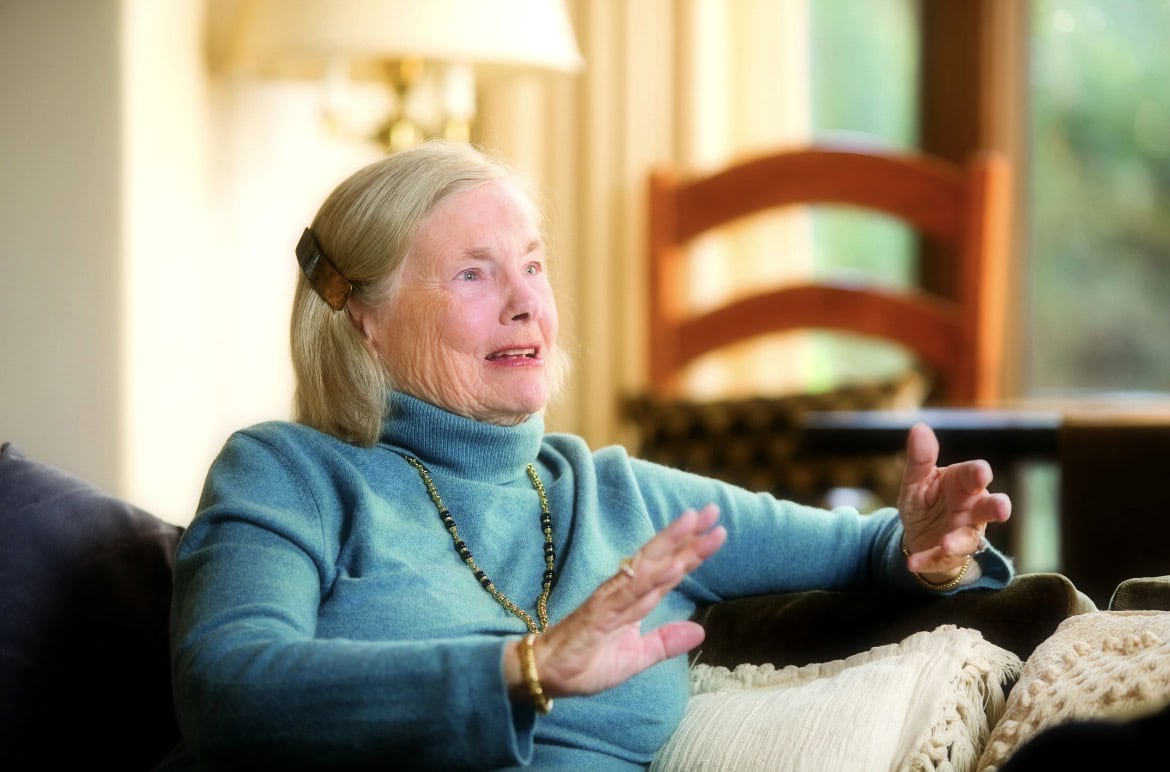
As Monterey’s Ohana Center for Child and Adolescent Behavioral Health passes the 50,000‑visit mark and launches round‑the‑clock residential care for local teens, and as Northwestern University unveils a new $11.8 million expansion of its Roberta Buffett Institute for Global Affairs, the long‑range vision of philanthropist Roberta “Bertie” Bialek Elliott is coming sharply into focus—from youth mental health on California’s Central Coast to global education in Evanston and beyond.
What looked in 2018 like a bold bet on an unbuilt campus and an emerging youth mental health model now reads, in 2026, as one of the most consequential donor‑driven transformations in the field, matched by an equally ambitious effort to prepare the next generation of globally fluent leaders.
In Monterey County, the scale and speed of Ohana’s impact are striking. Since opening its Ryan Ranch campus, Ohana has already provided more than 50,000 patient visits to youth and families, with Montage Health leaders expecting that number to grow substantially as new levels of care come online.
In August 2024, the program opened a voluntary, 16‑bed residential treatment unit for children and adolescents under 18—the first local, 24/7 option for teens experiencing severe mood and anxiety disorders, suicidality, trauma, and complex family stress. Stays typically run from two to six weeks in an unlocked, camp‑like environment that replaces the institutional feel with nature, art, and a sense of safety, supported by a multidisciplinary clinical team delivering intensive group, individual, and family therapy.
The campus design itself, now widely covered and honored in healthcare and architecture circles, is built around the idea that surroundings—light, air, movement, connection to the outdoors—can be powerful co‑therapists for children and adolescents.
The program’s clinical philosophy underscores just how far Elliott’s $105.8 million gift has traveled. Ohana’s leadership describes adolescent mental health as “the public health crisis of our time,” and positions the center as both a local lifeline and a national model that can be replicated in other communities.
Treatment emphasizes building “mental fitness” over the long term, using evidence‑based approaches such as dialectical behavior therapy, family‑focused work, and practical skills for emotional regulation, healthy routines, and safe technology use—tools designed as much for prevention and resilience as for crisis response. Youth themselves have a voice in shaping the program through Ohana’s Youth Advisory Council, where middle and high school students—many of them former patients—advise leadership and help design a center their peers can trust.
Taken together, these elements embody precisely the kind of systems‑level change that a nine‑figure gift can unlock: not just more beds, but a different way of thinking about young people, families and mental health.
None of this would exist without Elliott’s historic $105.8 million commitment to Montage Health—at the time, the largest gift ever received by Community Hospital of the Monterey Peninsula.
Her philanthropy funded the construction of the Ohana campus, the recruitment of a dedicated youth mental health team, and a long‑term endowment to secure the program’s future, ensuring that local children and families will have access to this care for generations.
For a county that once had no inpatient psychiatric beds for children, the change is transformational: families who previously faced long waits, long drives or no realistic options now have a comprehensive continuum of care in their own community. The opening of the residential program in 2024 and the rapid growth in patient volume since have made clear that Elliott’s bet on youth mental health was not only timely but prescient.
What makes this story even more compelling in 2026 is that it is only one chapter of a broader philanthropic narrative. A decade earlier, in 2015, Elliott reshaped her alma mater with a $101 million gift to establish the Roberta Buffett Institute for Global Affairs at Northwestern University, creating a permanent engine for international research and teaching.
That institute has since become a central hub for undergraduates across disciplines to pursue global experiences, with more than 1,000 students participating in its programs during the 2024–25 academic year.
In November 2025, Elliott deepened that commitment with a new $11.8 million gift specifically dedicated to expanding undergraduate global education—funding additional learning opportunities through the institute and strengthening the curriculum of the International Studies Program, which now bears her name as the Roberta Buffett International Studies Program. Northwestern leaders have framed the gift as both a vote of confidence in the institute’s first decade and a catalyst for the next generation of globally engaged graduates, to be trained by faculty and visiting practitioners on issues ranging from disinformation and warfare to climate change and global health.
The symmetry between these two pillars of Elliott’s giving—mental health at Ohana and global education at Northwestern—is striking. In Monterey, her philanthropy underwrites a place where children and adolescents can stabilize, heal and build the skills to thrive.
In Evanston, her gifts create pathways for those same cohorts, a little older, to step into the world as informed, empathetic adults capable of working across borders and disciplines. Both investments are patient, institution‑building commitments rather than one‑off gestures: they fund bricks and mortar, endowed programs, faculty and clinicians, and a host of programs that will evolve over time in response to changing needs. And in both places, Elliott’s involvement has been characterized by quiet persistence rather than public fanfare, with university and health‑system leaders far more vocal about her impact than she is herself.
Elliott’s path to this role blends Midwestern roots, academic excellence and decades of community engagement. An Omaha native and 1954 Northwestern graduate in history, she built a life in Carmel, California, where she moved in the early 1960s and immersed herself in local civic, cultural and educational institutions.
An early Berkshire Hathaway investor alongside her brother, Warren Buffett, she transformed investment success into a philanthropic platform, co-founding the Berkshire Foundation with her daughters in 1996 to support a broad portfolio of organizations. In Monterey County alone, she has served on the board of Community Hospital of the Monterey Peninsula, helped lead campaigns for major facilities such as the Comprehensive Cancer Center, and supported programs ranging from the Family Birth Center to inpatient rehabilitation.
Her name appears on the leadership rosters of regional mainstays such as the Monterey Bay Aquarium, the Carmel Bach Festival, and local community foundations, reflecting a belief in strong, rooted institutions as vehicles for lasting change.
Beyond health and higher education, Elliott has left an imprint on American arts and culture, notably through her support of the Oregon Shakespeare Festival. In 2019 she made a $4.5 million unrestricted gift to the festival—a substantial boost relative to its annual budget—helping the organization invest in core functions like marketing and development at a pivotal time.
Festival leaders hailed the donation as “transformational,” enabling them to navigate leadership transition and external pressures while preserving artistic ambition. As with her other commitments, Elliott’s giving has been notable not only for its size, but for its flexibility and trust in leadership to deploy funds where they are most needed.
Taken together, these threads add up to a portrait of a donor whose influence is only now becoming fully visible in the public eye. At Ohana, children are sleeping in single rooms designed to feel like a camp retreat rather than a psychiatric ward, doing homework between therapy sessions and learning skills that may keep them out of emergency rooms for years to come.
At Northwestern, undergraduates from every school are enrolling in new courses, traveling abroad, working with global practitioners, and, in some cases, stepping into their first jobs overseas through programs that the Roberta Buffett Institute has built. Both are tangible, everyday expressions of a philanthropy that is intentionally long‑horizon, deeply relational, and focused on building the kinds of places and programs that can carry a vision forward long after the initial check is written.
As the youth mental health crisis continues to dominate headlines and universities race to define what “global education” should mean in an era of rapid change, Roberta “Bertie” Bialek Elliott’s work offers a rare through line: invest early, invest big, and stay long enough to see the idea mature.
In Monterey and Evanston alike, that approach is now paying visible dividends—in fuller treatment options for vulnerable teens, in more confident and globally literate graduates, and in institutions better equipped to meet the challenges of the next decade.