
$100 Billion, Zepbound, and N. Clay Robbins: the man behind America’s most powerful Christian philanthropy
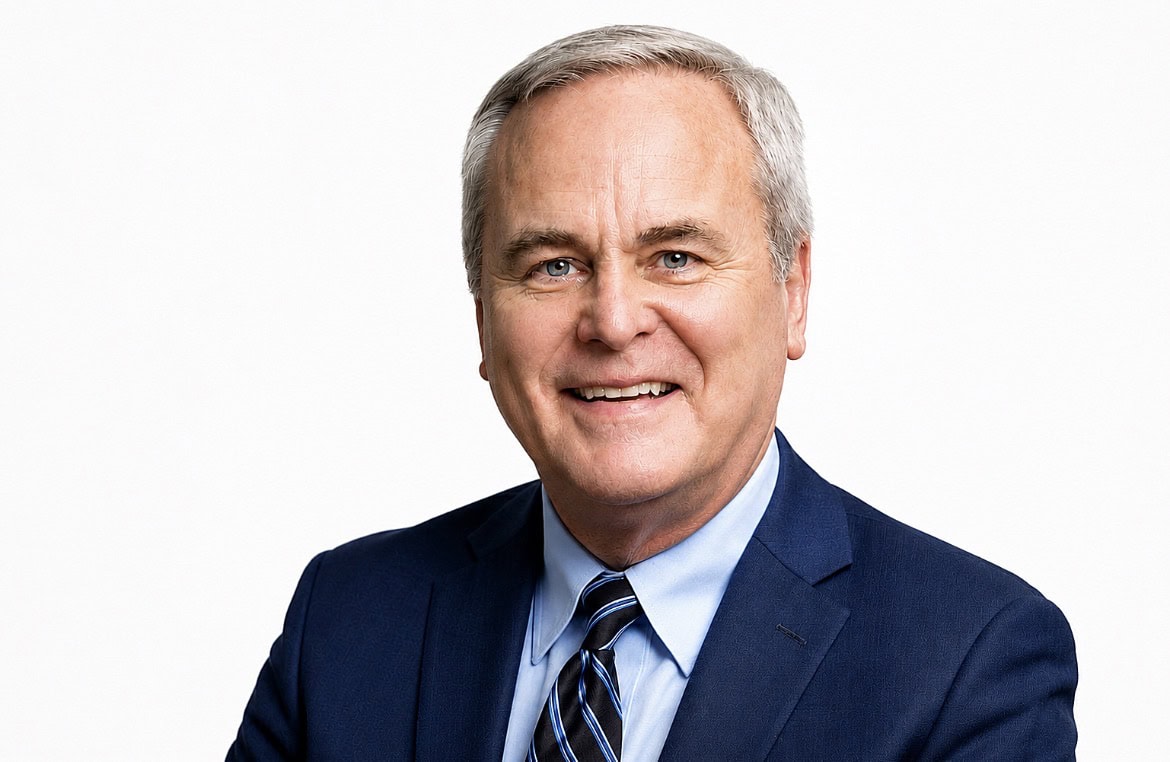
As chairman and chief executive officer of a $100‑billion‑plus foundation, N. Clay Robbins sits at the fulcrum of one of the most powerful philanthropic machines in modern history, translating an extraordinary pharmaceutical windfall into targeted, faith‑centered giving on a scale few institutions have ever attempted.
The blockbuster success of Eli Lilly’s weight‑loss drugs, including Zepbound, has propelled the drugmaker’s stock sharply higher since 2022, pushing Lilly Endowment’s assets beyond the $100 billion mark and cementing its status as the largest private foundation in the United States.
With a roughly 10% stake in Eli Lilly & Co., the endowment is the single biggest beneficiary of the global obesity-drug boom—but it is Robbins who must decide how that windfall moves from balance sheet to beneficiaries.
Under his leadership, annual grantmaking has surged into the multibillion‑dollar range.
In recent years, the Endowment has been distributing billions annually, with required payouts now in the mid‑single‑digit billions to satisfy federal rules tied to its asset size.
Over its nearly nine decades, the foundation has deployed more than $20 billion in cumulative grants worldwide, and that lifetime figure is now climbing by several billion dollars every year on Robbins’s watch.
What distinguishes his stewardship is not just how much the endowment gives, but where he has chosen to concentrate its power. A substantial share of recent disbursements—on the order of a third—has gone to religious causes, with a strong emphasis on Christian organizations across the United States and Canada.
At a time when inflation‑adjusted giving to religious organizations nationally has been essentially flat, Robbins has positioned the Endowment as a countervailing force, creating a sizeable independent wave of support for churches, ministries, seminaries, and faith‑based initiatives.
Under his tenure, the Endowment has committed hundreds of millions of dollars to theological schools, reinforcing clergy education and religious scholarship at a moment when many such institutions face demographic and financial pressures.
It has funded a major national storytelling initiative around Christianity, deploying hundreds of millions more to projects that aim to tell compelling, contemporary stories of Christian faith and life. It has continued backing journalism initiatives that deepen reporting on religion, signaling a view that public understanding of faith is a civic good rather than a niche concern.
At the same time, Robbins has overseen large‑scale investments in the intersection of faith and technology.
A recent grant in the tens of millions to the University of Notre Dame, aimed at building a faith‑based ethical framework for artificial intelligence, exemplifies his willingness to underwrite religious engagement with frontier issues.
Taken together, these moves suggest a strategic arc: he is not simply shoring up institutional religion; he is underwriting its relevance in public life and in debates over ethics, data, and emerging technologies.
Regulatory payout requirements give this strategy a distinctive urgency. At an asset level above $100 billion, the endowment is structurally obliged to move billions of dollars out the door every year. Robbins’s task is to scale grantmaking to meet that mandate without diluting the foundation’s long‑standing focus on religion, education, and community development.
Analysts have noted how rapidly the endowment has expanded its giving while keeping staff size and overhead relatively modest, a sign of operational discipline inside an institution now functioning at sovereign‑wealth scale.
The velocity and size of individual commitments illustrate that new reality. In the current cycle, the Endowment has approved megagrants of $75 million to Feeding America, a $100 million historic gift to the National Park Foundation, and a record $250 million to Indiana’s READI 2.0 quality‑of‑place initiative.
Each of those checks would once have equaled—or exceeded—an entire year of the foundation’s giving. Now they sit alongside billions more in religious, educational, and community grants, many of them focused on Indiana, where roughly half or more of annual disbursements continue to land.
Despite this scale, both the Endowment and Robbins maintain a notably low public profile.
Founded in 1937 with gifts of Eli Lilly stock from members of the Lilly family, the foundation has remained structurally independent from the company even as its fortunes track the drugmaker’s share price. There is no personal pledge marketing, no splashy billionaire branding, and Robbins himself appears far less frequently in the spotlight than peers overseeing far smaller pools of capital.
The emphasis is consistently on program areas and grantee outcomes rather than on his own persona.
Yet the decisions now flowing through his office—how fast to spend, which sectors to prioritize, which religious and civic narratives to amplify—are reshaping the landscape of American philanthropy. Lifetime giving has already crossed into the tens of billions; annual grantmaking is measured in multiple billions, and individual awards routinely reach into nine‑digit territory.
For Christian ministries, theological education, community development in Indiana, and national initiatives such as hunger relief and parks, the impact is immediate and transformative.
In an era when philanthropic power is often associated with individual billionaires and highly visible pledges, N. Clay Robbins occupies a different role: the low‑profile executive at the helm of a high‑obligation, high‑impact philanthropic engine.
As Lilly Endowment continues to deploy billions each year from its historic, Eli Lilly‑fueled surge, his choices are quietly redefining what institutional, faith‑centered philanthropy looks like at the very top of the giving pyramid.