
$1.5 billion in donations to date, mega-philanthropists Steve and Connie Ballmer are just getting started in Southeast Michigan
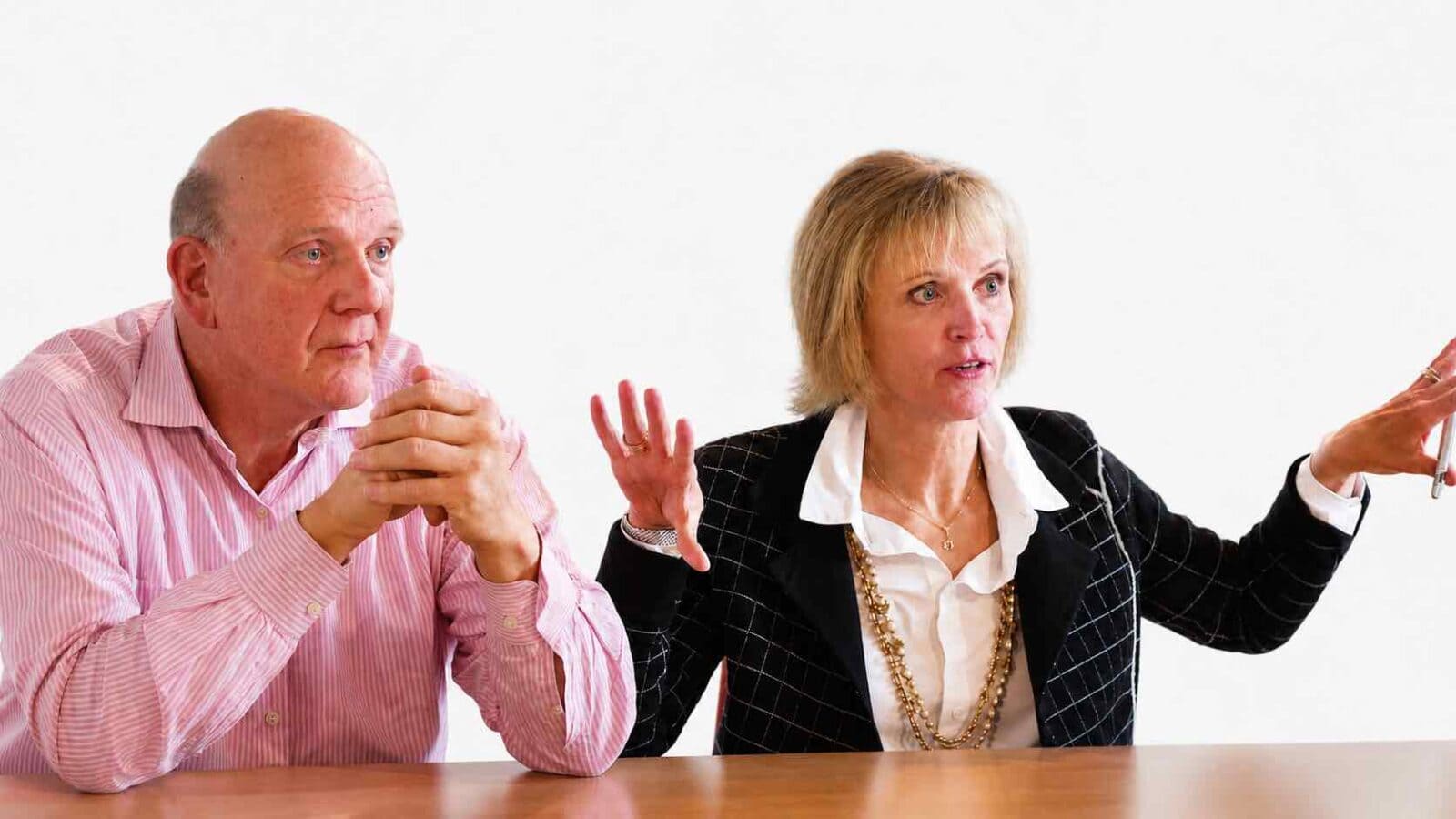
Former Microsoft Corp. CEO Steve Ballmer and his wife Connie have announced the creation of MoveUp Southeast Michigan—a new, independently governed nonprofit that will carry forward the couple’s decade-long philanthropic commitment to children and families in the Wayne, Oakland, and Macomb County region—as part of a sweeping restructuring of their Ballmer Group that simultaneously spins out two additional regional philanthropies in Los Angeles County and Washington State.
The announcement, made July 1, 2026, from the couple’s philanthropic headquarters in Bellevue, Washington, marks the most significant organizational pivot in the history of the Ballmer Group since the couple co-founded it in 2015 following Steve’s retirement as Microsoft’s chief executive, and it arrives at a moment when the couple’s combined charitable portfolio has swelled to well over $7 billion in grants made since they entered organized philanthropy.
The sheer scale of what the Ballmers are now formalizing into permanent, community-embedded institutions is difficult to overstate. Ballmer Group CEO Terri Ludwig, who will serve as a founding board member of all three new organizations while continuing to lead the national Ballmer Group, framed the accomplishment in terms of raw capital deployed: across Southeast Michigan, Los Angeles, and Washington State combined, her teams “have demonstrated exceptional leadership and have distributed more than $1.5 billion in grants over the past decade.”
In Southeast Michigan alone, the group had invested more than $100 million in grants to Michigan-focused organizations by 2022, a figure that has grown substantially since, including a $62 million commitment to the Summer Discovery program through United Way for Southeastern Michigan that served nearly 30,000 students across the tri-county area in 2025.
The total investment picture in Southeast Michigan also includes a $157.5 million initiative — half directed into Detroit — backing the DiscoverWorks summer learning and enrichment program that by summer 2026 was reaching 60,000 young people.
That commitment is rooted in something more personal than strategy. Steve Ballmer was born in Detroit, the son of an accountant, and he grew up in the Detroit suburbs of Oak Park and Farmington Hills, studying college prep at Lawrence Tech and graduating as valedictorian of his Detroit Country Day School class before going on to Harvard and eventually Microsoft.
He has described it as “irresponsible” not to have directed his philanthropy toward economic mobility in the region where he came of age, and that personal imperative has been the engine behind Ballmer Group’s Southeast Michigan presence since the organization opened its regional Detroit office in 2018.
What began with a $16 million splash across 18 Detroit-area nonprofits in 2018 — grants to organizations including City Year Detroit, United Way for Southeastern Michigan, and Detroit Employment Solutions Corp. — has since compounded into one of the most sustained and well-capitalized private philanthropic commitments any American city has received from a single donor family.
The question of how large the financial commitment behind MoveUp Southeast Michigan will ultimately be is the one that the announcement has left partially open — and deliberately so.
The Ballmers have made clear they intend the new organization to be a “permanent, ongoing resource” in the region, and Ballmer Group’s language explicitly contemplates that the new organizations will be funded by the Ballmers on an ongoing basis.
A formal endowment is one structure under active consideration for the long-term financial model, though it has not been established at launch. What the announcement does establish unambiguously is permanence of intent: MoveUp Southeast Michigan will set up its own independent board, continue existing grant relationships without disruption, and evolve to meet local needs over time—a structure designed to outlast any particular philanthropic cycle or organizational priority shift.
That architecture is itself a statement of commitment. Philanthropic endowments are built precisely so that institutions cannot be unwound by a change of heart at the top.
To appreciate what MoveUp Southeast Michigan is inheriting and what it is being entrusted to sustain, consider the breadth of what Ballmer Group has built in the region over eight years of active grantmaking.
The group has funded summer employment for tens of thousands of youth, backed school-based family support initiatives, helped pass statewide financial education requirements for Michigan high school graduates, and partnered with the Detroit Regional Chamber’s Detroit Drives Degrees program to channel more than $30 million toward community college access across seven Southeast Michigan institutions. It has backed housing stability work through Invest Detroit and expanded career pathways through NAF and the Michigan College Access Network.
It has invested $1.5 million in the state-led Mi Money Matters Financial Empowerment Initiative, the largest financial literacy campaign ever undertaken in metro Detroit, targeting Wayne, Oakland, and Macomb counties—home to five of Michigan’s most unbanked cities.
And in November 2025, Ballmer Group committed $72 million to transform behavioral health care in Michigan and two other states, funding an expansion of Certified Community Behavioral Health Clinics through a landmark three-year pilot with the National Council for Mental Wellbeing and the National Association of State Mental Health Program Directors. All of that activity — grants, partnerships, systems-change investments — now transitions into the hands of MoveUp Southeast Michigan.
The person entrusted to lead that transition and build the new organization is Kylee Mitchell Wells, a Detroiter whose own story of upward mobility through financial knowledge mirrors the mission she has spent her career advancing. Wells grew up struggling with basic math until her father put her to work as the family’s “house manager,” teaching her to balance the checkbook, track expenses, and understand credit—lessons she later channeled into a successful campaign to make financial education a graduation requirement for every Michigan high school student.
She has served as executive director of Ballmer Group’s Southeast Michigan office since December 2017, a tenure that has made her one of the most deeply networked and credentialed philanthropic operators in the state. Before Ballmer Group, she served as Senior Director for the Michigan Market at Enterprise Community Partners, as Associate Director in Detroit’s Office of Grants Management, and as a Program Officer for Financial Stability at United Way for Southeastern Michigan—a CV that reads as a systematic preparation for exactly the kind of institution-building she is now being asked to lead.
Crain’s Detroit Business named her one of the 100 Most Influential Women in Michigan; she holds an MPA in public affairs, government relations, and behavioral economics from the City University of New York.
“I am honored to help establish Steve and Connie’s permanent philanthropy in Southeast Michigan,” Wells said in the announcement.
“Over the past decade, Ballmer Group has driven clear progress across my home city and state, with impactful investments that include supporting tens of thousands of youth with summer employment opportunities and expanding access to school-based family supports. I look forward to leaning further into collective partnerships and collaborations that will lead our region toward a more equitable future.” The words “permanent philanthropy” in that statement carry significant weight. Ballmer Group team members currently working in Southeast Michigan will transition to MoveUp Southeast Michigan over the next year, bringing institutional knowledge, existing grant relationships, and deep community ties into the new entity.
The broader restructuring of which MoveUp Southeast Michigan is a part reflects a maturation in the Ballmers’ philanthropic philosophy—and a recognition that after a decade of building regional capacity, the organizations they have helped create and support are ready to operate as genuinely local, permanently rooted institutions rather than as extensions of a national grant-making vehicle based in Bellevue.
As the three regional entities become independent, Ballmer Group will narrow its national focus to “a smaller set of large, scalable initiatives” aimed at improving economic mobility for children and families across the United States.
The nature of those future initiatives has not been specified, but the pattern of Ballmer Group’s recent national grant-making offers some indication of the scale and ambition involved. In November 2025, the group pledged up to $170 million per year over the coming decade — likely more than $1 billion in total — to dramatically increase preschool access for low-income families in Washington State.
That commitment came alongside the $72 million behavioral health investment across three states, the $62 million Summer Discovery grant in Southeast Michigan, and Connie Ballmer’s $80 million donation to NPR in April 2026—the largest gift from a living donor in the network’s history—to fund digital innovation amid federal funding cuts.
These are not the philanthropic gestures of a family decelerating its giving.
They are the moves of a couple who, a decade and more than $7 billion into their lives as organized philanthropists, are reconfiguring the infrastructure through which they give in order to sustain and accelerate impact at greater scale.
The Ballmers’ capacity to make good on those intentions is underwritten by a fortune that continues to grow even as they give it away at a rate few American philanthropists can match. Steve Ballmer’s net worth stands at approximately $132 to $136 billion as of mid-2026, derived overwhelmingly from his roughly 4% stake in Microsoft — the world’s largest software company — and augmented by his ownership of the Los Angeles Clippers NBA franchise, valued at $7.5 billion, a franchise he purchased for $2 billion in 2014.
He is the first business executive in history to reach such a level of wealth without having founded his own company, his fortune built instead on an early and loyal bet on Bill Gates and a three-decade career that took him from Microsoft’s 30th employee to its chief executive.
His annual dividend income from Microsoft shares alone has been estimated at $900 million. Against that backdrop, the philanthropic architecture the Ballmers are now building — three permanent regional philanthropies plus a refocused national vehicle plus the separately incorporated Rainier Climate Group, the $1 billion-plus climate initiative they launched in 2024 under their son Sam’s leadership—amounts to one of the most deliberately structured charitable portfolios in American philanthropy.
The 100 Most Influential People in Philanthropy recognized both Steve and Connie Ballmer in 2025, noting that more than a decade into their philanthropy and more than $7 billion in grants later, the couple had begun widening their focus at the urging of their son Sam, seeding what the magazine described as “a second generation of philanthropy.”
That generational dimension gives the MoveUp announcement a particular resonance. By establishing independent philanthropies with their own boards and CEOs — by deliberately engineering organizational structures that do not depend on the Ballmers’ continued personal involvement — the couple is building institutions designed to outlast them and to carry forward a mission that has already produced measurable results for the children and families of Southeast Michigan over the past decade.
Connie Ballmer, who has been the quieter but arguably more substantive philanthropic force in the partnership—her passion for children and economic mobility programs having guided the Ballmer Group’s focus since the beginning, according to TIME—has increasingly stepped into her own public philanthropic identity, with the NPR gift and the MoveUp announcements standing as the most visible expressions of a giving philosophy that spans from summer learning programs in Detroit to the digital future of American journalism.
“Our intention,” Connie and Steve Ballmer said in a joint statement accompanying the July 1 announcement, “is to ensure that these local philanthropies can be permanent, ongoing resources in each region, while we concentrate our national efforts on advancing economic mobility in new ways.” In those two clauses—permanence in the regions, scale nationally—lies the architecture of what the Ballmers are building.
MoveUp Southeast Michigan will inherit not just a portfolio of grants and a team of deeply experienced practitioners. It will inherit the credibility, the relationships, and the accumulated institutional knowledge of eight years of sustained philanthropic investment in one of America’s most economically challenged metro regions.
What the Ballmers are giving Southeast Michigan’s children is not just money. It is a permanent institution, funded by one of the world’s largest fortunes, committed to ensuring more of those children can climb the economic ladder—the same ladder a boy from Detroit climbed more than half a century ago.