
$27.5 million gift from Foster and Coco Stanback will give school new room to build the future of flight
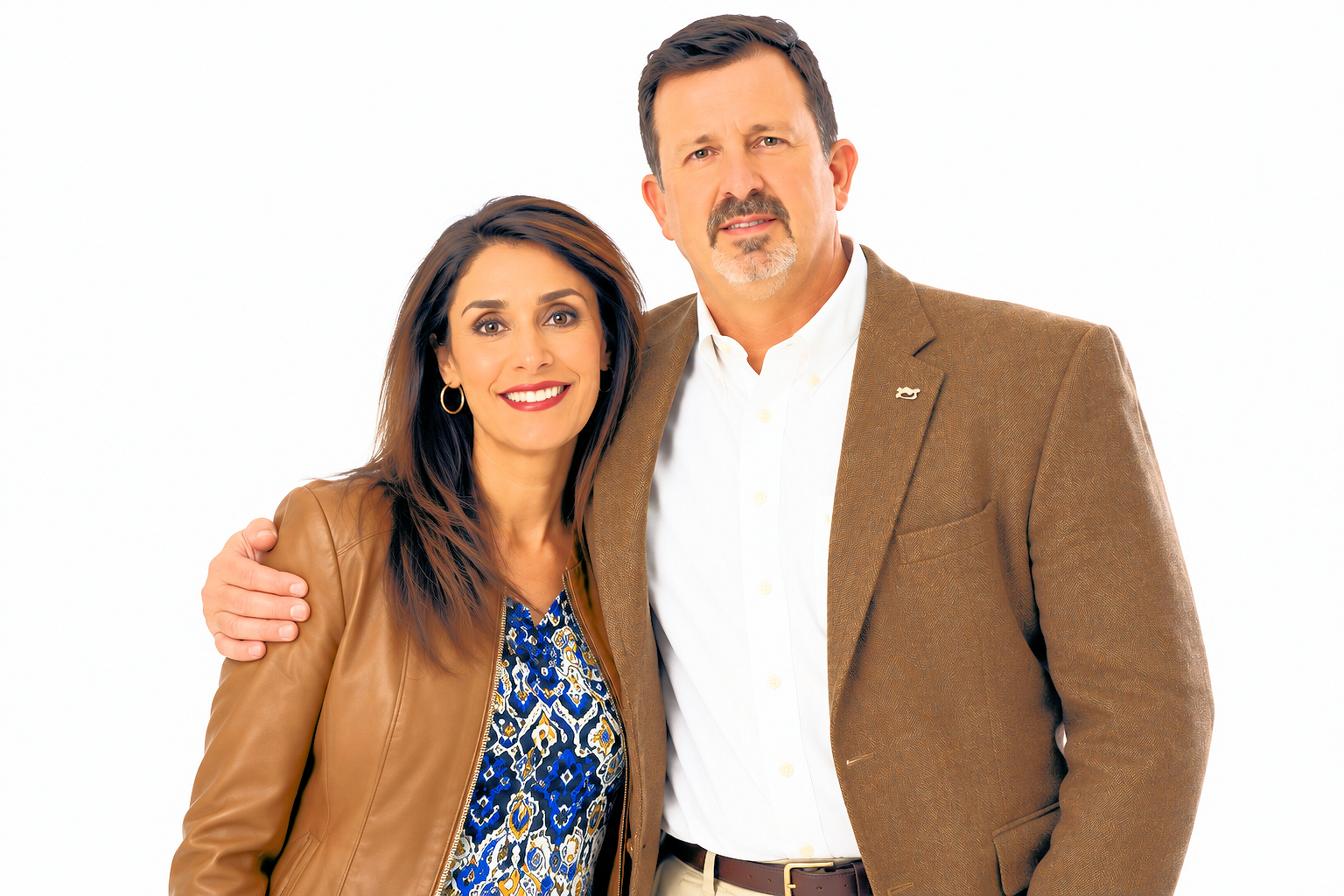
Foster Stanback has never been the kind of donor who is satisfied watching from the gallery. He is a pilot, an aviation professor and a man who once took a struggling high school student up in a small plane just to show him what was possible.
Recently he and his wife, Coco, turned that instinct into one of the most consequential gifts of their long partnership with Caltech: $27.5 million to expand aerospace research, hands-on training and invention at Caltech and NASA’s Jet Propulsion Laboratory, which Caltech manages for the space agency.
The commitment was announced by Caltech President Ray Jayawardhana during the celebration of his inauguration, an evening that also marked the naming of Artemis II commander Reid Wiseman as JPL’s next deputy director.
It came in two parts.
A $20 million gift, made through the Foundation for the Carolinas, will create the New Space Makerspace at JPL and fund education and workforce programs led by Caltech.
A separate $7.5 million gift will renovate and expand Caltech’s hypersonic research facility and add a new shock tube for studying flight at extreme speeds.
“Caltech and JPL have played defining roles in modern aerospace research and innovation since the field’s earliest days, and Foster and Coco’s remarkable generosity will help build upon that pioneering legacy,” Jayawardhana said, calling the gifts “powerful catalysts” for turning bold ideas into breakthrough technologies and training the talent a fast-changing industry needs.
The makerspace is designed to close a gap that frustrates researchers everywhere: the long, expensive distance between a promising invention and a working instrument.
Located near JPL’s Microdevices Laboratory, which has spent nearly 35 years building the sensors and components behind NASA missions, including the lasers in the Curiosity rover’s methane-detecting spectrometer, the new facility will provide chip-to-board assembly tools so teams can quickly turn new concepts into prototypes that can be tested in the field or in flight.
It will also link JPL’s work with Caltech’s Kavli Nanoscience Institute, allowing an idea to travel from a new detector material on campus to flight-ready hardware at the lab.
Harry Atwater, who leads Caltech’s Division of Engineering and Applied Science, described how slow that journey can be today. His group designs chips that steer beams of light for uses such as lidar, but building the circuits to run them often means paying outside suppliers hundreds of thousands of dollars per project, forcing researchers to choose which inventions ever become complete prototypes.
With the makerspace, he said, those systems can be built and tested in-house, and “this is likely to accelerate the engagement of both Caltech and JPL with the commercial space sector.”
Just as important to the Stanbacks are the people who will learn there.
The gift funds a Makerspace Fellows Program that will place student interns, including students from community colleges and technical education programs, alongside postdocs and JPL staff, teaching them how a device made in a research lab becomes part of a working system.
“This is the kind of stuff you previously have had to learn on the job only after you get to the industry,” Atwater said. JPL Chief Technologist Shouleh Nikzad, herself a Caltech alumna, sees the space as a place where early-career researchers can experiment freely without disturbing the exacting work of delivering mission hardware.
“You have to play,” she said, “and you have to push the machines.” John Eiler, who chairs the Division of Geological and Planetary Sciences, put it more simply: “We’re training. We’re inventing. We’re manufacturing. We don’t have to choose between these things.”
The second gift reaches back to Caltech Aeronautics’ roots, a tradition that runs from Southern California’s first wind tunnel to the country’s first continuously operating supersonic tunnel, which reaches Mach 4.
Today Caltech’s hypersonic laboratories study flight at more than five times the speed of sound, where shock waves create the intense heat a spacecraft must survive when it plunges into an atmosphere.
The existing T5 shock tunnel blasts test models with airflow near 1,700 degrees Celsius for about a thousandth of a second.
The Stanbacks’ gift will expand the facility’s footprint, fund a new shock tube capable of even higher temperatures and velocities, and fully renovate the space with better access and safer exits.
Sergio Pellegrino, who leads Caltech’s aerospace department, said the investment will help “attract new faculty and students who will shape the next chapter of aerospace research at Caltech,” and preserve something rare in the field: a lab where every student on campus can run experiments and publish the results.
For Foster Stanback, the stakes are both national and deeply personal. He sees America’s aerospace manufacturing expertise as a source of good middle-class jobs and believes keeping it requires sustained investment in research and engineering education.
“For aerospace engineering, you need a Caltech there,” he said.
“You’ve got to have that cutting-edge research. That’s what makes all this possible.”
With a background in finance and education, he now teaches aviation at Cypress College, where colleagues describe a professor who learns his students’ names and goals and then connects them to internships, scholarships and employers.
This year he was nominated for the 2027 Orange County Teacher of the Year award. He has also served as an aerospace education officer in the Civil Air Patrol.
The story he tells most often explains why the new programs reach so deliberately beyond Caltech’s own students. Years ago, his brother-in-law, a math teacher at Anaheim High School, asked him to take a promising student flying.
The young man dreamed of becoming an aerospace engineer at NASA, but his family had little money.
Stanback took him up in a plane and then helped him enroll in community college courses in metallurgy and electronics.
The student went on to win a scholarship in aerospace engineering, land a JPL internship, and earn a master’s degree.
“He was already ready and willing and eager, but he’s a kid who could have easily just been shut out completely,” Stanback said.
“The metric that’s most important to me is people.”
That conviction runs through more than two decades of the couple’s giving to Caltech.
They first became known on campus as champions of environmental science, contributing $3 million to make the Ronald and Maxine Linde Laboratory for Global Environmental Science one of the most energy-efficient laboratories of its kind, including the clever repurposing of the building’s historic solar telescope to channel daylight deep inside.
They endowed a discovery fund and the Foster and Coco Stanback Postdoctoral Fellowship, which still supports early-career scientists working on climate, oceans, glaciers and atmospheric chemistry, along with graduate fellowships in the field.
They gave $6.7 million, matched by the Gordon and Betty Moore Foundation, to endow the Terrestrial Hazard Observation and Reporting Center, which studies ways to reduce the damage from earthquakes, floods, wildfires, and other natural hazards.
After joining Caltech’s Space Innovation Council, a group chaired by filmmaker James Cameron and then-JPL director Charles Elachi, the Stanbacks turned increasingly to the sky.
Their $7.8 million package to the Division of Engineering and Applied Science created a $3 million Space Innovation Fund to seed bold ideas in perpetuity, $3 million for graduate fellowships in aerospace, and $1.8 million for an outreach program pairing Caltech graduate students with community college students from disadvantaged backgrounds.
Foster compared the investment to Portugal’s backing of the great sailing voyages: “When Vasco de Gama rounded the coast of Africa with that first load of pepper from India, the world changed.”
By the time the couple had given Caltech more than $24 million in support over a single decade.
Later, he endowed Caltech’s Center for Autonomous Systems and Technologies, the robotics and drone hub known as CAST, and created a matching challenge that helped establish a leadership cr it.
Foster gave $7.4 million to build the Frank J. Malina Laboratory for High-Speed Flight Dynamics, a two-story home for the student rocketry team PA, replacing the small garage behind the Guggenheim Aeronautical Laboratory where the team has worked, and the couple has also supported the group’s operations well.
The building is scheduled to open next year.
Counting only the amounts made public, the Stanbacks’ support for Caltech and JPL now approaches $60 million, before the CAST endowment, whose size has not been disclosed.
Their generosity extends well beyond Pasadena.
This summer Foster gave $900,000 to the Orange Coast College Foundation to launch an air traffic control program, funding simulators, classrooms, and curriculum for one of the country’s most in-demand aviation careers, building on earlier support for the college’s aviation and student rocketry programs.
A collector of antiquities, he gave his collection of ancient Near Eastern and Roman artifacts to York College in Nebraska, where it became the Clayton Museum of Ancient History, featuring the Stanback Collection, a free museum that welcomes school groups and families.
He chairs the Apologetics Research Society, which helped bring that museum to life. Aviation history has benefited too: Foster stepped in to save a rare Gloster Meteor T.7 jet, which found a new home at the Planes of Fame Air Museum, and the couple has appeared among the donors to the Smithsonian’s National Air and Space Museum.
Even laboratories outside Caltech carry his imprint, including a high-speed camera he funded for UCLA’s propulsion research.
It all comes down to a belief that talent is everywhere and opportunity is not.
The new makerspace and hypersonic lab will produce instruments, discoveries and, in time, perhaps the technologies that carry people farther into space.
But if the Stanbacks have their way, the truest measure of this gift will be the student who walks into a lab at JPL never imagining she belonged there and walks out ready to build.