
$25 million gift from Nancy Grand funds Technion research on aging well-raising the family’s philanthropy to more than $130 million
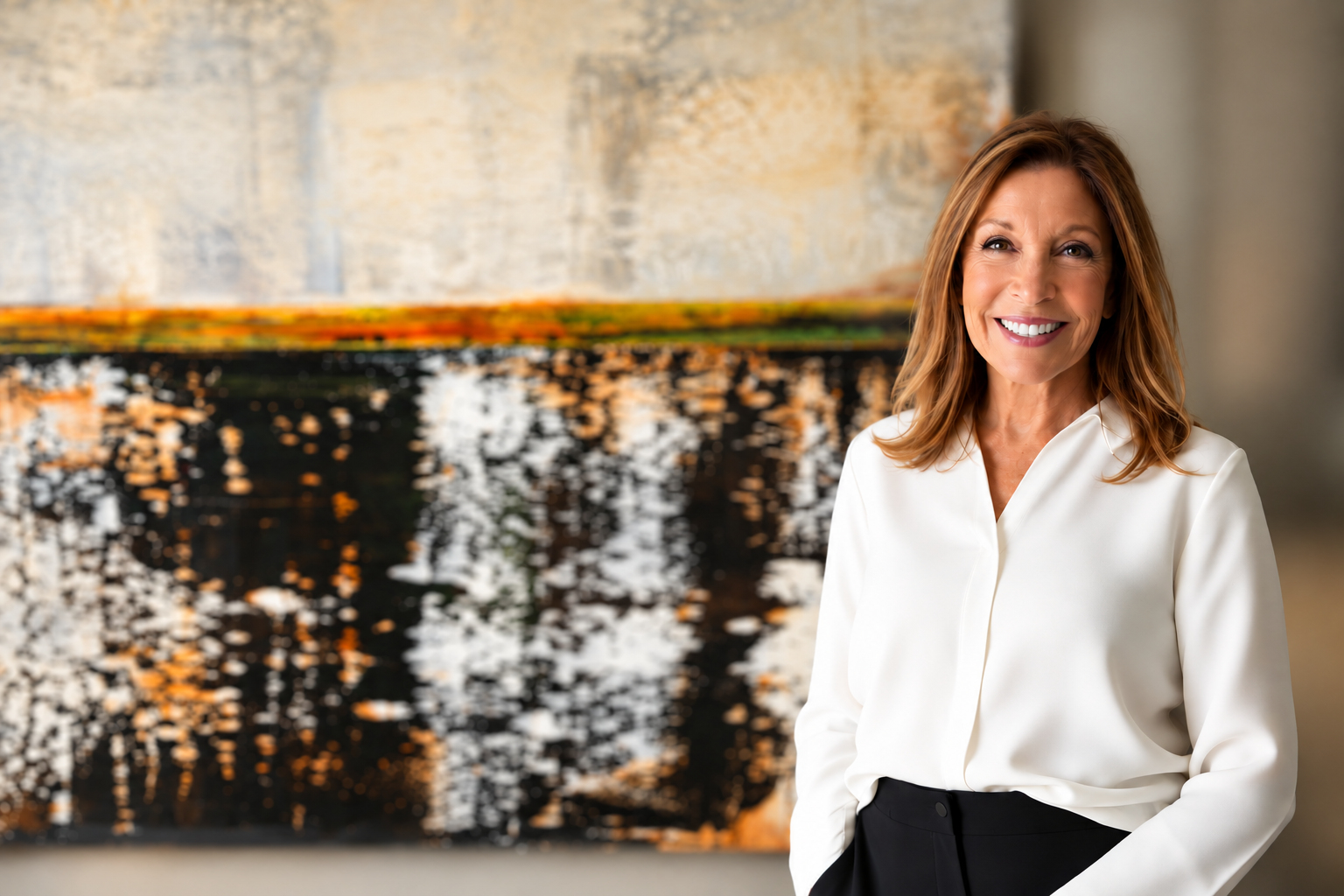
When Nancy Grand thinks about aging, she isn’t asking how long people can live.
She’s asking how well they can live. “You can live to 95, but if your brain falls apart in your 70s, then what’s the difference?” she asks.
That question drives her new $25 million commitment to the Technion–Israel Institute of Technology, funded by the Grand family’s philanthropy.
The money supports the Nancy and Stephen Grand Healthy Aging Institute, which is working to understand why some people stay sharp, mobile and engaged into late life while others decline.
For Grand, now 77, the subject is personal.
“This healthy aging thing, I take it personally,” she says with a laugh.
She was drawn to an institute “concentrating on getting the most out of the years you have left, planning and doing purposeful things.”
Her verdict was quick: “It’s cutting-edge, and it will help humanity. I loved the whole thing.”
The institute opened in 2024 and is led by Prof. Shai Shen-Orr of the Technion’s Ruth and Bruce Rappaport Faculty of Medicine.
It brings together more than 60 faculty members across seven research areas. Those areas range from what happens inside aging cells to personalized medicine, food and drug interventions, assistive technology for independent living, and the role that communities and neighborhoods play in later life.
The central idea is that aging is about more than a number of years.
A person’s DNA, body, diet, stress, relationships, and surroundings shape it, all working together.
At the heart of the gift is the Lifespan Cohort, a study that will follow 1,000 adults over several years.
Researchers will track stress, gait and movement, cognitive performance, nutrition, and social habits, along with new measures developed by Technion faculty.
The aim is to see how these signals interact over time.
The institute is also building a Human Health Monitoring Center and a Systems Medicine Center to support studies with people, clinical trials and complex data.
The institute plans a new graduate program in aging research to train the next generation of scientists.
Technion President Uri Sivan called the work increasingly important as populations age, because it can help people “not only live longer but also maintain a good quality of life in older age.”
Grand’s way of giving sets this gift apart.
She didn’t arrive with a project in mind.
She asked Technion leaders to bring her three opportunities, and one of them led her to Shen-Orr.
“He’s the real deal,” she says.
“He is aiming for the stars.”
Her philosophy is generous and humble at once: “If you want to honor the institution, you find what they need.”
She is also a hands-on donor.
She reads the research reports herself and follows the science closely, and she says that healthy aging, unlike aerospace architecture, is a subject she finds fascinating.
The gift opens a new chapter in a partnership with Israeli science that she and her late husband, Stephen, built over nearly four decades.
Grand still describes him as her guide in every decision.
Now she is the one shaping the family’s giving, in her own voice.
This is the first major commitment she has directed to the Technion on her own, and she chose a field that speaks directly to her stage of life.
Her record of giving is long and wide.
With Stephen, she provided major support for the Stephen and Nancy Grand Water Research Institute, now Israel’s national center for water science and a leader in desalination research.
Together they gave $20 million to create the Nancy and Stephen Grand Technion Energy Program, a campus-wide search for alternative energy.
That gift completed the American Technion Society’s $1 billion campaign. Their Technion giving also funded the Grand-Holdstein Drone Competition, laboratories connected to Nobel laureate Aaron Ciechanover’s protein research, and the Nancy and Stephen Grand Aerospace Building, the new seven-story home of the Technion’s aerospace engineering faculty.
They joined the Technion Guardians, the society’s highest level of recognition.
At the Weizmann Institute of Science, the couple committed $50 million to name the Nancy and Stephen Grand Israel National Center for Personalized Medicine.
It was the largest gift in the history of the American Committee for the Weizmann Institute. Earlier, they had created the Nancy and Stephen Grand Center for Sensors and Security there.
“We don’t call it a gift,” Grand said when the center was dedicated.
“We call it an investment.” In the United States, they launched the Stephen and Nancy Grand Multiple Myeloma Translational Initiative at UCSF and the Multiple Myeloma Research Foundation with $2 million.
They later gave nearly $2 million to the Lustgarten Foundation for pancreatic cancer research.
Much of Grand’s philanthropy grew out of things she saw herself.
While sitting with her husband during treatment at UCSF, she noticed other families sleeping on the waiting-room floor.
She resolved to do something about it. That resolve became the Nancy and Stephen Grand Family House, a five-story home near UCSF Benioff Children’s Hospital that offers free lodging and meals to families of children receiving care there.
Her care for older adults also runs deep. The couple supported senior services at Jewish Family and Children’s Services for years, and that work now continues through an endowment in their names.
She has also been a community leader, serving as president of San Francisco’s Jewish Community Federation and Endowment Fund.
Her giving keeps growing.
This month, the Stephen and Nancy Grand Charitable Trust also funded a new collaboration between UCSF and Tel Aviv University to use AI and computational biology in drug discovery.
Grand described it as a bridge between “the city that we have called home for many years” and Israel.
Counting only gifts with publicly reported amounts, the Grand family’s commitments now total well over $130 million, and many more gifts were never priced.
Across water, energy, aerospace, cancer, family care, and now healthy aging, Nancy Grand’s approach stays the same.
She finds brilliant people, trusts them, and lets them tell her what they need.
With this gift, she is helping science study the very years she is living now.
Her message is that those years can be vital, purposeful, and full.