
$35 million brain tumor center opens a new front at Penn Medicine, led by a gift from John and Rosanna Troiano
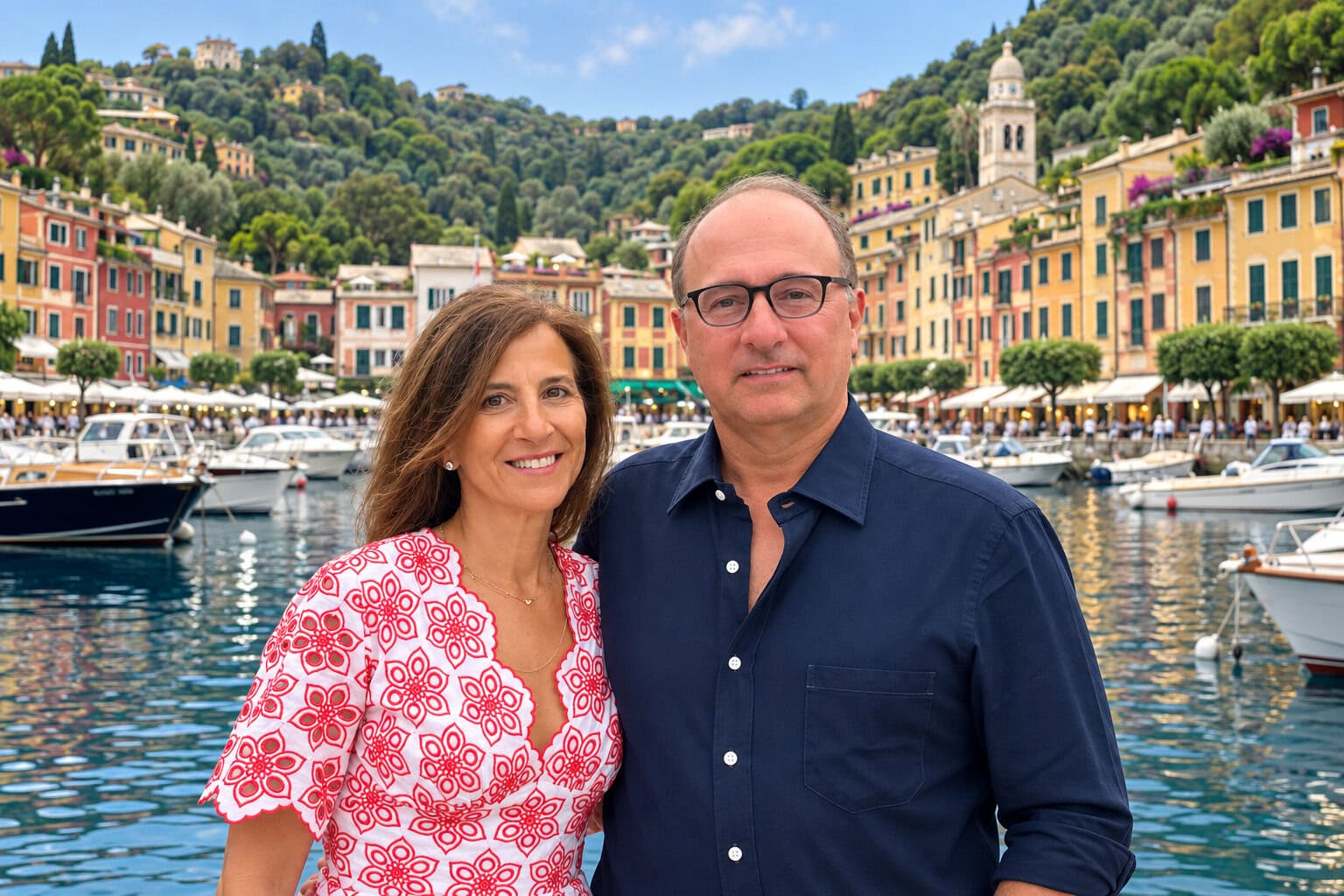
Some gifts come from a balance sheet. This one comes from a family history.
John Gabriele Troiano lost both of his parents to brain tumors.
He and his wife, Rosanna, have spent years making sure that loss would mean something for other families, first by quietly supporting immunotherapy research at Penn Medicine and now with a foundational gift that puts their name on an entire institution.
The Troiano Brain Tumor Center, announced this week, is the lead piece of a $35 million initiative that combines the couple’s gift with institutional investment and additional philanthropy. Penn has not disclosed the size of the Troianos’ contribution, but its role is clear: it is the gift that made the center possible.
“For our family, having lost both my parents to brain tumors, this is personal,” John Troiano said. “No one should lose a loved one to this disease, and we know the devastation of that kind of loss all too well. Rosanna and I have made it our mission to ensure that others don’t experience the same.”
His parents are now part of Penn’s permanent architecture.
The gift endows two professorships in their names, the Maria R. Troiano Professorship in Neurosurgery Research and the Gabriele J. Troiano Professorship in Neurosurgery, positions designed to attract and keep the kind of scientists who move a field forward.
One of them is already filled.
Dolores Hambardzumyan, the center’s scientific director and a leading authority on how brain tumors reshape the immune environment around them, holds the title of Maria R. Troiano Professor.
In other words, a mother’s name now sits beside some of the country’s most important brain cancer research.
The need is stark. Glioblastoma, the most aggressive form of brain cancer, typically takes patients’ lives within 14 to 18 months of diagnosis.
Brain tumors are notoriously varied in their biology and remarkably good at hiding from the immune system, which is why immunotherapies that have transformed the treatment of blood cancers have struggled against them.
Penn, the birthplace of CAR T cell therapy and the Nobel Prize-winning mRNA research behind a generation of new medicines, has worked for years to close that gap. The Troianos have been part of that effort from early on.
Their earlier support went to the laboratory of neurosurgeon Donald M. O’Rourke, whose team developed an experimental CAR T therapy for glioblastoma that engineers a patient’s own immune cells to attack two targets on tumor cells at once.
In an early-phase trial of 18 patients with recurrent glioblastoma, tumors shrank in 62 percent of those who had measurable disease remaining after surgery. One patient’s cancer held stable for more than 16 months, despite having been aggressive and widespread at enrollment.
The results were preliminary, and the road ahead remains long, but for a disease where past immunotherapies barely moved tumors, they were a genuine signal. “Seeing recurrent GBM tumors shrink like this is extraordinary,” said Stephen J. Bagley, the oncologist who led the trial.
The work is now moving toward newly diagnosed patients, when tumors may be more vulnerable.
Bagley will serve as the new center’s clinical director.
The center is meant to turn signals like that into a system.
When it formally launches in November, it will bring together nearly 100 physicians, scientists, and staff across neurosurgery, neurology, hematology-oncology, neuroradiology, neuropathology, and cancer biology, integrated with Penn’s Abramson Cancer Center.
Its executive director, neurosurgeon Nduka M. Amankulor, a White House Cancer Moonshot Scholar, has built his career around one question: how brain tumors trick the immune system into treating them as healthy tissue, and how to make them visible again.
His approaches range from RNA-based therapies that would strip away the immune-suppressing cells tumors recruit as a shield to a retinoic acid treatment for IDH-mutant gliomas, now in a clinical trial, that sounds like an immune “alarm signal” inside the tumor.
Amankulor understands the Troianos’ motivation from the inside. He lost his own father to brain cancer when he was 16.
“This is one of humanity’s greatest unsolved problems,” he said. “There can be no quit in this game.”
He believes the field will need not one breakthrough but many, perhaps 10 to 20 distinct approaches, to treat brain cancer in all its forms, and he sees the new funding as a way to draw talent from outside the specialty into the fight.
The goal, as he puts it, is a toolkit deep enough to build the exact solution for a specific patient.
The Troianos’ gift reaches beyond the laboratory.
It will support multidisciplinary clinics, a survivorship clinic for patients living beyond their diagnosis, integrated clinical care, first-in-human clinical trials, and the training of the next generation of brain tumor specialists.
It is, in effect, a commitment to both halves of the problem: discovering better treatments and making sure patients receive coordinated, humane care while those treatments are being found.
“Through their compassionate philanthropy, John Troiano and his wife, Rosanna, have embraced this mission,” said University of Pennsylvania President J. Larry Jameson.
Jonathan A. Epstein, dean of the Perelman School of Medicine, said the couple’s support “empowers our experts to build on innovations like CAR T therapy and the Nobel Prize-winning mRNA platform—discoveries made here at Penn—to explore therapies that will truly help people.”
Daniel Yoshor, chair of neurosurgery, called the gift timely, arriving “at a pivotal moment at which our team is making groundbreaking discoveries in this field.”
For John Troiano, Penn is familiar ground.
He graduated summa cum laude from the Wharton School in 1992, with concentrations in finance and accounting, before earning an MBA at Harvard Business School.
He helped build Onex’s New York office, one of the oldest private equity firms in North America, and in 2004 co-founded The Beekman Group, a New York firm that partners with management teams to grow lower middle-market companies.
He leads it today as managing partner and CEO. “As a proud Penn alum,” he said, “I believe there is no better place than Penn to deliver on that mission.”
But the through line of the Troianos’ giving begins on Staten Island, where John grew up.
He graduated from St. Joseph Hill Academy’s elementary school, run by the Daughters of Divine Charity, and credits the discipline and faith he learned there as essential to his success.
From there he went to Regis High School in Manhattan, the Jesuit school that has offered every one of its students a full scholarship since 1914. The couple has given back to Regis at the highest levels of its current campaign, and John has served on its board.
Together, John and Rosanna have also endowed a perpetual scholarship for underserved middle school children on Staten Island, a gift aimed at exactly the age when a door like Regis can open or close.
He also serves on the Board of Trustees of The Episcopal School in the City of New York.
The pattern is consistent: the Troianos invest in the places that shaped them and in the people who might follow.
The brain tumor center is the most personal expression of that instinct, and the couple has made clear they do not see it as finished.
“We invite others to join us on our philanthropic mission to further accelerate the work of this important Center,” John Troiano said.
It is an open door, from two donors who have turned private grief into a public project and who are asking the rest of the philanthropic world to help them see it through.