
$263 million in giving: Niu Gensheng, sold as an infant for less than $8, gives away a dairy fortune
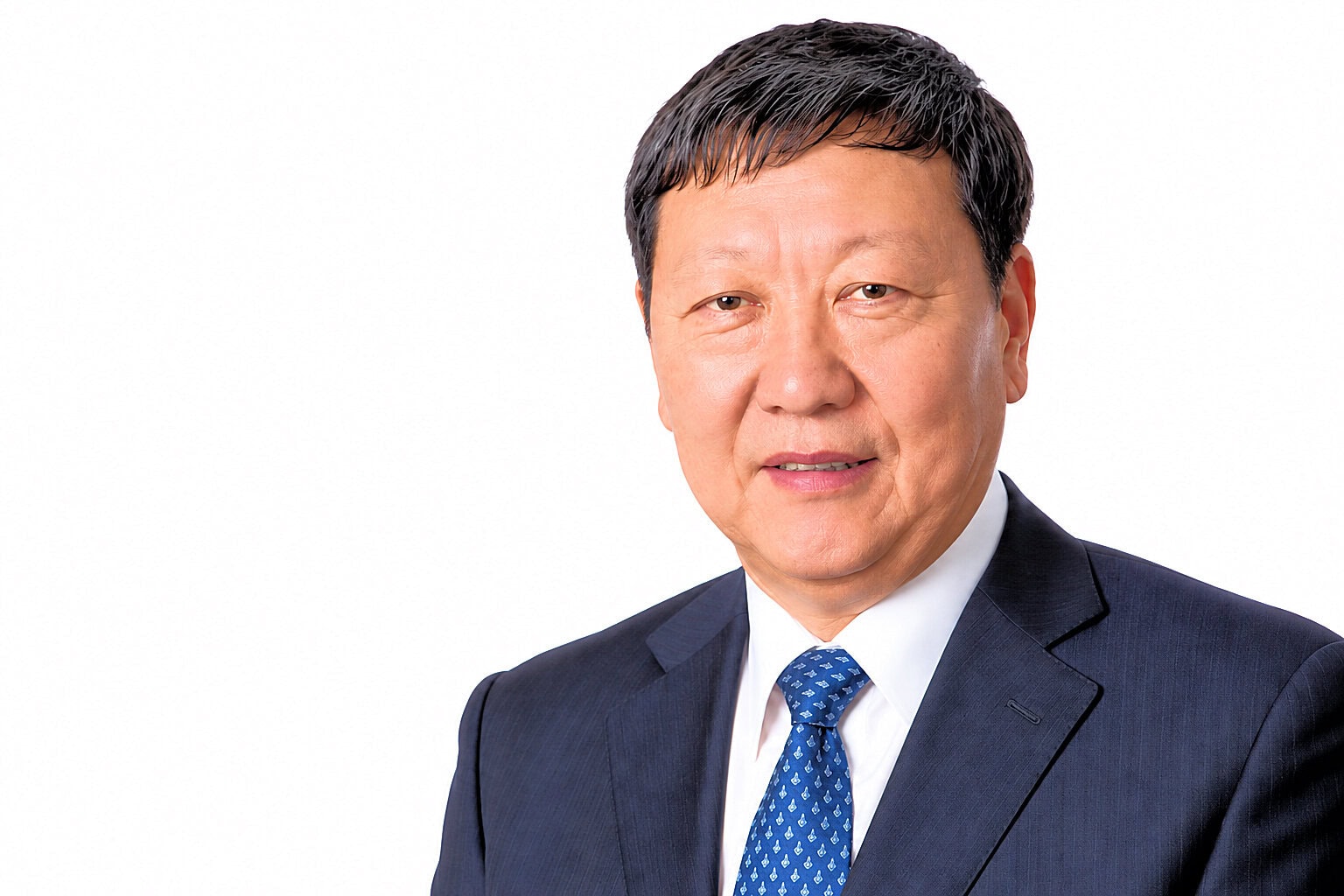
Niu Gensheng remembers that “everybody, including my family, thought I was crazy” when he gave away his company, until Bill Gates told him, “You were ahead of me.”
Gates had good reason to say it.
Years before most American billionaires had heard of the Giving Pledge, the founder of China’s Mengniu dairy empire had already handed his family’s entire stake to charity.
In 2016, he became the first person from mainland China to sign the pledge.
A year earlier, he had joined Gates and Ray Dalio, along with Chinese billionaires He Qiaonyu and Ye Qingjun, to found the China Global Philanthropy Institute, a school for new philanthropists.
Each of the five agreed to put in $2 million a year for five years.
The next spring, Niu led a group of Chinese donors through Boston, New York, and Seattle, stopping at Harvard, the Gates Foundation, Microsoft, and Starbucks to see how Americans give.
He is proudest of the project he started in America.
In 2011, Niu was in Hawaii to look at environmental projects and stopped at a children’s museum there.
There were no glass cases and no lectures.
Children ran the room.
He decided on the spot that China needed museums like it.
That idea reached Shanghai.
Recently, at the Shanghai Science and Technology Museum, Lao Niu Foundation chairman Lei Yongsheng and museum deputy director Xin Ge unveiled the donation plaque for “One Meter World,” an exhibit built to a child’s height, as the 2026 Children’s Museum Education Symposium opened.
It is meant for children ages three to eight, who learn by experimenting with their hands and coming back to try again. It is also something new for the foundation: its first “museum within a museum,” which means rebuilding a children’s gallery inside an existing institution instead of constructing a new building. Neither side disclosed what the gift cost. Inside, children push, stack and test things, and parents mostly sit and watch.
The Shanghai gallery follows a decade of building.
The first of these museums opened in Beijing in 2015, with about $6.3 million from the foundation.
A gift of about $19.5 million followed for a huge complex in Hohhot, his hometown.
To find out whether the idea worked, he turned to New York. From 2016 to 2019, Columbia University’s Teachers College evaluated the Beijing museum’s educational effect with the foundation’s funding.
He has always been clear about how long this takes.
Measuring the results of early-childhood work can take 50 years, he once noted, and joked, “I’m already 60. Can I live another 50 years?”
Niu understands what childhood can cost.
He was born into poverty in Inner Mongolia, and his parents sold him to a cattle farmer for 50 yuan, less than $8 today, shortly after his birth.
When he was eight, his adoptive father lost everything, and the boy swept streets beside him.
Both adoptive parents later died.
Even then he gave things away.
As a boy he shared his pocket money with friends until they began to follow his lead, and he later called that the source of his favorite saying: “When wealth is hoarded, people scatter. When wealth is shared, people gather.”
He started as a bottle washer at the dairy that became Yili and rose to vice president.
His wife, Shen Shuxiang, remembers that in his best year he earned the equivalent of about $113,000 and brought home about $15,000, having handed most of the rest to his staff.
That habit explains why so many of his colleagues followed him when he left to found Mengniu in 1999.
Within a few years, Mengniu had passed its rivals to become China’s top dairy brand.
Then Niu went home and told his family he wanted to give all of it away.
Shen had expected him to keep some shares for the children’s schooling.
When he announced he would donate everything, she said, “This man is truly out of his mind. We married in 1981 and worked our way up from poverty. We’d only just gotten money; it wasn’t even in our hands yet, and he wanted to give it all away. Everyone said he’d gone crazy.”
Their son, Niu Ben, still a university student, shrugged: “It’s your money anyway.
It has nothing to do with me.”
Niu gave two reasons for the gift: it would be good for the children, and it would keep the family safe.
Shen agreed in the end, and she, their son and their daughter each signed a written consent.
Niu said he wanted every co-owner on record so that no one could ever ask for the money back.
Above the family’s front door hangs a couplet he copied from the former home of the Qing-dynasty merchant Hu Xueyan.
It says, roughly, that a family lasts by keeping a generous heart, and a person lives well by being sincere.
In late 2004, the family put all of its Mengniu shares and most of their dividends into the Lao Niu Foundation. It was the first family foundation in China funded by a private individual, and the assets the family has donated are now valued at more than $600 million.
Through its first 20 years, the foundation spent about $258 million on 325 projects and drew another $282 million from partners.
It spent about $5.3 million more on charitable programs in 2025 and ended the year with about $79 million in net assets.
That brings its lifetime giving to about $263 million.
By the end of 2024, the foundation’s work had reached 9.22 million people directly. It also spent about $11 million planting more than 5,000 acres of forest around the venues of the 2022 Beijing Winter Olympics.
His American ties have only grown.
The Nature Conservancy gave him its Oak Leaf Award, and the Committee of 100 named him for philanthropic excellence.
The Nature Conservancy is also his partner in replanting the drylands of Inner Mongolia.
In 2023, he and Carnegie Corporation of New York president Louise Richardson were paired to discuss philanthropy at the National Committee on U.S.-China Relations’ People’s Dialogue.
Even his children’s plans for the family’s future come from an American example.
They modeled their own Laoniu Brother and Sister Foundation on the Rockefeller Brothers Fund.
The family that once doubted him now runs the work.
His wife focuses on care for the elderly, his son on the environment, his daughter-in-law on culture and education, and his daughter on children.
The foundation’s leaders are candid about the hard part of giving everything at once.
With no family company behind it, the foundation has to earn its own way, and it still holds to Niu’s founding wish: “a hundred-year Mengniu, a thousand-year foundation.”
Niu, meanwhile, has started over.
He built Aice into a leading ice cream brand in Southeast Asia, aimed at “allowing the poor to live with dignity”.
His advice to younger donors is simple: “Do what you promise to do.”
In Shanghai this week, the promise that began in Hawaii was easy to see at one meter high.