
$15 million from Ellen Stirn Mavec carries a family’s century at university into its newest expansion—under her leadership, the foundation has directed more than $117 million to local arts organizations alone
When Case Western Reserve University opens its Interdisciplinary Science and Engineering Building on the Case Quad this fall, a terrace will run across its entrance.
It will overlook the Michelson-Morley Fountain and connect the new building to the historic Wickenden Building next door.
It will carry the names of Kelvin and Eleanor Smith, a Cleveland couple whose family has been part of the university for more than a century.
The Kelvin & Eleanor Smith Foundation has committed $15 million to the building.
That makes it one of the most important gifts to the largest project in Case Quad’s history.
Because of the university’s century bond program, which matches gifts to the building, the commitment becomes $30 million in total support.
Part of it creates the Kelvin & Eleanor Smith Foundation Terrace, an outdoor space of about 2,000 square feet.
The terrace links to the building’s forum, a central indoor area for study and collaboration, and will host students, faculty, visitors and campus events.
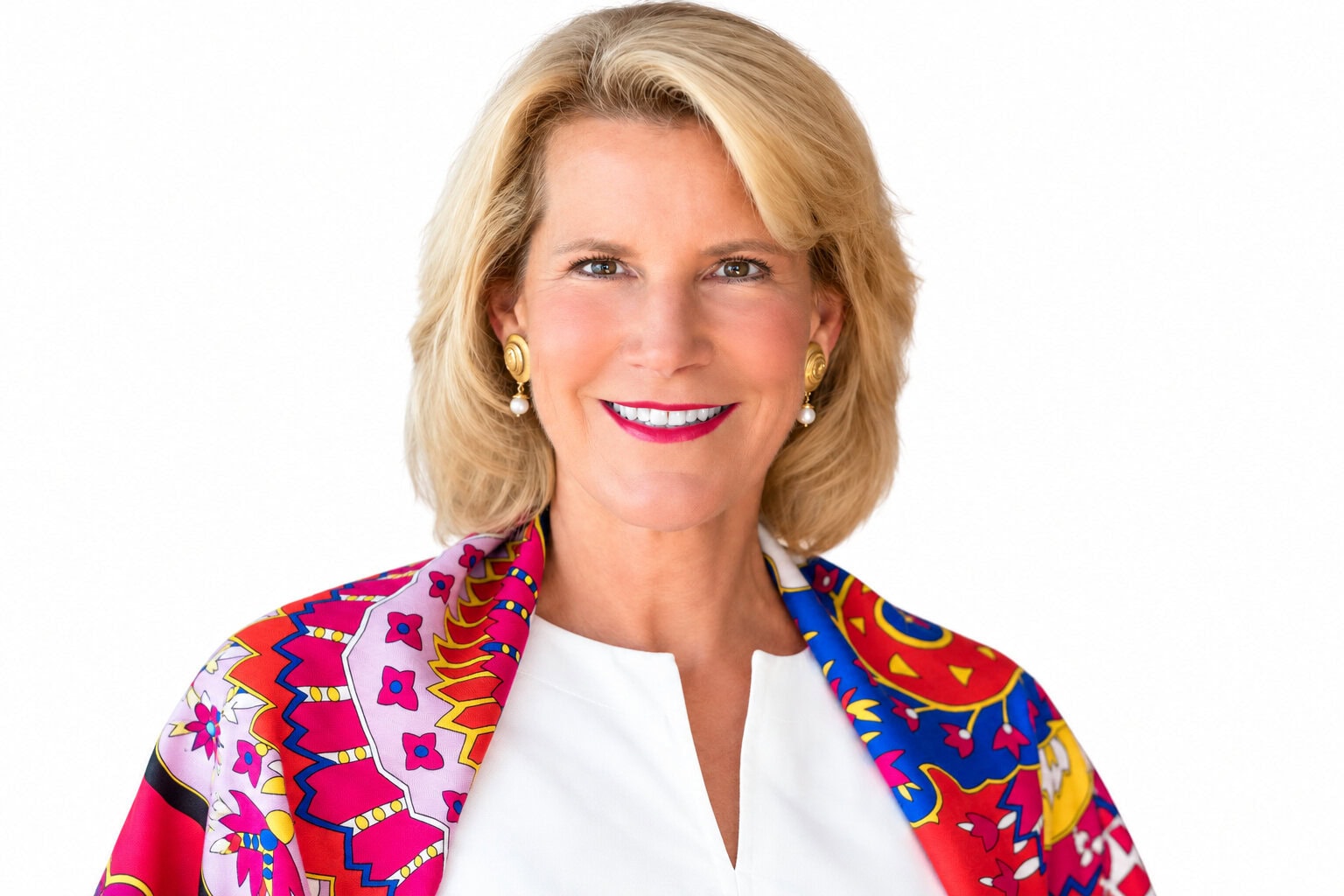
Ellen Stirn Mavec, the Smiths’ granddaughter, leads the gift.
She has served on the foundation’s board since 1982 and has been its president and chair since 1997.
“Our family’s relationship with Case Western Reserve University spans generations, and we are proud to continue supporting an institution that has long advanced innovation, discovery, and opportunity,” she said.
“The Interdisciplinary Science and Engineering Building reflects the kind of collaborative, forward-looking research environment that will help shape the future, and we are honored to be a part of it.”
Her daughter, Vanessa Mavec King, a 2019 graduate of the university’s management school, also serves as a foundation trustee. That makes her the fourth generation of the family tied to the campus.
The building is designed to bring people together. It covers 189,000 square feet across five stories, costs an estimated $300 million, and is the university’s largest single investment in research.
It will house about 300 researchers, more than 60 faculty members, and dozens of students in seven research clusters.
Their work ranges from electrochemistry and energy science to advanced materials, molecular therapeutics, precision diagnostics, neurotechnology, neurorobotics, and climate and ecosystem science.
Labs are visible from one another, shared core facilities are open to researchers across campus and outside partners, and a café and communal seating encourage informal meetings. The terrace extends that idea outdoors.
“The Smith family legacy runs deep at Case Western Reserve, and the lasting impact of the Kelvin & Eleanor Smith Foundation is evident across campus,” said President Eric W. Kaler.
“For decades, the foundation has prioritized support in and around University Circle, which has enabled its institutions to grow and thrive. We are honored to be among them.”
That legacy starts with Kelvin’s father, Albert W. Smith.
He enrolled at the Case School of Applied Science in 1885, joined the faculty, chaired the chemistry department, and helped start the school’s chemical engineering program in 1913.
He also helped found Dow Chemical with Herbert Dow..
All four of his children earned degrees from the university. In 1928, three of them, Kent, Vincent, and Kelvin, joined with Alex Nason to found Graphite Oil Products Co., the small Cleveland company that became the global specialty chemical maker Lubrizol.
Albert Kelvin Smith was born in Cleveland in 1899. He earned a physics degree from Dartmouth in 1920 and a chemical engineering degree from Case in 1922, then worked as a chemist at Dow before helping start the family business.
He served as Lubrizol’s president from 1951 to 1962. In that time, the company opened manufacturing subsidiaries in five countries, became publicly owned, and more than doubled its sales and earnings.
He and his brother Kent were trustees of Case Institute of Technology and helped bring about its 1967 federation with Western Reserve University. Kelvin then became a charter trustee of the combined Case Western Reserve.
He liked to say, “Education is crucial for our country, for success in business and for the dignity and growth of an individual.”
Eleanor Armstrong Smith was his equal in public life. She was born in Wheeling, West Virginia, in 1899 and moved to Cleveland in 1912, when her father became a partner at Pickands Mather & Co. She graduated from Hathaway Brown School and then, cum laude, from Smith College in 1921.
She met Kelvin at a dance class in 1915, and they married in 1923. Her life’s cause was people who are blind or have low vision. She was president of the Society for the Blind for five years and served seven years on the Ohio Commission for the Blind.
In 1961 she received the Migel Medal from the American Foundation for the Blind, presented by her friend Helen Keller.
She was also a devoted gardener. She became president of the Garden Center of Greater Cleveland, now the Cleveland Botanical Garden, in 1946 and later received its Sherwin Medal.
The Smiths gave generously during their lives, mainly to Cleveland’s music, art, science, and civic life.
Kelvin endowed the music director’s chair at the Cleveland Orchestra and was a major contributor to Blossom Music Center. He funded Albert W. Smith Merit Scholarships at Case, endowed a physics professorship at Dartmouth, and supported University Hospitals, the Cleveland Clinic, and the Cleveland Sight Center.
A love of the ocean led him to open Mystic Aquarium in Connecticut in 1973. They created their foundation in 1955 and funded it entirely through their own gifts and estates. Kelvin died in 1984.
Eleanor died in 1998 at 98, in the Shaker Heights home where the couple had lived for decades.
Their foundation has kept those interests alive. It supports arts and culture, education, health, conservation, and community work in Northeast Ohio, guided by three principles: excellence in mission, creativity in approach, and fiscal responsibility.
At Case Western Reserve, its $8 million gift in 1991 helped build what local media called “the library of the future.” The Kelvin Smith Library opened in 1996 and is still the university’s main library.
In 2011, the foundation committed $7 million to the Tinkham Veale University Center, where the Kelvin & Eleanor Smith Foundation Grand Ballroom now hosts campus events. “My grandparents really wanted to encourage and support individuals in the pursuit and fulfillment of their dreams,” Mavec said then.
The family’s name also appears on the fabrication floor of the Sears Innovation Center, on the Lucia Smith Nash Walkway, named for the Smiths’ daughter, and on a plaza at the Maltz Performing Arts Center.
Mavec has also broadened the foundation’s reach well beyond the campus.
She established its first independently staffed office, and under her leadership, she and the foundation have given more than $100 million to institutions in University Circle.
A Northwestern art history graduate and longtime dealer in decorative arts, she has served as a trustee of the Cleveland Museum of Art since 1991 and now chairs its board.
In 2024, the foundation gave the museum $25 million for exhibitions, garden restoration, a permanently endowed curatorship of decorative arts and the renovation of its North Lobby.
That followed $22.5 million toward the museum’s expansion, completed in 2013. In 2024 alone, the foundation paid $9.3 million in 77 grants.
They ranged from the Cleveland Orchestra’s “We Believe” campaign to capital and operating support for the Cleveland Museum of Natural History. Mavec, an emerita trustee of the university, received its President’s Award for Visionary Achievement, and in 2024 she won the Cleveland Arts Prize for advancing the arts.
The timing is fitting. Case Western Reserve is marking its bicentennial in 2026, and this year it inducted the Smith family into its Hudson and Case Society, which honors its most generous benefactors.
The building will open with a ribbon-cutting in late October. Its new terrace faces a fountain named for the 1887 Michelson-Morley experiment, which took place on that campus while a young Albert W. Smith was studying there.
The new building is meant to help science and engineering tackle the problems of the next century.
A family that has supported the university for more than a hundred years has given it a place where people can meet.