
$15 million against long COVID: Steve & Judy Pagliuca and Todd Park lead a donor coalition behind push from discovery to cure
Some philanthropy starts with a strategic plan.
This gift started with worry.
Steve Pagliuca and Todd Park have spent their careers solving problems others called too big.
Pagliuca did it in private equity and professional sports, and Park did it in health technology and in the White House.
Then Long COVID reached into both of their families, and they found themselves in the same position as millions of Americans.
They watched someone they love struggle with an illness that most doctors still can’t reliably diagnose and that no approved drug can treat.
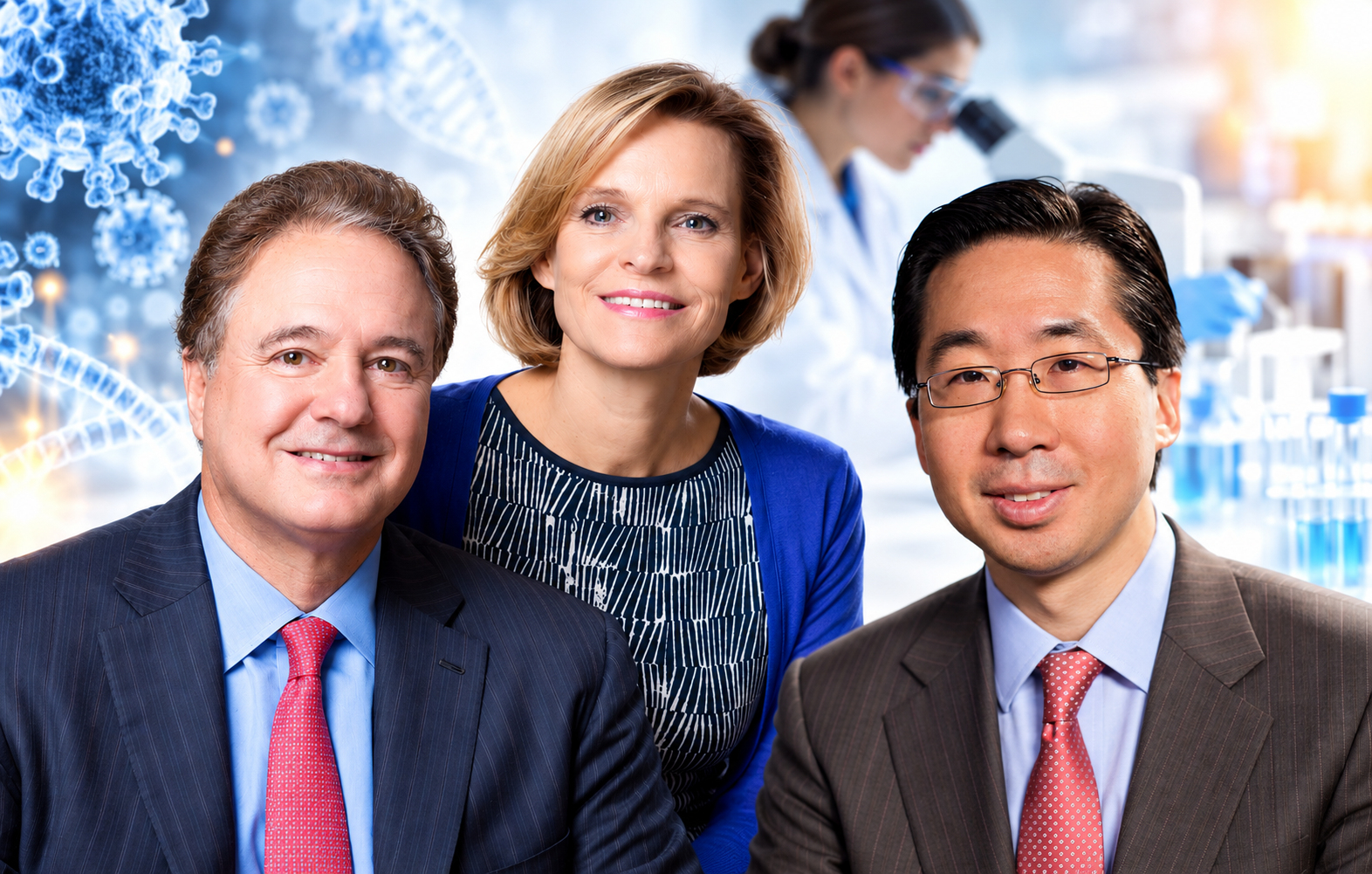
That shared experience is the heart of the $15 million PolyBio Research Foundation has now raised for its Long COVID Cure Initiative. The total was announced at an evening in Boston, hosted by Steve and Judy Pagliuca with Massachusetts Governor Maura Healey at The ‘Quin House.
The donor coalition includes Park, the co-founder of Devoted Health and a former U.S. Chief Technology Officer, along with Amy Geng, the Pagliucas, and a circle of other supporters, some of whom gave during the evening itself.
“Long COVID has touched our family personally, so we understand that behind every statistic is a person whose health, independence, or career has been completely disrupted,” Steve Pagliuca told the room.
“The urgent challenge now is turning scientific discoveries into tools and treatments that reach patients.”
Anyone who has lived with long COVID, or loved someone who has, will know the pattern behind those words.
A parent who used to run marathons now needs a nap after the grocery store. A young professional can no longer follow a meeting through the brain fog. Test results come back normal, specialist visits pile up, and the answer is often a shrug. Scientists have made real progress in the past five years.
They have found fragments of the virus lingering in the body’s tissues and immune systems that never seem to stand down. That knowledge, though, has mostly stayed in research papers.
What patients are still missing is the bridge between the lab and the doctor’s office: a test that can say what is actually wrong, a trial that is testing the right drug in the right person, and a doctor who knows what to do with the answer. The Pagliucas and the Parks have chosen to build that bridge.
They did not get here overnight. The Pagliuca family helped launch the initiative in the fall of 2025. In March 2026 they joined Greg and Mindy White, another family touched by the illness, in funding VIPER, the program’s diagnostics effort, which started with $1.35 million sent to the University of California, San Francisco.
In April, the Park-Pagliuca Fund, a partnership between the two families, gave $10 million with a challenge attached: find other donors to match it and unlock the next phases of the work. The September evening was that challenge carried into a room full of people. Two families who had already given generously were now asking their friends and peers to stand with them.
For Steve Pagliuca, that kind of rallying comes naturally.
He joined Bain Capital in 1989 and served as its co-chair from 2016 to 2022. He is now a senior advisor there while running PagsGroup, his own growth-capital firm, which invests in biotech, technology, media, and sports.
Bostonians knew him for years as a co-owner of the Celtics.
Italians now know him as principal owner and co-chairman of Atalanta, the club from Bergamo that won the Europa League in 2024, its first major trophy in more than 60 years. He has a well-earned taste for underdogs, and Long COVID patients have been underdogs for a long time.
Judy Pagliuca is every bit his partner in this. She grew up in Chicago, earned a mechanical engineering degree from the University of Illinois and an MBA from Harvard Business School, and began her career as a portfolio manager at Fidelity. Today she is managing partner at PagsGroup, where she backs Boston startups and works closely with their founders.
The couple’s giving has long focused on children and education. Their clearest bet on science came in 2016 with the Pagliuca Harvard Life Lab, a shared lab where young biotech companies from the Harvard community can get their start.
At the time, the couple said that innovation in the life sciences was important “to all of our futures in its potential to solve complex health problems.” They could not have known then how personal that sentence would become.
Todd Park brings his own kind of conviction. The son of South Korean immigrants, he co-founded athenahealth at 24. He later co-founded Castlight Health, served as chief technology officer at the Department of Health and Human Services, and then became U.S. Chief Technology Officer.
In 2017, he and his brother Ed founded Devoted Health, which they built to care for older Americans the way they would want their own family cared for. Investors valued the company at $12.9 billion in 2024.
He talks about Long COVID the way an engineer talks about a machine that can be fixed. “The biology of Long COVID is measurable,” he said in April.
“The missing piece is the infrastructure to validate those signals and translate them into biomarkers, diagnostics, and treatments.” It is the confidence of someone who has watched stubborn systems change before and who now has a personal reason to change another one.
The need is huge. More than 18 million people in the United States are living with long COVID, according to PolyBio. Many have symptoms that ripple across the body, and the clinics set up to help them are overwhelmed, with long waits for care.
The new funds will help build a clinical trials network designed to test promising treatments faster. It will focus on checking whether a drug actually changes what is happening inside a patient’s body, rather than only whether they feel a little better, and it will explore combining treatments.
VIPER is the foundation of the plan. It borrows its approach from the work that gave HIV medicine its most important diagnostic tests, and it aims to compare competing Long COVID tests side by side to see which ones truly detect lingering virus and the immune damage around it. It sounds technical, but the goal is very human: to give a patient a real answer and a doctor a clear next step.
The Boston evening was built as much around people as science. Drs. Timothy Henrich and Michael Peluso, physician-scientists now at UCSF, walked guests through what drives the disease. Dr. Amy Proal, PolyBio’s research director and co-founder, laid out the path from test to treatment.
Then Jessica White, who lives with long COVID, told her own story, and that was what the room will remember. Governor Healey spoke directly to people like her.
“To everyone living with Long COVID: we see you, we hear you, and we are committed to making sure you have the treatments and support you deserve,” she said, and she thanked the Pagliucas “for their leadership and generosity in helping move this critical work forward.”
PolyBio itself has come a long way in a short time.
In 2020, the year it was founded, it took in just $24,211. It has since become one of the most important private forces in the field, drawing roughly $50 million in private support over the years, much of it from Ethereum co-founder Vitalik Buterin’s Balvi fund.
The Pagliuca and Park families bring more than another round of funding. They are pushing the mission into its next stage, from asking what Long COVID is to asking how to end it. The same infrastructure is already being extended to chronic Lyme disease and other chronic illnesses that follow infections, where patients have often waited even longer for someone to take them seriously.
“By combining philanthropic capital with a focused execution strategy,” Steve Pagliuca said in April, “we can help compress a process that would normally take decades into just a few years.”
An investor’s promise carries a family’s hope.
It will be measured not in dollars but in time, in the months and years this gift gives back to the patients still waiting.