
$55 million: billionaire philanthropist Tom Secunda’s return to his alma mater and the AI center he wants the public to own
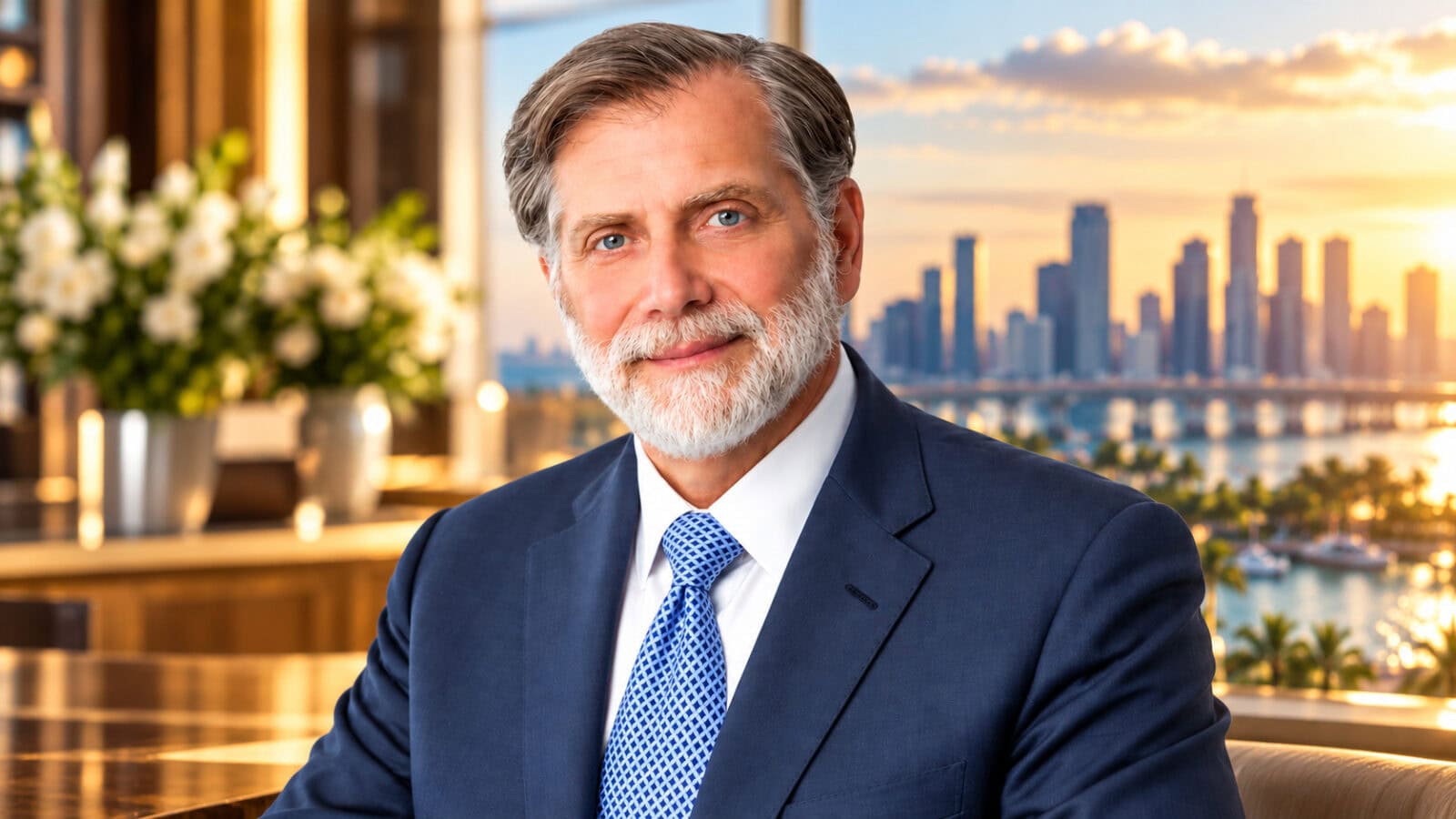
Half a century ago, a young man from Bethpage, Long Island, came to Binghamton to study mathematics.
He stayed for a master’s degree and then went into the working world at a time when finance was just starting to depend on computers.
Few people outside Wall Street know his name.
Almost everyone on it has used what he built.
Tom Secunda is one of the four founders of Bloomberg LP, and the man most closely associated with the Bloomberg terminal, the black-and-amber screen that turned market data into something close to a shared language.
Now 72, he has come back to his alma mater with a question that belongs to this era the way the terminal belonged to his: if machines are going to shape our lives, who makes sure we can trust them?
His answer is the Center for AI Responsibility and Research, a $55 million project the first independent AI research center at any public university in the United States.
The heart of it is a $30 million commitment from a small group of donors led by Secunda, the largest academic gift Binghamton has ever received. New York State added $25 million in capital funding. The division of the money is telling.
The private dollars pay for people: the center’s leaders, its faculty researchers and the work they do. The public dollars pay for the building and equipment. Secunda is the only donor who has been named. The others in his circle have not come forward, and neither the university nor the state has said how the $30 million is shared among them. Still, there is no doubt about who is leading.
The gift has come back into focus this fall, as Binghamton tallies what it helped make possible.
At the end of August, the university announced that it had raised $101.6 million in its 2026 fiscal year, the first time in its 80-year history that it had passed $100 million in a single year, and a quarter more than its previous best.
A few weeks earlier, in Buffalo, a $40 million NVIDIA-powered supercomputer called Empire AI Beta was switched on for researchers across the state. Hochul called it the most powerful academic research computer in the country, and more than 300 projects were already waiting for time on it. Secunda chairs the board of Empire AI, the consortium that owns it.
The Binghamton center is meant to be its conscience: the place where the tools running on that machine are tested, measured and explained.
To understand why this matters to him, it helps to go back to Salomon Brothers, where, after Binghamton, Secunda worked in the systems research group and got to know Michael Bloomberg.
When Bloomberg left in 1981 to start his own company, Secunda went with him, along with Charles Zegar and Duncan MacMillan. What they built was, in a real sense, a trust machine. Traders relied on the terminal because its numbers were accurate, its tools worked the same way every time and its calculations could be checked.
According to Forbes, Secunda designed many of the company’s financial products, and the terminal still brings in about two-thirds of Bloomberg’s estimated revenue of nearly $15 billion. He remains vice chairman, holds about 4 percent of the private company and is worth an estimated $5.2 billion.
Looked at this way, his interest in AI that is transparent, repeatable and accountable, is less a new direction than the continuation of a lifelong habit of mind.
He is not someone who seeks attention. He lives in Croton-on-Hudson, in the Hudson Valley, with his wife, Cindy; they have two children. The couple set up the Secunda Family Foundation in 2006 and in 2011 signed the Giving Pledge, promising to give away at least half of their wealth. The foundation is private in every sense.
It chooses its own grantees and does not accept applications. Its giving follows personal commitments rather than trends: health care, the environment, Jewish life and the arts in New York, and the fight against hunger through WhyHunger. There is also a deep connection to the U.S. Virgin Islands.
After the hurricanes of 2017, Secunda helped lead the recovery there, and his foundation has since supported Love City Strong, a disaster-readiness group on St. John. Reading the list, you see a donor who tends to show up after the headlines have faded and stay for the long work of rebuilding.
Artificial intelligence is where that low profile finally became public. When Hochul proposed Empire AI in 2024, Secunda was among its first private backers and took on the role of independent board chair.
Early that year he visited Binghamton with the governor and met with faculty who were using AI to tackle problems in health care and information security.
Soon afterward he promised the university $5 million, on the condition that lawmakers fund the consortium.
They did.
“As a Binghamton University alumnus, I’m proud to champion novel tech advancement and AI infrastructure at my alma mater,” he said then, and he urged legislators to give New York’s students the chance to “lead responsible AI research.” In 2025 he gave $10.5 million to Cornell to create a postdoctoral fellowship program tied to Empire AI.
Each gift was a step toward the Binghamton center, which is the largest of them and the clearest statement of what he cares about.
He described it with a builder’s optimism and an engineer’s caution. “I’m optimistic about what AI will unlock — new scientific discovery, better health outcomes, stronger public services, and productivity gains that expand opportunity,” he said when the center was announced.
“To capture those benefits at full scale, we also need to build trust the right way: through independent, rigorous research that can test systems, measure performance, and explain how advanced models behave in real-world settings.” What he wants, he said, is AI that is “not only powerful, but also secure, transparent, and worthy of public confidence.”
The center is organized around four ideas that anyone who has depended on a Bloomberg screen would recognize. Systems should be safe and secure, doing what they are supposed to do and resisting misuse.
They should be transparent, so that people can understand how they reach their answers. The science should be repeatable, built on shared standards and datasets so that one lab’s results can be confirmed by another. And they should be aligned with human values, with safeguards against harmful or surprising behavior. Hochul has put particular weight on public-sector uses, promising New Yorkers independent research that gives them confidence in how AI is used by the institutions that serve them.
The university has also been careful to say what the center is not. It is not a data center, and it will not draw on the region’s power or water.
The talent it will build on is already on campus.
Yu Chen, an electrical and computer engineer, is teaching machines to spot deepfakes and AI-generated images by the faint digital traces they leave. Jeremy Blackburn studies how hate speech and harassment move through online communities, and how to slow them. Zhaohan Xi works on making large AI models safer and more dependable in settings like hospitals.
Thi Tran is developing ways to reduce clickbait and misinformation on social media. Shiqi Zhang is building service robots to help people who are blind or visually impaired. This is the human side of “responsible AI”: researchers working to make a powerful technology a little more honest and a little more kind.
Much of the story is still to come, and that is part of what makes it compelling. A national search for the center’s leadership began in January, and Binghamton has not yet publicly named a director. For now the center is starting out in temporary space at 4736 Vestal Parkway, while the university seeks state funding for a permanent building on campus.
The agreement also carries a symbolic condition: as part of the state’s capital commitment, Binghamton agreed to update its name and branding to align more closely with SUNY, a reminder that the center is meant to belong to New York’s public university system as a whole.
Philanthropy observers have noticed. Commentators suggested that the gift could encourage other wealthy alumni to champion their own universities as leaders in responsible AI, and one adviser praised Secunda for helping keep a technology with huge public consequences “anchored in public institutions.”
There is quiet irony in it.
A man who became a billionaire building one of the world’s most valuable private data businesses is spending his fortune to make sure that the most important questions about the next generation of data technology are answered in the open, by public researchers.
For Binghamton, a public university in New York’s Southern Tier that has rarely been mentioned in the same breath as the country’s elite computer science programs, the gift is both a vote of confidence and a challenge.
The money is committed, the supercomputer is running and the mission has been set. What remains is the human work of finding the people who will carry it out.
Tom Secunda has spent his career building tools that people trusted enough to stake fortunes on. He is now betting that the campus where he first learned to think in numbers can help teach the world how far to trust its machines.