
$101 million gift from philanthropists Mark and Robyn Jones brings classrooms, study areas, offices and clinical simulation learning under one roof, giving nursing students a place designed around the realities of their training and the responsibilities waiting for them after graduation
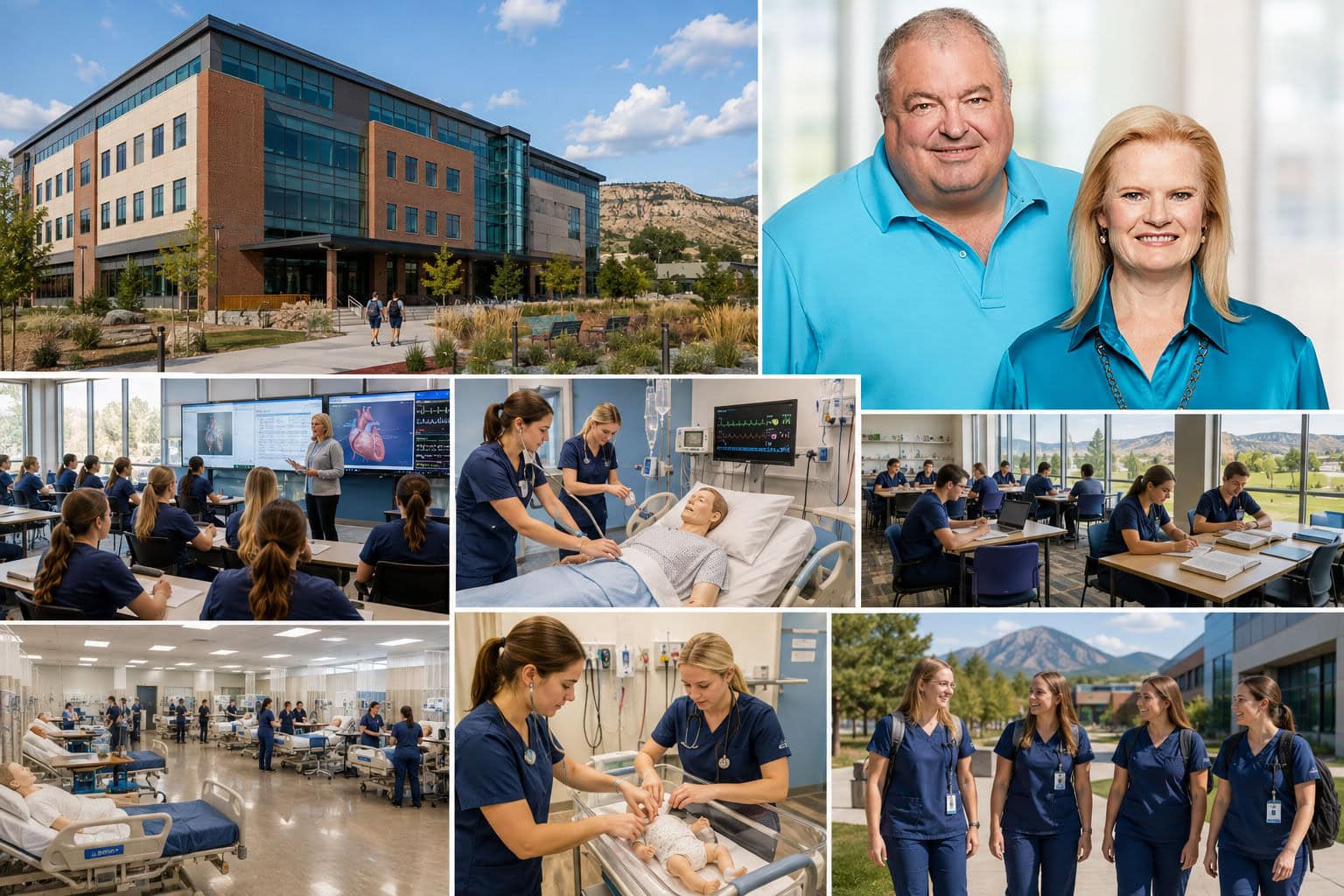
For Mark and Robyn Jones, the new Montana State University nursing building in Billings is not simply the outcome of a major gift.
It is the expression of a personal conviction: that people living in Montana’s smaller and more remote communities should not have to travel extraordinary distances—or wait too long—for essential care.
The couple’s $101 million commitment to Montana State University’s College of Nursing has reshaped the university’s ability to educate nurses across the state.
In Billings, that commitment has created a permanent home for students and faculty who had long worked in borrowed and dispersed space.
The new facility brings classrooms, study areas, offices and clinical simulation learning under one roof, giving nursing students a place designed around the realities of their training and the responsibilities waiting for them after graduation.
Mark and Robyn Jones are best known as the founders of Goosehead Insurance, the fast-growing Texas-based insurance company they built together.
Their professional partnership began with a practical frustration: Robyn had become dissatisfied with the insurance options available while the couple was renovating and selling homes, earned her insurance licence, and began building an independent agency. Mark later joined her, and the company grew into a national business.
Today, both remain closely connected to Goosehead’s leadership and legacy, with Robyn serving as vice chair and Mark having led the company from its founding until stepping down as chief executive.
Yet Montana has become central to the way the couple thinks about philanthropy.
They made a home in the Whitefish area and have spoken about being drawn to the character of the place and to the people they encountered there.
Mark has described their giving as an investment in making a difference, but also as something more instinctive: a response to feeling welcomed by the communities around them.
Their interest in health care deepened through loss.
The Joneses were close to David Haney, a superintendent working on their Montana home, who died of cancer.
Initially, they worked with MSU to establish a scholarship in Haney’s memory, intended to support a student pursuing cancer research.
But as their conversations with the university progressed, they learned more about the stark realities facing patients and providers across Montana: shortages of health professionals, limited access to care in rural areas and the particular challenges facing Indigenous communities and reservations.
The result was a philanthropic commitment of unusual scale and focus.
Rather than directing their wealth toward a single urban medical centre or a project in Texas, where their business was built, the Joneses chose to support a statewide network of nursing education.
Their gift has funded facilities at MSU’s nursing sites in Bozeman, Billings, Great Falls, Kalispell and Missoula, while also supporting scholarships, faculty positions and advanced nursing education, including nurse-midwifery.
Its aim is straightforward but expansive: prepare more nurses, midwives and nurse practitioners who are equipped—and encouraged—to build their careers in the communities that need them most.
In Billings, that vision now feels immediate.
The new building includes a 12-bed skills lab where students can practice the daily work of patient care, along with simulation rooms that allow them to respond to realistic scenarios in maternity, pediatric and adult medicine.
These spaces give future nurses an opportunity to make mistakes, ask questions and develop confidence before entering clinical environments where the stakes are real.
The facility also allows the Billings program to increase enrollment. With more capacity, MSU expects to graduate more nurses each year, a meaningful development for a state where staffing shortfalls have placed pressure on hospitals, clinics and long-term-care providers.
The impact may be felt most strongly in smaller communities. A significant majority of nursing graduates from the Billings campus remain in Montana, suggesting that investments in local education can translate directly into a stronger local workforce.
There is a notable humility in the Joneses’ approach.
Their gift bears their names, but its purpose is fundamentally about the people who will pass through the doors: students who may be the first in their families to enter a health profession; faculty members training future caregivers; and patients whose access to care may depend on whether a nurse decides to stay and practice in their hometown.
The Billings building is a powerful symbol of what consequential philanthropy can look like when wealth is paired with close listening.
For Mark and Robyn Jones, the goal was never simply to erect five buildings.
It was to help create a durable health-care pipeline for Montana—one nurse, one family and one community at a time.