$400 million—and hundreds of millions more on the way: Bill Ackman and Neri Oxman commit to a landmark brain institute inspired by their daughter’s recovery
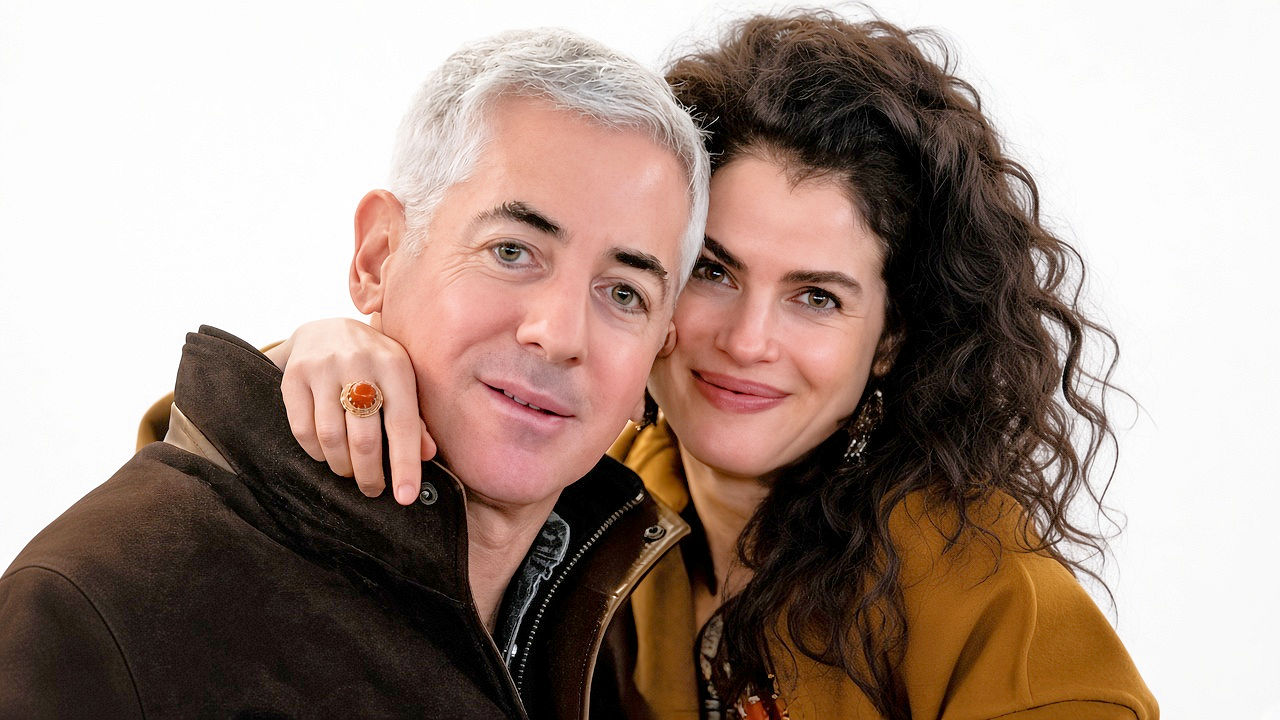
In the quiet hours of a February night, a doorbell rang at the home of Bill Ackman and Neri Oxman, the kind of sound that can split a life into before and after.
What followed was a father’s race against time for his 26-year-old daughter Lucy, a young woman found unconscious on the floor of her apartment after a massive brain hemorrhage that had already begun its silent, devastating work hours earlier.
By the time emergency surgeons at Mount Sinai performed a life-saving hemicraniectomy roughly 19 hours after the bleed began, the odds were stacked against recovery.
Lucy spent weeks in a coma.
When she awoke, she could not breathe on her own, could not walk, could not speak, and could not see.
The optic nerve had been crushed.
Vision was gone.
Voice was gone.
Mobility was gone.
Cognition, for a time, seemed uncertain.
Yet six months later, something extraordinary has unfolded.
Lucy understands everything.
She walks more than a hundred steps at a time with assistance.
She is forming sounds, vowels, consonants, the fragile beginnings of speech. Her mind is intact, aware of her circumstance, fighting.
The vision has not returned, but the rest of her is coming back, piece by hard-won piece.
Ackman has called her survival a miracle, and he has treated her recovery as both a personal triumph and a public mandate.
That mandate crystallized this week into one of the most ambitious and personally driven philanthropic projects in modern medical science.
On August 19, 2026, Bill Ackman announced that he and Neri Oxman are co-founding the Ackman Oxman Institute, a vast new center for brain science, rehabilitation, brain-computer interfaces, and longevity research.
They have donated approximately $400 million—ten million shares of Pershing Square Inc.—as the long-term capital anchor for the institute.
An additional gift of similar or greater size from non-Pershing Square assets is expected soon to provide the near-term runway.
The shares are meant to compound over decades, generating dividends that will fund operations while the institute itself becomes self-sustaining through intellectual property, equity in spin-out companies, and reinvested revenues.
The physical footprint is as bold as the financial commitment. On a 3.4-acre campus near West 66th Street on Manhattan’s Upper West Side, the institute is assembling roughly 680,000 square feet of space.
That includes a 400,000-square-foot A+ biotech facility acquired for about $190 million, an adjoining 130,000-square-foot building currently used as a Saturday Night Live studio that will close in December, and existing zoning rights that allow another 150,000 square feet.
The views of the Hudson are spectacular. The potential for further upzoning is real. When complete, the campus will be larger than Rockefeller University’s laboratory footprint and will house neurosurgery suites, neuroscience laboratories, rehabilitation floors with soaring ceilings, nutrition and longevity programs, hyperbaric oxygen therapy, device development workshops, human clinical trial spaces, and dedicated areas for brain-computer interface research.
Mount Sinai, the hospital that saved Lucy’s life, will be a central partner. But the Ackman Oxman Institute will not be exclusive.
It intends to collaborate simultaneously with other hospitals, medical schools, and research institutions. The philosophy is deliberately non-academic in the traditional sense.
Ackman has said the institute will not exist to produce papers or chase Nobel Prizes for their own sake. It will be laser-focused on cures, treatments, devices, rehabilitation equipment, and the rapid translation of ideas into therapies that reach patients.
No silos.
No bureaucracy.
No politics that slow the work.
Teams will be mandated and incentivized to collaborate across disciplines on a single campus.
The structure is hybrid by design: a nonprofit engine paired with commercial instincts.
The institute will operate its own venture funding arm to incubate, invest in, and spin out companies developing treatments, pharmaceuticals, medical devices, and rehabilitation technologies.
Intellectual property licensing fees, equity returns, and commercial revenues will flow back into the mission.
Early-stage risk will be carried by philanthropic capital; later-stage financing, regulatory pathways, and scale will be handled by the commercial entities.
In Ackman’s vision, this model compresses the fragmented traditional pipeline—university labs, hospital clinics, venture capital, startups, and large device or pharmaceutical companies—into one integrated ecosystem under one roof.
The board already reflects that ambition.
It includes inventor Dean Kamen, Regeneron CEO George Yancopoulos, Nobel laureate James Rothman, neuroscientist Bernardo Sabatini, neurosurgeon Chris Kellner, Olivia Flatto of the Pershing Square Foundation, Neri Oxman, and Ackman himself.
Earlier reports also noted the involvement of Stanford neuroscientist and podcast host Andrew Huberman. Leadership recruitment is underway.
Operations in the main building are expected to begin by the end of the year.
Behind the institutional architecture lies a deeply human story.
Neri Oxman lost her mother to Alzheimer’s several years ago.
That loss had already planted the seed of a major brain-focused philanthropic effort.
Lucy’s crisis made the seed germinate overnight. Ackman has spoken of how every strand of his previous life—philanthropy, scientific curiosity, relationships built during the COVID years when he and Mount Sinai created a saliva-based testing laboratory—prepared him for the moment he needed to know whom to call at 2:30 a.m.
Lucy became, in his words, a test case.
Experimental approaches, including mitochondrial injections aimed at preserving residual optic nerve function, were tried under extraordinary circumstances.
Insights from that intensive, resource-rich care are now intended to be systematized, studied, and made available more broadly.
Brain-computer interfaces sit at the strategic heart of the vision, not as science fiction but as a practical response to the realities of patients like Lucy.
Visual restoration, motor control, neural signal decoding, and neuromodulation are active frontiers. Companies exploring these technologies face persistent bottlenecks: long-term safety, surgical accessibility, signal stability, meaningful clinical endpoints, and payment pathways.
By co-locating neurosurgeons, rehabilitation specialists, engineers, trial patients, and device developers on the same campus, the Ackman Oxman Institute aims to shorten the feedback loops that currently stretch across institutions and years.
Artificial intelligence is expected to accelerate everything.
Ackman has noted that AI still has much to learn about human intelligence and the brain, and that the institute should stand at the forefront of that interplay.
The same tools that are transforming other domains of science will be applied here with urgency.
This is not charity as distant check-writing.
It is a father and a mother converting private anguish into public infrastructure.
It is a financier applying the same long-term compounding logic he has used in markets—concentrated capital, patient ownership, aligned incentives—to the most complex organ in the human body.
The ten million shares of Pershing Square Inc. are not a one-time gift that dissipates; they are a permanent claim on future growth and dividends, binding the institute’s resources to the ongoing success of the platform Ackman built.
An additional substantial gift will bridge the early years until the model generates its own momentum.
In the broader landscape of medical innovation, the Ackman Oxman Institute represents an attempt to reconstruct the industrial chain of discovery.
Traditional pathways are slow and siloed.
Here, capital, talent, patients, and commercial pathways are meant to occupy the same physical and institutional space.
Success will be measured not in publications but in the speed and scale with which new treatments, devices, and rehabilitation methods reach people who need them.
Lucy continues her recovery.
She walks.
She begins to speak.
Her cognition is clear.
The vision remains the open challenge, one that brain-computer interfaces and continued research may one day address.
Her father has taken the long, painful arc of her crisis and bent it toward something larger than any single family.
On a 3.4-acre campus overlooking the Hudson, with hundreds of thousands of square feet of laboratories and clinics still taking shape, a new kind of institute is being built—one that insists the distance between a breakthrough and a patient should be measured in months and years, not decades, and that the most personal of medical emergencies can become the foundation for institutional hope.