
$2.1 billion net worth, one Giving Pledge: Georgetown grad Mo Dewji’s philanthropy has touched 817,800 lives
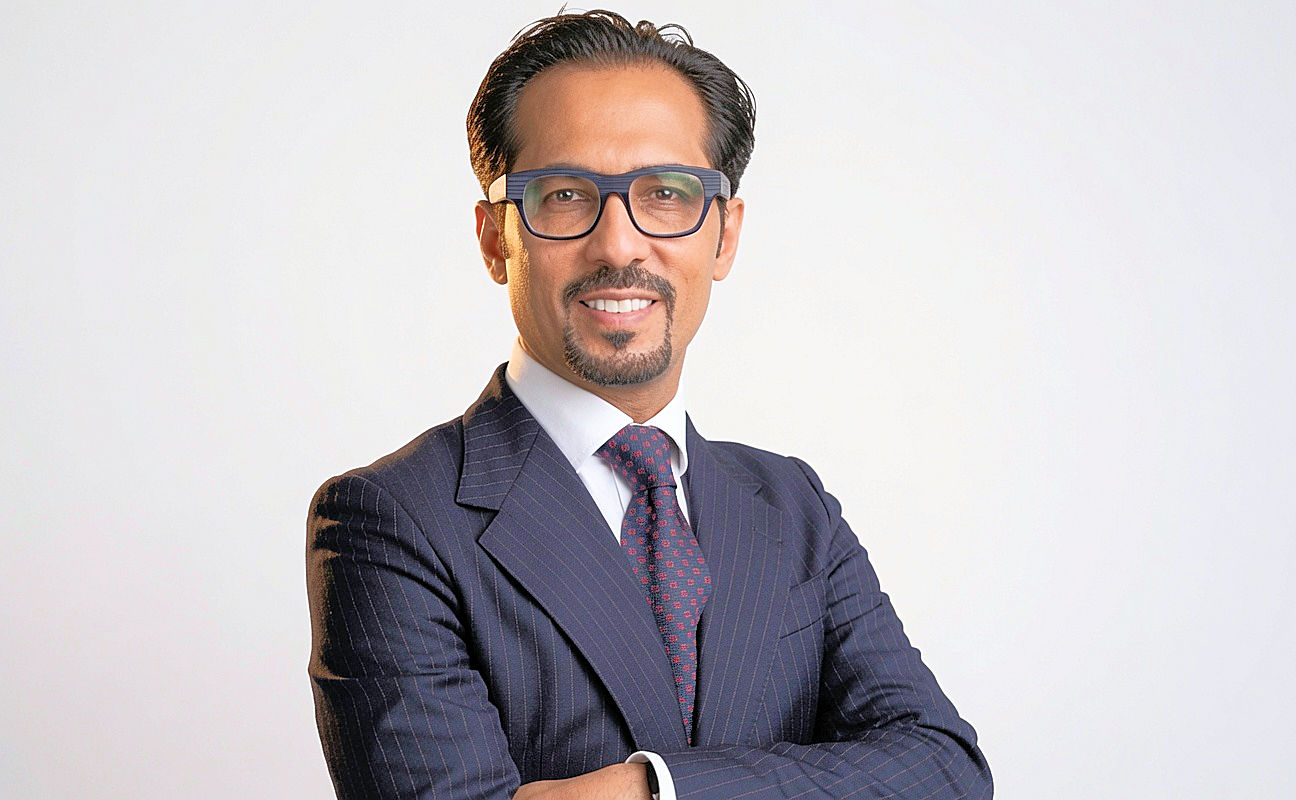
Mohammed “Mo” Dewji, the Tanzanian billionaire, was recently honored on a prestigious global philanthropy list in the “tackling poverty” category, standing alongside names like Rihanna, Chance the Rapper, and Steven Spielberg. It’s a fitting nod to two decades of giving that started small—back when he was a rural member of parliament paying for wells out of his own pocket— and grew into one of East Africa’s most respected charitable operations, the Mo Dewji Foundation.
Most of MDF’s work happens in Tanzania, but Dewji’s giving carries a distinctly American thread, one that traces back to a college campus in Washington, D.C. Dewji graduated from Georgetown University’s McDonough School of Business in 1998, majoring in international business and finance with a minor in theology.
That education left a lasting mark. He later returned to Washington to accept an honorary doctorate from the business school and deliver a commencement address urging graduates to “recognize the power in community”—a line that has become something like his personal mission statement ever since.
The Georgetown connection runs far deeper than sentiment.
Through MDF, Dewji has directly funded Georgetown’s Pivot Program, a Washington-based initiative that helps formerly incarcerated individuals rebuild their careers through business training, internships, and entrepreneurship support.
He contributed significantly over three years, helping 80 participants find new career paths—and as of mid-2024, more than 90% of graduates had landed jobs within three to four months, with over 15 launching their own businesses.
The program’s executive director, Dr. Alyssa Lovegrove, credits the partnership with sending a powerful message: that no one should be denied the chance to contribute to society and fulfill their potential.
Dewji’s most visible American tie is his membership in the Giving Pledge, the campaign started by Bill Gates and Warren Buffett.
He signed on in 2016, becoming the first Tanzanian and one of only a handful of Africans to commit to giving away more than half his fortune.
“All these material comforts that surround us are temporary accessories,” he said at the time. “This is why I decided a long time ago that I do not need any more personal wealth.”
Dewji founded MDF in 2014, right after stepping down from a decade in Tanzania’s parliament, and the foundation has since poured more than $5 million into programs that have touched over 635,000 lives across the country.
Its Mo Scholars Program has awarded more than 250 university scholarships since 2016, with applications recently surging past 2,600 as demand for higher-education support grows; the foundation has also partnered with a leading Indian technical university’s Zanzibar campus to train young scholars in AI and data science.
On the health side, MDF’s mobile eye clinics have screened and treated more than 126,000 people and performed over 13,900 sight-restoring surgeries with outcomes that exceed international benchmarks, while its long-running support of East Africa’s largest pediatric cancer center helped enroll 900 new children in 2024 alone, with survival rates now roughly five times higher than they were when the partnership began in 2013.
Dewji’s commitment to clean water predates the foundation entirely—he personally funded 49 wells in his home region of Singida while still in parliament—and MDF is now building 50 more, alongside a household water-purification effort that has already reached about 8,700 people.
All of this is made possible by MeTL Group, the Tanzanian conglomerate Dewji has led since his Georgetown days, now employing more than 34,800 people and generating roughly 4% of Tanzania’s GDP.
Today he stands as Tanzania’s only billionaire and one of the wealthiest people on the African continent—a remarkable outcome for someone who has said he no longer needs any more personal wealth.
What sets Dewji apart is that his giving doesn’t follow the usual script.
Rather than directing wealth only toward causes back home, he has quietly reversed the flow—a Tanzanian foundation helping fund second chances for formerly incarcerated Americans in the nation’s capital.
MDF describes it simply: philanthropy, at its best, is about showing up and staying long enough to see it through.
Two decades in, that’s exactly what Dewji has done, on two continents at once, carrying the values he first found at Georgetown all the way back home.