
$10 million bet by the vision of Scott Hamilton on building the structure rural entrepreneurs have never had
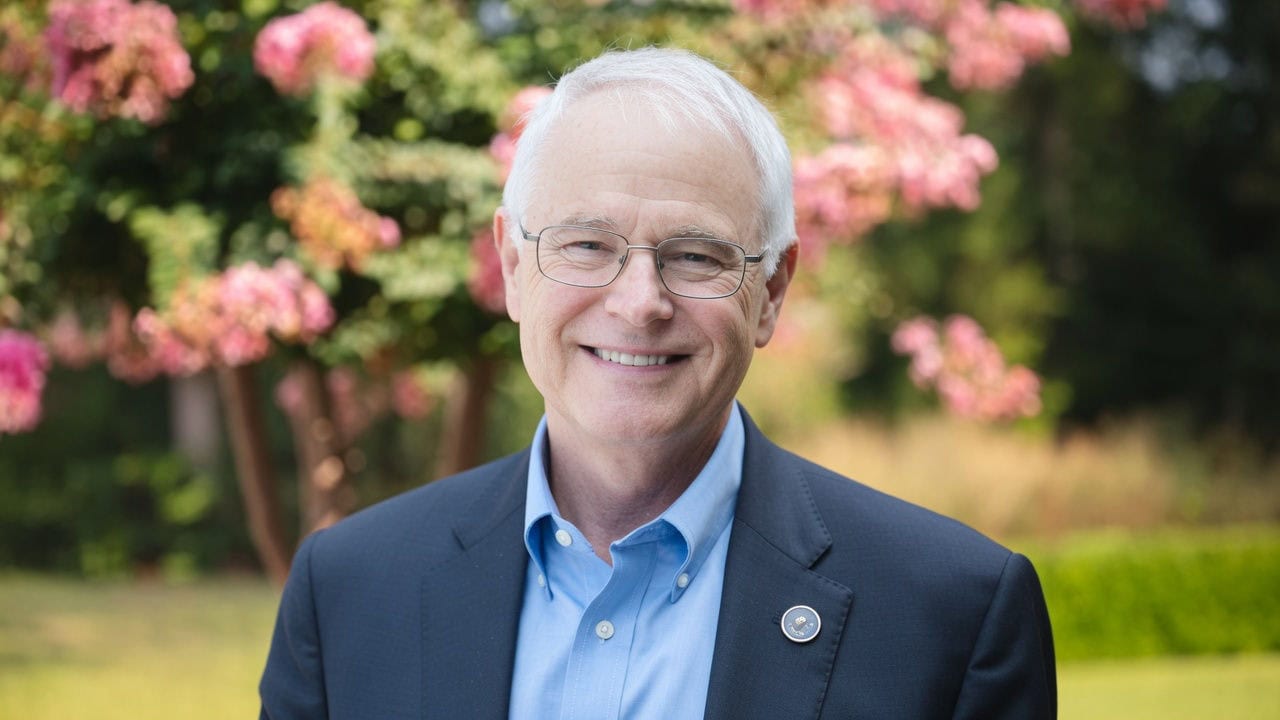
Scott Hamilton has spent nearly seven years now walking into rooms across North Carolina’s poorest counties trying to convince skeptical local leaders that the answer to their town’s economic troubles isn’t a factory relocation announcement or a call center landing a tax incentive.
It’s the guy already living three streets over who has an idea and nowhere to take it.
Recently, Hamilton, president and CEO of the Golden LEAF Foundation, stood before his board in Rocky Mount and got the money to prove it at a scale his organization has never attempted: $10 million, the single largest allocation on that day’s agenda, aimed squarely at building the scaffolding rural entrepreneurs have never had.
The money is going to NC IDEA, and specifically into the hands of Thom Ruhe, the foundation’s president and CEO, a man who describes his own career in two acts—twenty years starting and selling companies, followed by what he only half-jokingly calls a midlife crisis that sent him into nonprofit economic development instead of buying a motorcycle.
Ruhe has been building entrepreneurial ecosystems since his seven years at the Kauffman Foundation in Kansas City, an experience he compares, without much modesty, to getting called up to the majors.
He co-founded JumpStart in Cleveland before that, watched it grow into an organization whose economic impact in northeast Ohio is now measured in the billions, and arrived at NC IDEA in late 2015 as its first president after the organization converted from a supporting nonprofit into an independent private foundation.
He took the job, he has said, because North Carolina already felt strangely familiar—his family had been vacationing on the Outer Banks since he was six years old, and years on the board of the Kenan Institute at UNC Chapel Hill had already pulled him into the state’s orbit.
What Hamilton and Ruhe have built together is called the Rural Entrepreneurship Regional Constellations Program, and the name is deliberately unusual because the design underneath it is too.
Most economic development money in America gets distributed the way state agencies are comfortable distributing it — a single statewide program, uniform criteria, one office deciding who wins.
This one inverts that. Six rural regions of North Carolina will each organize themselves into a “Constellation,” a coalition of local organizations working together under a single anchor institution called a Regional Champion, which coordinates partners and drives whatever strategy actually fits that region — advanced manufacturing in one place, agricultural technology in another, the outdoor recreation economy somewhere else entirely.
NC IDEA will run the grant-making and coaching from Durham, but the strategy has to come from the ground. The first request for proposals goes out this fall, with coaching sessions and office hours for prospective applicants, and the first cohort of three Constellations gets named in early 2027, followed by a second cohort in 2028.
Ruhe has built his argument for this program on a number that keeps surprising people outside the state: business registrations in North Carolina climbed from 100,338 in 2019 to 171,244 in 2025, a 71 percent jump that is outpacing the national average, according to state Secretary of State data cited in the announcement.
Rural counties are no longer sitting this out—expanding broadband access has quietly removed one of the last hard barriers to running a business outside Charlotte or the Triangle, and the ambition is already there.
What has been missing, in Ruhe’s telling, is the coaching, the capital, and the peer network that founders in Raleigh or Winston-Salem simply take for granted.
“For over 20 years, NC IDEA has worked alongside entrepreneurs in every corner of the state, and we have seen firsthand what becomes possible when rural founders get access to the coaching, capital, and community that entrepreneurs in our metropolitan areas often take for granted,” Ruhe said, crediting Golden LEAF’s board and staff for a level of patient, long-term investment in rural communities that he says few funders can match.
Hamilton’s framing is more personal still.
“Entrepreneurship has the power to transform rural communities,” he said at the announcement.
“This initiative is about more than supporting individual small businesses. It is about building lasting networks that connect entrepreneurs and develop and strengthen local ecosystems that create the conditions for businesses to grow for years to come”.
It is a philosophy he arrived at the long way.
Before Golden LEAF, Hamilton ran the Appalachian Regional Commission, the federal-state partnership tasked with lifting one of the country’s most persistently poor regions, overseeing more than fifty staff and the workforce and infrastructure investments that came with it.
Before that he led AdvantageWest across the mountain counties of western North Carolina and, earlier still, founded the Henderson County Partnership for Economic Development essentially from scratch.
He is a UNC Greensboro graduate who has spent four decades moving between small regional development shops and the machinery of state and federal government, and he is doing it once more: Hamilton announced in June that he will retire from Golden LEAF at the end of this year, which makes the Constellations program one of the last major initiatives he will get to see through the door before he leaves.
He will hand it off to a foundation with money to spare and, for once, less political interference than it has faced in years past.
Golden LEAF exists because North Carolina’s leadership, in 1999, decided the state’s share of the national tobacco settlement — nearly $4.6 billion over twenty-five years — should be walled off from the ordinary state budget and managed by an independent board rather than the legislature.
Brian Raynor, a Cumberland County native who co-owns Highland Paving Company and was appointed to the Golden LEAF board in 2020, now chairs that board. He took the gavel late last year from Ralph Strayhorn after Strayhorn’s board tenure oversaw more than $141 million in awards, including landmark job announcements from Johnson & Johnson, JetZero, and Vulcan Elements.
Raynor has spent his career paving roads across rural Cumberland County; now he is helping decide how tobacco settlement money gets turned into the roads rural entrepreneurs need to build their own businesses.
None of this means anything, of course, without the entrepreneurs it is meant to reach — and North Carolina’s rural counties are not short on them, even if the state has been short on the infrastructure to connect them.
In Marion, a small town in McDowell County still working through recovery from Hurricane Helene, Doug and Debbie built Flavors on Main from a 600-square-foot storefront into a space ten times that size, one of roughly 160 graduates of the town’s own homegrown Growing Entrepreneurs Marion program, which has helped attract more than $5 million in private investment to a downtown that was, not long ago, dying.
In Lincoln County, Dr. Terra Smith grew up on a small horse farm before training as a veterinarian and building DocTerra Mobile Veterinary Services, a fully equipped mobile practice — three units, one with a surgical suite — that now brings preventive care and emergency treatment directly to farms within forty miles of Vale, work that earned her the SBA’s 2026 North Carolina Rural Small Business of the Year honor.
In Whiteville, Shawn Adams built Southern Boii Cuisine into enough of a local economic force that the NC Rural Center named him its 2026 Rural Entrepreneur of the Year, recognizing not just his revenue but the mentorship he has extended to other founders trying to follow him.
These are precisely the kinds of founders NC IDEA has spent the past two years trying to reach more systematically — the foundation’s rural impact grants, backed in part by a $500,000 Wells Fargo commitment, have already gone out to companies like Stemz, a Winston-Salem venture using technology to help regional flower farmers close the gap between what buyers need and what fields can supply, and to a dozen other small rural companies scattered from Carthage to North Wilkesboro.
None of them are guaranteed a dollar of this particular $10 million; the six regions have not been chosen yet and won’t be until early 2027. What Hamilton and Ruhe are betting on instead is that the next Doug, the next Dr. Terra Smith, and the next flower-farming software founder are already out there in one of those six future Constellations, waiting on exactly the kind of coordinated support—mentorship networks, accelerator cohorts, capital access, and business succession planning—that this program is designed to manufacture at scale.
NC IDEA is projecting the program will support 1,800 early-stage companies, help launch 120 new businesses, create or retain 2,000 jobs, and generate $40 million in follow-on capital over its life.
Those are the kind of round, hopeful numbers that funders always attach to a program before it has proven anything.
But Hamilton has one more year left to watch this particular bet start to pay off, and Ruhe, now a decade into the job, has made a career out of believing the next founder worth backing is never in the city everyone already looks to first.