$10 million to launch fund backed by philanthropists Howard and Sheri Schultz aims to expand paid service programs for young people
A new $10 million philanthropic collaboration is betting that paid national service — not partisan politics — can pull American states out of their deepest divides.
The Andrew Carnegie Foundation, formerly known as Carnegie Corporation of New York, and the Schultz Family Foundation announced on August 1, 2026, the launch of the Service United Fund, a joint effort to help governors across the country expand paid service programs for young people, in direct partnership with the National Governors Association.
The fund is arriving alongside a companion initiative called Service United, unveiled the same morning by Maryland Governor Wes Moore during the National Governors Association’s Summer Meeting in Oklahoma City, hours before he was formally elected the organization’s new chair.
Together, the philanthropic commitment and the governors’ campaign represent what the NGA is calling a historic infusion of private money into its work—the first time outside foundations have underwritten a coordinated, multistate push on service at this scale.
The gift itself traces back to two very different sources of wealth, each carrying its own century-old story.
On the Carnegie side, the $10 million commitment flows from an endowment first established by steel magnate Andrew Carnegie more than a century ago, now steered by Dame Louise Richardson, the foundation’s president.
Richardson framed the new fund as a direct extension of Carnegie’s original ambitions for young people and civic peace.
“Over a hundred years ago, Andrew Carnegie sought to persuade young people to join what he called a League of Peace as an antidote to conflict,” Richardson said.
“As stewards of his legacy, we are proud to support Service United and look forward to working with governors across the country as they engage young people in community service.”
Inside the foundation, senior adviser Alan Khazei has been the operational force behind this push, having led Carnegie’s national service work, including a 2025 summit that brought together hundreds of leaders to produce the action plan now underpinning the fund.
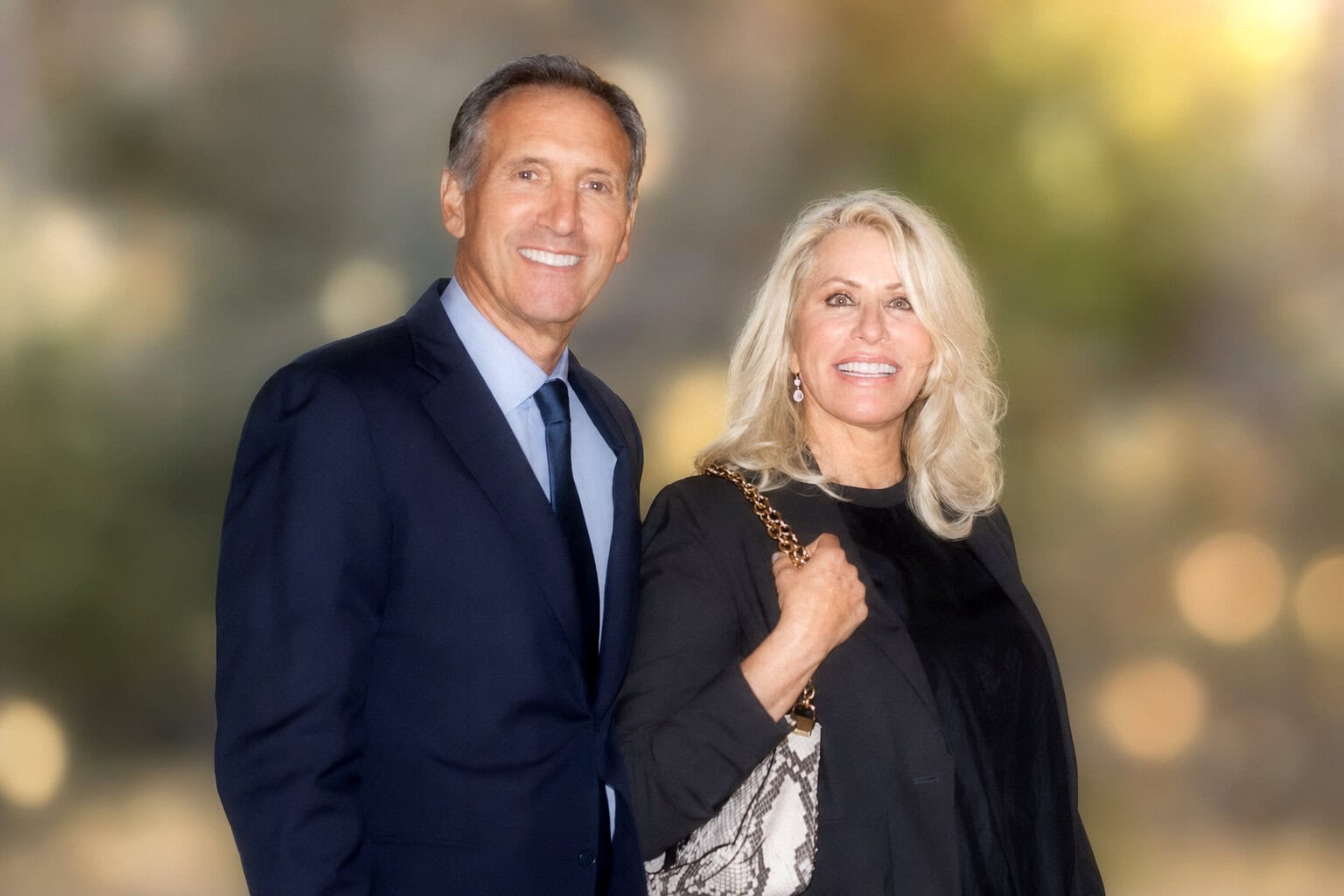
The other half of the money is rooted in the personal fortune of Howard Schultz, the former Starbucks chief executive, and his wife, Sheri Schultz, who co-founded the Schultz Family Foundation on the belief, as the foundation puts it, that “talent is everywhere, but opportunity is not.”
Sheri Schultz spoke personally to the stakes of the new partnership, pointing to work her foundation has already done through the Youth Mental Health Corps, which she said has enrolled more than 1,000 members across 27 states.
“We have seen firsthand that when young people are given the opportunity to serve, they don’t just strengthen communities—they discover purpose, develop skills, and often find a calling,” she said.
“At a time when our nation faces both a youth mental health crisis and a critical shortage of behavioral health professionals, this initiative creates a powerful bridge between service and career.”
Day-to-day, the foundation’s giving is run by chief executive Vivek Varma, who cast the effort in economic as much as civic terms.
“Service creates a rare double dividend,” Varma said.
“It helps states tackle pressing challenges today while opening meaningful pathways for young people to build skills, earn credentials, and launch careers. As AI reshapes the labor market, governors have an opportunity to make service a cornerstone of workforce strategy”.
The commitment is not Carnegie’s first foray into this territory.
Over the past four years, the foundation has already put $7.8 million into state-level service programs in Maryland, New York, and Utah, and it separately awarded $1 million to the nonpartisan nonprofit More Perfect to sustain related work tied to the new NGA partnership.
Both foundations say the $10 million is meant as seed capital rather than a ceiling, and they are actively courting additional foundations, corporations, and individual donors to join the effort through a dedicated portal at serviceunitedfund.org/funders.
Structurally, the Service United Fund will not hand out a single template.
Instead, it will issue catalytic grants ranging from $100,000 to $1.5 million, with governors’ offices applying by first submitting an expression of interest through the fund’s website.
The first grantmaking round is open through October 23, 2026, with a second round scheduled to open after the November elections specifically so that incoming governors taking office in 2027 have a chance to apply alongside sitting ones.
Eligible uses span workforce shortages, education, public safety, mental health, housing, energy, and conservation—essentially any state priority that can be advanced through paid service.
On the government side, the National Governors Association is positioning Service United as the marquee initiative of Moore’s chairmanship, explicitly modeled on Maryland’s own Service Year Option, which pays young adults who recently finished high school a minimum of $15 an hour to serve with host organizations, plus a $6,000 completion award and access to skilled-trade credentials.
“At a time of deep division, I firmly believe that service will save us,” Moore said at the Oklahoma City announcement.
“Service United is a bipartisan call to action for our nation’s governors to create and expand paid service programs that meet our most urgent community needs while helping young Americans build critical skills. Its promise is simple: Service from All.
Opportunity for All.”.
NGA’s own leadership backed the framing.
Chief executive Brandon Tatum said the initiative would “help states develop robust service programs that will not only strengthen civic engagement but promote economic mobility,” while chief policy officer Timothy Blute called it a source of “unprecedented momentum” behind the association’s service agenda.
The launch also drew outside voices into the fold: Gina Raimondo, co-founder and chief executive of the workforce group RAISE US, tied the effort to competitiveness in artificial intelligence, saying “America cannot lead in AI if American workers are left behind,” and Jennifer Hoos Rothberg, executive director of the Einhorn Collaborative — a funder that has spent more than a decade backing national-service infrastructure through groups like City Year — called the launch the culmination of years of groundwork now “translating into a national movement of this scale”.
The initiative arrives against a backdrop the NGA describes in stark terms: roughly 30 million Americans are between 16 and 24, a majority of them struggling to find good jobs, with about 5 million neither in school nor employed, even as structural workforce shortages persist and the AI transition reshapes entry-level work.
Under Moore’s chairmanship, Service United will also sit under a broader NGA umbrella effort called Campaign for America, meant to build cross-partisan civic bonds, with additional pillars expected to be announced in the coming months.
For now, the money is real and the mechanism is live: states can begin applying immediately, the first deadline falls in late October, and the ultimate scale of the fund will depend on how many additional donors Richardson, Varma, and their teams can persuade to follow the Carnegie and Schultz families into what both sides are describing as a long-term bet on service as bipartisan common ground.