
$11.6 billion heading to charity: Dangote family signs a historic pledge, built on a decade of American partnerships
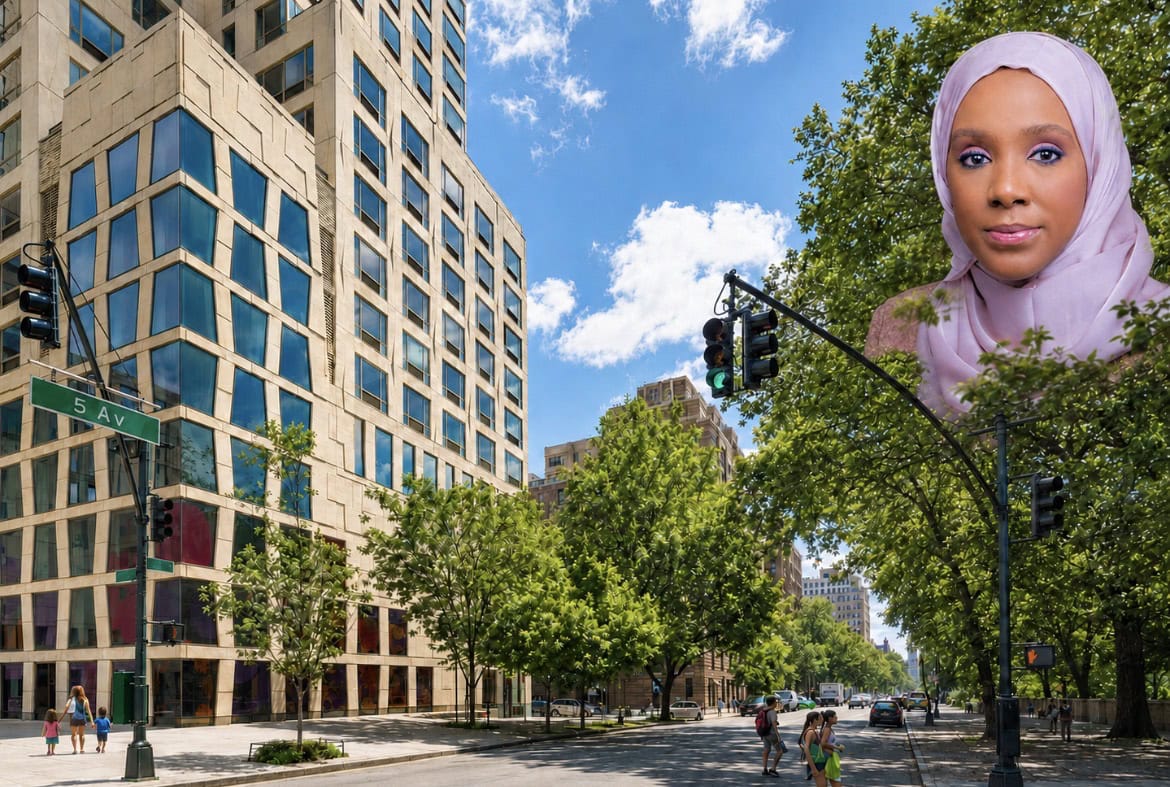
Long before most Americans ever heard the word “succession” attached to Aliko Dangote’s name, they had likely already encountered his family’s philanthropy without realizing it.
Walk to the northern edge of Manhattan’s Museum Mile, and you’ll find the Africa Center, a cultural institution built to reshape how the United States understands the continent — funded in part by a $20 million gift from the Aliko Dangote Foundation, with the Bill & Melinda Gates Foundation chipping in another $5 million toward the same capital campaign.
Halima Dangote, the daughter who would later become the family’s public voice on succession, sits as the Africa Center’s board president.
It is not a ceremonial title.
She has spoken about the project in the same terms she now uses for her father’s estate: as an effort to change how the world understands where the Dangote fortune and the Dangote family’s sense of duty actually come from.
That American thread runs older and deeper than one building in New York. Nearly a decade before this year’s succession news, Aliko Dangote stood in a government house in Kaduna State next to Bill Gates and the sitting U.S. Ambassador to Nigeria to launch a routine-immunization partnership across four northern Nigerian states, blending Dangote Foundation money with Gates Foundation money and technical support from the U.S. Agency for International Development.
The same week, the two foundations separately unveiled a joint $100 million, five-year commitment to fight childhood malnutrition in Nigeria.
That collaboration, layered onto an earlier joint push on polio eradication, helped set the stage for Africa being declared free of wild poliovirus in 2020.
Gates has described the relationship in strikingly personal terms, calling it a genuine friendship built over years of shared work, andDangote himself has said that watching Gates and Warren Buffett reshape their own fortunes into public-health infrastructure pushed him to make his own giving louder and more structured, rather than keeping it as private as he once did.
So when Halima Dangote sat for an interview at the end of July and revealed that her father had already secured the family’s signatures on a will committing one-third of his fortune to charity, the news did not land as a surprise announcement from an unfamiliar name.
It landed inside a philanthropic relationship the American giving world had been watching, in pieces, for years.
“He asked me, my two sisters, and his mother to sign that will that, you know, he is able to give that 33 percent to humanity,” Halima said, describing a family decision rather than a corporate one.
Aliko Dangote, the cement and oil-refining magnate who remains Africa’s richest person, has a fortune recent estimates place somewhere between $35 billion and $37 billion, depending on how his still-unlisted refinery assets are valued in a given week.
A third of that, today, comes to somewhere between $11.6 billion and $12 billion—a sum that, once it eventually reaches the Aliko Dangote Foundation, would stand among the largest philanthropic transfers ever tied to a single African family.
What sets this apart from the usual billionaire pledge is the mechanism underneath it.
There was no stage, no ceremonial signing photo, and no campaign branding attached to the announcement.
It was framed, from the outset, as an inheritance document rooted in faith rather than fanfare. “If you look at it, it is what we call in Sharia Code in Islam; it means he has donated 33 percent of his whole inheritance to his foundation,” Halima explained, noting that Islamic inheritance principles generally cap what a person can direct outside their immediate heirs at one-third of an estate, unless those heirs agree to give up a larger share themselves.
By getting his mother and his three daughters to sign, Dangote locked in essentially the maximum his tradition would recognize without a family negotiation. It’s a structure built to hold, not a headline built to fade.
Halima describes her father’s giving less as a series of grand gestures and more as a habit built over years.
“He sort of put all the structure in place whereby we focus a lot on health and education,” she said, noting that he had already steered a quarter of his holdings toward the foundation before this latest step put the fuller 33 percent figure in writing.
To the family, this isn’t a first pledge.
It’s a decade-plus pattern of giving, finally made durable enough to outlive the man behind it.
The vehicle for all of it is the Aliko Dangote Foundation, which got its start in 1994 and took its current shape in 2014, when Dangote endowed it with $1.25 billion — at the time, the largest single philanthropic endowment ever committed by a sub-Saharan African donor.
Halima says the foundation has since taken in another $700 million on top of that original endowment.
About 70 percent of what it spends stays inside Nigeria, another 20 percent reaches the rest of Africa, and the remainder funds initiatives further afield, including a past donation to help people displaced by catastrophic flooding in Pakistan.
Health, education, nutrition and disaster relief have been the foundation’s steady focus since its rebrand, and the giving record backs that up.
Late last year, the foundation committed roughly $700 million to Nigerian education over the next decade, a pledge Dangote unveiled at an international forum in Doha alongside Bill Gates, aiming to reach 45,000 students in its first year and grow to more than a million beneficiaries by the program’s end, with particular emphasis on STEM subjects, girls’ education, and nationwide teacher training.
By the middle of this year, publicly tracked giving for 2026 alone had already climbed past $47 million in named, verified gifts — rice distributed across every local government area in Nigeria during Ramadan, a multimillion-dollar donation to a science and technology university in Kano, a sizable commitment to Nigeria’s new national food bank program championed by the country’s first lady, and a hunger-relief pledge made from a charity stage in Dubai.
Dangote has talked, more than once, about wanting the giving to eventually outlast the balance sheet in how people remember him.
He has said he wants to be known not just as Africa’s richest person but as its biggest philanthropist, and that framing has followed him onto international recognition lists that place him alongside titans of American giving — the same bracket that includes Warren Buffett, Oprah Winfrey and Melinda French Gates.
He remains the only Nigerian and one of very few Africans to appear in that top tier of global philanthropic recognition.
It’s worth setting this pledge next to the framework most American readers already know: the Giving Pledge, the campaign Warren Buffett and Bill and Melinda Gates started in 2010 asking the world’s wealthiest people to commit at least half their fortunes to charity, generally within their lifetimes or at death. Dangote’s 33 percent falls short of that 50 percent line, and he is not among the pledge’s signatories.
But the comparison sells the moment a little short. Islamic inheritance law doesn’t offer the same flexibility an American or European estate can claim — a third is close to the ceiling a Muslim testator can direct outside the family line without every heir signing off.
Getting three daughters and a widow to put their names to that ceiling, in writing, while the patriarch is still running Africa’s largest industrial conglomerate, is its own rare kind of public commitment.
It is the largest philanthropic pledge ever made by an African billionaire.
None of the American ties change where the bulk of the money is actually headed. Roughly seven of every ten dollars the Aliko Dangote Foundation spends stays inside Nigeria, and the Africa-wide 20 percent on top of that keeps the mission rooted on the continent where the Dangote fortune was built in the first place — cement, sugar, and, more recently, one of the largest single-train oil refineries in the world, all financed and constructed across Nigeria and West Africa.
What the American partnerships add is a set of validating relationships — the Gates Foundation’s technical and financial co-investment in immunization and nutrition work, a landmark cultural gift in Manhattan, a seat at the table on international philanthropy’s biggest recognition lists — that have helped place Dangote’s giving inside a global conversation usually dominated by American and European names.
That positioning seems to matter to the family as they think about what comes next. Dangote has been gradually handing more operational responsibility across his business empire to a younger generation of executives even as he stays on as chairman, and Halima’s growing public role — foundation trustee, group executive director of the parent company, board president of a New York cultural institution, and now the family’s chosen voice on succession — suggests the philanthropic infrastructure is being built to outlast any one generation, not just her father’s.
She framed her father’s thinking not as a single grand gesture but as an ongoing discipline: philanthropy, she said, was never meant to be a one-off act, but a consistent, long-term commitment — which is why locking in the 33 percent mattered enough to put in writing, with every woman in the family’s name attached to it.
Whether the eventual transfer settles at $11.6 billion, $12 billion, or something larger will depend entirely on what Dangote’s fortune is worth by the time the will takes effect — a fortune that stays hard to price precisely because so much of it sits in an industrial portfolio that has never traded on a public market.
What’s fixed, according to his daughter, is the proportion, the family’s agreement to it, and the causes it’s meant to serve: health, education, nutrition, and poverty relief for the population Dangote has spent three decades building his companies among, carried forward by partnerships—Seattle to Kaduna, Manhattan to Lagos—that have made this pledge as much a story about global philanthropy’s shifting center of gravity as it is about one family’s fortune.
Photo: New York’s Africa Center. Inset: Halima Dangote, who, in her 30s, is the moving force behind the family’s philanthropy