
$50 million gift from Jeffrey Lurie earns him ESPN’s Stuart Scott ENSPIRE Award not as a Super Bowl–winning owner, but as the public face of a decades-long campaign to rewrite the playbook for autism research and care
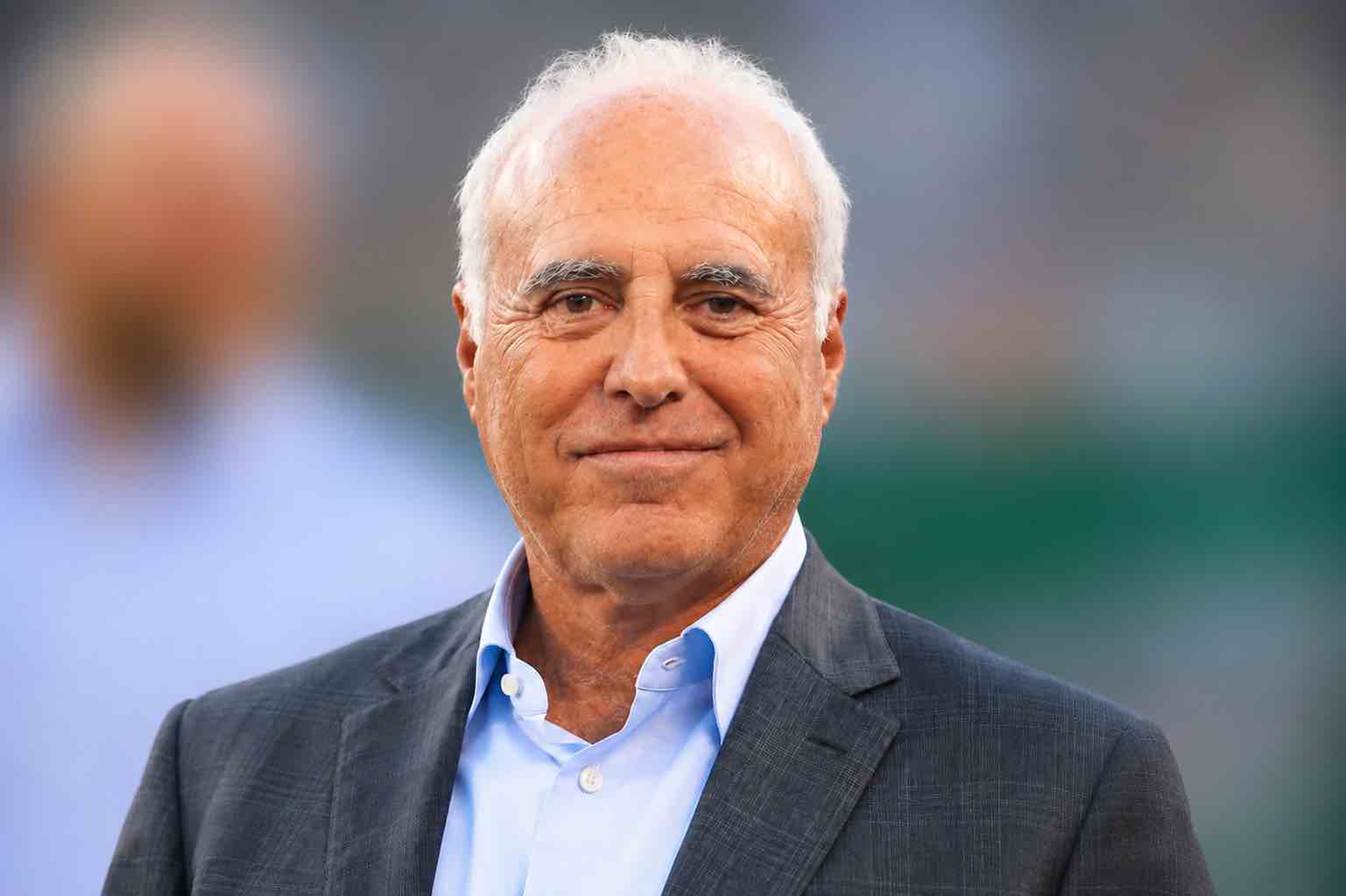
Jeffrey Lurie’s record $50 million gift to launch the Lurie Autism Institute has effectively turned the Philadelphia Eagles’ owner into one of the most consequential private philanthropists in American autism research, a commitment now being recognized on the national stage with ESPN’s Stuart Scott ENSPIRE Award.
Philadelphia Eagles chairman and CEO Jeffrey Lurie will step onto the ESPYS week stage this July not as a Super Bowl–winning owner, but as the public face of a decades-long campaign to rewrite the playbook for autism research and care.
ESPN has selected Lurie as the 2026 recipient of the Stuart Scott ENSPIRE Award, one of its highest humanitarian honors, citing his “work supporting the global autism community” through the Eagles Autism Foundation and, most recently, the creation of the Lurie Autism Institute.
The award is part of ESPN’s Sports Humanitarian Awards program, held in New York on July 14 and televised during the ESPYS broadcast on July 15, underscoring how far Lurie’s philanthropic identity has moved from the owner’s box to the broader public square.
The inflection point came, when the Lurie family pledged $50 million to create the Lurie Autism Institute, a joint initiative of Children’s Hospital of Philadelphia and Penn Medicine.
Structurally, the Institute is designed as a cross-campus, cross-discipline hub, aligning Penn’s academic and research infrastructure with CHOP’s pediatric and family-facing care to follow autistic individuals “across the lifespan”—from early diagnosis through adulthood—rather than siloing services in childhood or in a single hospital system.
Health-system leaders described it as the largest single donation ever made to U.S. academic medical centers specifically for autism research, signaling not just generosity but an effort to reset what “scale” looks like in this field.
For Lurie, the $50 million wasn’t a discrete one-off, but the capstone of an arc that began with his own family’s experience with autism and evolved into a platform strategy anchored by the Eagles Autism Foundation.
Over the last eight years, the combination of the Foundation’s grantmaking and the Institute’s launch has directed more than $100 million toward autism research and clinical programs globally, according to reporting from the Philadelphia Inquirer and the team’s own statements.
Much of that funding has flowed into translational work—projects that move laboratory insights into real-world therapies and support services—reflecting Lurie’s stated belief that philanthropy has the highest impact when it compresses the time between discovery and delivery for families.
In the current philanthropy landscape, the Lurie Autism Institute stands out not only for its size, but for its positioning inside two powerhouse academic medical systems in a single city.
By structuring the gift as a joint partnership between CHOP and Penn Medicine, the Lurie family effectively insisted on integration: shared governance, shared data, and shared accountability for outcomes, rather than parallel, competitive efforts.
That approach has drawn attention from other donors and health-system leaders who see in the Institute a template for how private capital can force collaboration in an otherwise fragmented research environment.
The Stuart Scott ENSPIRE Award, named for the late ESPN anchor who became an emblem of resilience during his own cancer battle, is reserved for individuals who “use the power of sports to help the disadvantaged.” In Lurie’s case, the “power of sports” is literal: he has used the Eagles brand, fan base, and game-day experience as a fundraising and awareness engine, turning what was once a single awareness game into a year-round philanthropy platform.
Grantmaking from the Eagles Autism Foundation has supported projects on multiple continents, but the ENSPIRE recognition highlights how that portfolio has now fused with the Lurie Autism Institute’s research agenda, knitting together community fundraising with long-horizon academic science.
That synthesis defines Lurie’s overall giving profile more than any one check.
The historic $50 million Institute gift is the headline, but it sits atop a layered architecture of prior donations, grant cycles, and program investments that have collectively bankrolled everything from basic neuroscience to family support services and clinical trials infrastructure.
ESPN’s decision to spotlight Lurie now suggests that this body of work has reached a level of maturity and visibility where his name is no longer attached solely to a Lombardi Trophy or a franchise valuation but to a sustained, measurable effort to change the trajectory of autism research and care for the long term.