$26 million to help complete library: Kenneth C. Griffin’s latest gift reflects a lifetime of investing in America’s future
As the United States prepares to celebrate its 250th anniversary, one of the nation’s most influential philanthropists has made another defining investment in America’s future.
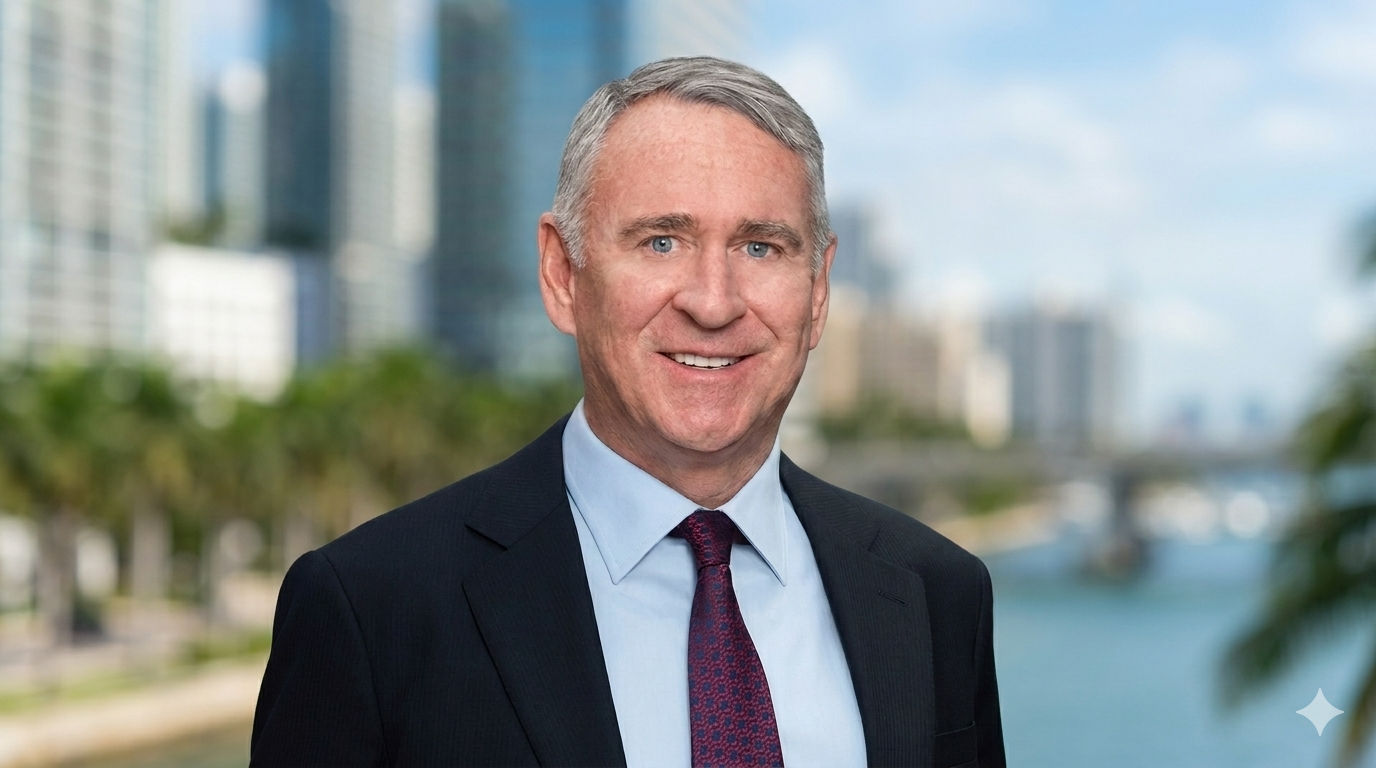
Kenneth C. Griffin, founder and chief executive officer of Citadel and founder of Griffin Catalyst, has pledged a landmark $26 million to help complete the Theodore Roosevelt Presidential Library in Medora, North Dakota, reinforcing his long-standing belief that America’s greatest strength lies in educating future generations, preserving its history, and nurturing principled leadership.
The gift, announced by the Theodore Roosevelt Presidential Library, will permanently associate Griffin’s name with one of the country’s most ambitious cultural institutions.
The library’s west wing will become the Kenneth C. Griffin West Wing, serving as the primary entrance for millions of future visitors while housing major exhibitions, educational programming, and public gathering spaces dedicated to the life and legacy of America’s 26th president.
For Griffin, whose philanthropy has increasingly focused on strengthening the institutions that underpin American society, the project represents a natural extension of decades of giving that have consistently looked beyond today’s immediate needs toward the generations who will inherit tomorrow.
“In our nation’s 250-year history, few Americans have embodied the spirit of leadership as fully as Theodore Roosevelt,” Griffin said. “His vision, courage, and commitment to public service left an enduring mark on our nation. I am honored to support this landmark institution as it educates and inspires future generations of Americans to lead with purpose and strengthen the ideals that define our country.”
Those words offer an important window into Griffin’s philanthropic philosophy.
Throughout his career, Griffin has often spoken about the importance of opportunity, education, personal responsibility, and civic engagement. His charitable giving has increasingly reflected those convictions, supporting institutions that cultivate leadership, preserve democratic values, advance scientific discovery, and expand educational access.
Edward F. O’Keefe, chief executive officer of the Theodore Roosevelt Presidential Library, described the contribution as transformative.
“We are deeply grateful to Ken Griffin for his extraordinary generosity and visionary support,” O’Keefe said. “The Kenneth C. Griffin West Wing will be a vital component of our campus, allowing us to expand civic education. Ken’s support reflects a commitment to fostering leadership and excellence beyond the coasts of our country, in the heart of the Badlands, and echoes the very principles of citizenship and character that Theodore Roosevelt championed throughout his life.”
The symbolism of the gift is particularly striking.
Rather than placing another monument in one of America’s great financial or cultural capitals, Griffin has chosen to invest in Medora, North Dakota—a community of fewer than 200 residents that forever shaped Theodore Roosevelt’s life. Roosevelt himself often credited his years ranching in the North Dakota Badlands with forging the resilience, independence, and conservation ethic that later defined his presidency.
It is there, surrounded by rolling grasslands and rugged buttes, that visitors from around the world will soon experience a presidential library unlike any ever constructed.
Designed by internationally acclaimed architecture firm Snøhetta, the Theodore Roosevelt Presidential Library is expected to become the first carbon-neutral presidential library in the United States. Rather than dominating the landscape, the building has been conceived to blend seamlessly into it, allowing visitors to experience Roosevelt’s enduring passion for nature, conservation, and stewardship while exploring the ideas that shaped one of America’s most consequential leaders.
Opening on July 4, 2026—the nation’s semiquincentennial—the library is intended to become far more than a museum.
Its mission is to cultivate civic leadership, encourage public service, promote environmental stewardship, and inspire thoughtful dialogue across generations.
Students, scholars, families, and community leaders will gather there not simply to study history, but to consider how Roosevelt’s example continues to inform the challenges of modern America.
That mission closely mirrors Griffin’s own philanthropic priorities.
Through Griffin Catalyst, his civic engagement initiative, Griffin has organized much of his charitable work around six interconnected pillars: education, science and medicine, upward mobility, freedom and democracy, enterprise and innovation, and strong communities.
Together, they reflect a practical philosophy that lasting progress depends upon strong institutions, evidence-based solutions, and investments capable of creating opportunity at scale.
His generosity over the past two decades has reshaped some of America’s leading educational, scientific, and cultural organizations.
Transformational gifts have supported Harvard University, the University of Chicago, Northwestern University, groundbreaking medical research, public education initiatives, and scholarship programs. His philanthropy has also strengthened major cultural institutions, including the Museum of Modern Art, the Field Museum, the Art Institute of Chicago, and the American Museum of Natural History, preserving access to art, science, and history for millions of visitors each year.
Equally important has been Griffin’s growing commitment to strengthening American democracy itself. Increasingly, his philanthropy has emphasized civic education, constitutional understanding, and the preservation of institutions that encourage informed citizenship—areas that resonate deeply with Theodore Roosevelt’s own lifelong emphasis on public service and national character.
Friends and colleagues frequently describe Griffin as intensely analytical, relentlessly curious, and deeply committed to measurable impact.
Rather than dispersing philanthropic dollars broadly, he has often concentrated his support where it can fundamentally change an institution’s trajectory, enabling organizations to think not merely in years but in generations.
The Theodore Roosevelt Presidential Library is precisely that kind of institution.
When visitors arrive beginning this summer, many will first step into the Kenneth C. Griffin West Wing.
Families with young children, students exploring American history for the first time, scholars examining Roosevelt’s presidency, and civic leaders seeking inspiration will all pass through a space made possible by Griffin’s vision.
It is fitting that the entrance bears his name.
Theodore Roosevelt believed citizenship was an active responsibility rather than a passive privilege. He challenged Americans to embrace what he famously called “the strenuous life”—a life defined by courage, service, curiosity, and moral purpose.
More than a century later, Kenneth C. Griffin’s latest gift reflects a similar conviction: that America’s future will ultimately be shaped not only by markets or technology but also by the strength of its educational institutions, the preservation of its democratic ideals, and the willingness of private philanthropy to invest in the nation’s civic life.
As America marks its 250th birthday, the new Theodore Roosevelt Presidential Library will stand as both a tribute to one of its greatest presidents and a powerful reminder that visionary philanthropy continues to help write the nation’s next chapter.
For Kenneth C. Griffin, whose philanthropy has already touched countless lives through education, science, medicine, culture, and civic engagement, this latest investment is far more than the construction of another building. It is an investment in memory, leadership, and the enduring promise that each generation can leave the nation stronger than it found it.