
$10 million gift from Frances and Miller Gorrie fuels expansive legacy in Alzheimer’s research
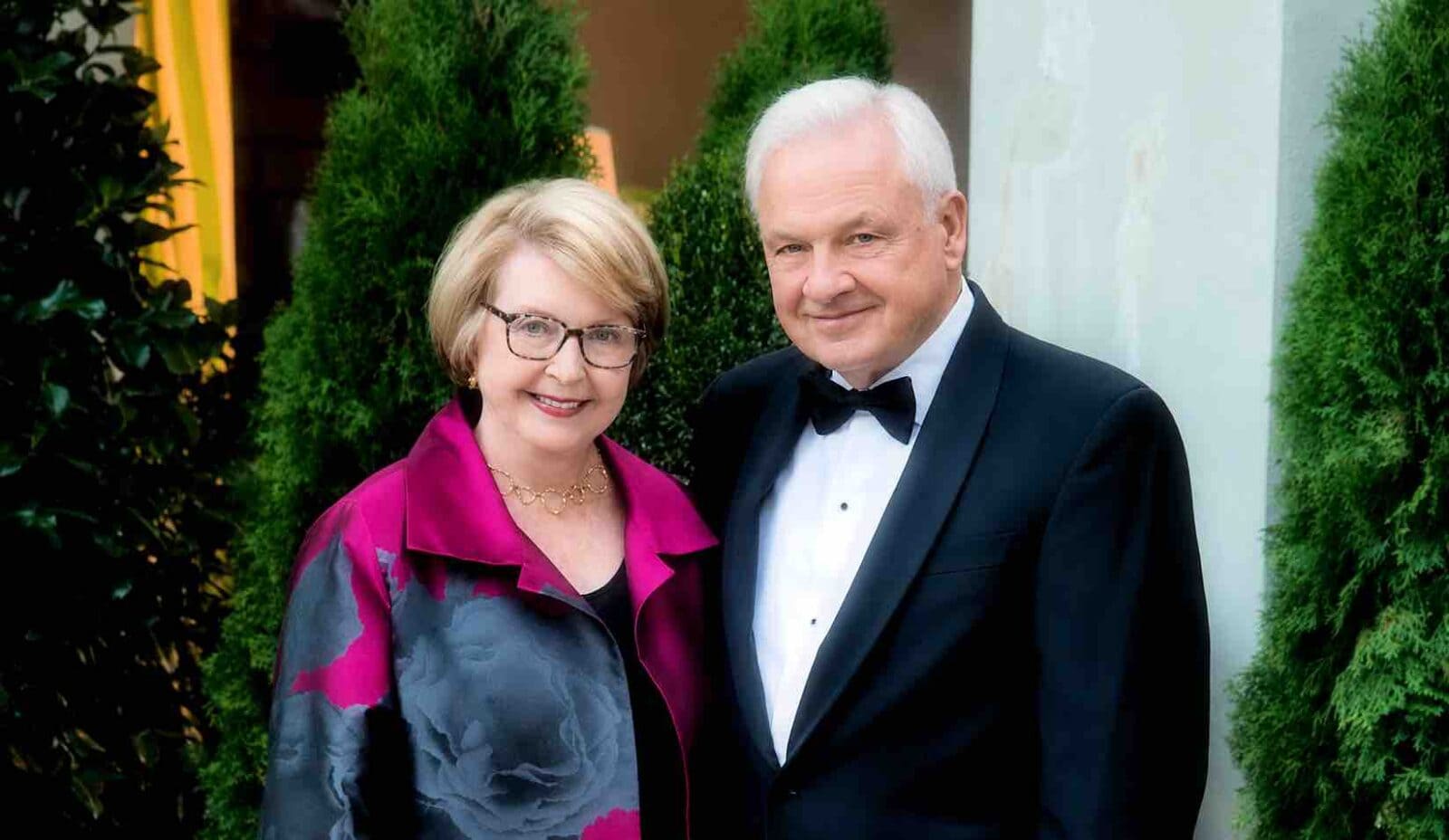
Frances and M. Miller Gorrie’s new $10 million commitment to the University of Alabama at Birmingham is the latest chapter in a decades-long story of deeply rooted philanthropy that has helped shape Alabama’s medical, educational, and civic landscape.
Centered this time on Alzheimer’s disease—a condition that now touches nearly 12 percent of Alabama seniors and gives the state one of the nation’s highest Alzheimer’s‑related death rates—the gift extends a family tradition of giving that has long blended major capital support with painstaking attention to the needs of vulnerable people and the institutions that serve them.
The couple’s newest contribution will fund research, teaching, and patient‑care initiatives at UAB and permanently link the family name to the fight against neurodegenerative disease through the Frances Gorrie Alzheimer’s Disease Center. UAB officials say the funding will catalyze new clinical trials, expand fellowship opportunities for emerging specialists, and create endowed faculty positions designed to attract leading researchers to Birmingham.
The center, established in 1991 as an academic and clinical hub for Alzheimer’s and related dementias, will now carry Frances Gorrie’s name in recognition of both the magnitude of the gift and the family’s long relationship with the institution.
For Miller Gorrie, the decision is explicitly personal; he has described Alzheimer’s as a disease that has “touched far too many families, including people I care deeply about,” and has framed the gift as a way to honor those journeys while pushing the field closer to better treatments and, ultimately, a cure.
That personal, almost understated tone is characteristic of a couple whose public profile has been defined more by construction milestones than by donor spotlights, even as their philanthropy has quietly expanded across education, health care, and community life in Alabama and beyond. Born and raised in Birmingham, Miller Gorrie graduated from Auburn University with a degree in civil engineering in 1957, served three years in the U.S. Navy’s Civil Engineering Corps, and returned to Alabama to build what would become one of the nation’s leading privately held construction firms.
In 1964 he acquired the assets of the Thomas C. Brasfield Company and, a few years later, renamed it Brasfield & Gorrie, guiding the business from a local contractor with roughly $800,000 in annual revenue into a multistate powerhouse frequently ranked among the top general contractors in the country.
As the company grew, the Gorries began channeling their success into a philanthropic portfolio that mirrors the breadth of the firm’s footprint: hospitals, universities, civic institutions, and specialized programs that serve people often overlooked by mainstream systems.
Education has been one of the couple’s enduring priorities. In 1987, Miller and Frances founded the Cloister Creek Educational Center in Atlanta, a school created specifically for young adults with learning disabilities. Gorrie has served as chairman of the board, and the center has been cited as a model of how targeted educational interventions can change the trajectory of students who might otherwise fall through the cracks.
Their philanthropy in higher education spans the state; Miller has held advisory roles with Auburn’s Building Science program and UAB’s Civil Engineering Board of Visitors, and he has served on the Samford University Board of Overseers and the UAB President’s Council, a pattern that pairs governance service with philanthropic investment. Reflecting that dual commitment, Auburn University recognized his leadership in 1997 by naming the M. Miller Gorrie Construction Center in his honor, a facility funded in part through a lead gift from Brasfield & Gorrie employees and emblematic of the culture of giving he fostered within the company.
At UAB, the relationship between the Gorrie family and the university now spans disciplines and decades. In addition to the newly named Alzheimer’s center, UAB has already recognized the couple’s longstanding support through Frances and Miller Gorrie Hall, a new home for the School of Engineering designed to integrate advanced hands‑on learning with real‑world industry experience.
The building, which opened as part of a multi‑year campus expansion, stands as a bricks‑and‑mortar emblem of the family’s belief that engineering and applied science are critical engines of opportunity for Birmingham and the broader region.
From UAB’s perspective, the Gorries are “among UAB’s biggest supporters,” a description that reflects both the cumulative size of their giving and the way their gifts have been structured to strengthen the institution’s research capacity, talent pipeline, and community impact.
Health care, particularly complex and chronic conditions, has been another through‑line in the family’s giving. Beyond the current Alzheimer’s commitment, Miller Gorrie has held leadership positions with several hospital foundations, including Medical Center East and Baptist Medical Centers, and has served on the board of Southern Research Institute, a Birmingham‑based organization known for its work in drug discovery and engineering research.
His board service has extended to the McWane Center, a hands‑on science museum, underscoring the family’s interest in science education and public engagement around health and technology. Over the years, national organizations have recognized his philanthropy and civic leadership with honors such as the “Outstanding Corporate Citizen” Award from the National Society of Fund Raising Executives, the “Tree of Life” Award from the Jewish National Fund, and the “Hope” Award from the Multiple Sclerosis Society, each tied to significant charitable contributions and advocacy on behalf of those causes.
Within Birmingham’s civic fabric, the Gorries have become synonymous with a particular brand of engaged corporate citizenship. Miller has served on the boards of the United Way, the Alabama Symphony, the Birmingham Construction Industry Authority, the Business Council of Alabama, the Birmingham Chamber of Commerce, and the Economic Development Partnership of Alabama, among others. These roles have often intersected with philanthropy, whether through campaign leadership, capital projects, or strategic efforts to strengthen the region’s economic and cultural infrastructure.
Colleagues routinely point to his soft‑spoken style—he has been described as “Silent Thunder”—as a contrast to the scale of his influence, a pairing that has made him a sought‑after partner for initiatives needing both financial and governance support. The family’s giving has also extended into corporate philanthropy through Brasfield & Gorrie, whose corporate responsibility program emphasizes volunteerism, community partnerships, and support for local nonprofits in the cities where the company operates.
The new Alzheimer’s gift not only builds on that history but also reflects an evolution in the family’s philanthropic focus toward aging and neurodegeneration at a time when demographic trends in Alabama make those issues increasingly urgent. UAB’s Department of Neurology chair, David Standaert, has called the donation both “exciting and critical,” noting that recent scientific advances have produced new treatments and promising avenues of research just as the aging population ensures that more families will confront Alzheimer’s and related conditions.
With the Gorrie funding, UAB plans to expand the number and scope of clinical trials beyond the five to seven Alzheimer’s‑related studies it typically runs at any given time and to use new endowed positions and fellowships to recruit and train specialists who can serve patients across the state.
The university also expects the gift to enhance community outreach and education by connecting Alabama’s urban and rural communities with resources to help families navigate diagnosis, care, and support.
Taken together, the Gorries’ philanthropy to date resembles a long‑term building project, one that has used major gifts, institutional leadership, and targeted programs to reinforce the educational, medical, and civic foundations of their home state.
From a specialized school for young adults with learning disabilities to engineering facilities, hospital foundations, symphony boards, and now a flagship Alzheimer’s disease center bearing Frances Gorrie’s name, the through line is a conviction that strong institutions and focused expertise can change individual lives at scale.
For Birmingham and Alabama’s aging population, the family’s latest commitment signals that the family’s most consequential work as philanthropists may still lie ahead, in laboratories, clinics, and community programs aimed at one of the most complex medical and human challenges of our time.