
$112.6 million new gift from Lorie and Nick Howley to school earns naming rights to College of Engineering and Computing
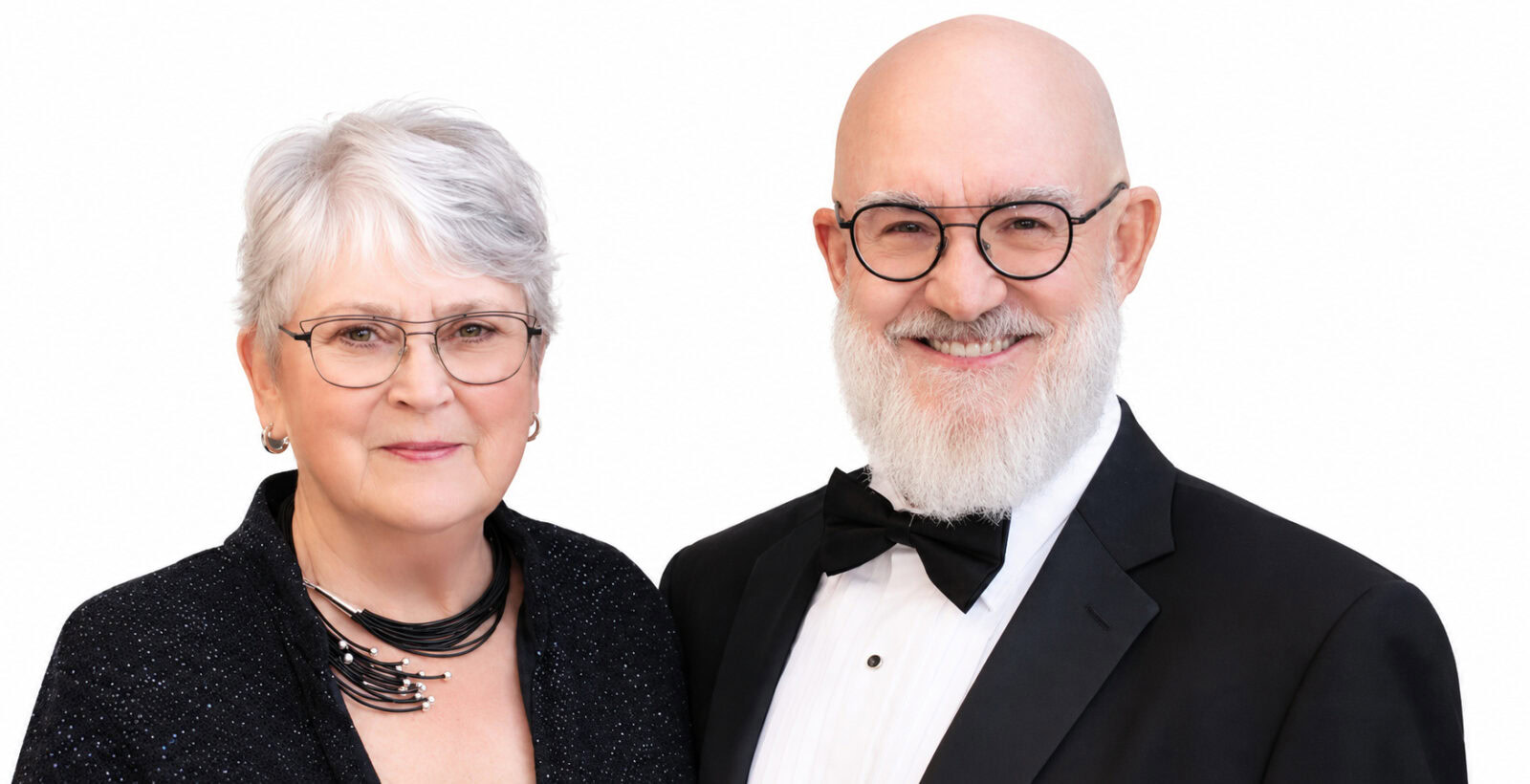
Drexel University’s largest gift in its 133-year history did not emerge from a single transaction so much as a family narrative that has been building for generations.
The $112.6 million commitment from the Howley Foundation—now formalized in the naming of Drexel’s new Nick Howley College of Engineering and Computing—reflects a tightly held philosophy shaped inside a large, working-class Catholic family and carried forward into one of the more quietly influential philanthropic efforts in American education.
At its center is Nick Howley, a 1975 Drexel engineering graduate who went on to build TransDigm Group into a multibillion-dollar aerospace manufacturer, but the architecture of the gift is distinctly collective: his wife, Lorie Howley, and daughter, Meg Howley, are not symbolic participants but active stewards of a foundation that has made access to education its singular focus.
For Howley, the story begins not with capital markets but with his father, Walter Howley Jr., who attended Drexel after World War II and graduated in 1951. That experience—an engineering education as a ladder into the middle class—became a kind of family doctrine.
Nick Howley, one of eight siblings, has often described education as the only durable asset his parents believed they could pass on. The idea was less about prestige than mobility: a practical pathway to stability, reinforced by discipline and opportunity.
That framework now informs the foundation’s giving strategy, which is unusually concentrated. Unlike many large donors who diversify across causes, the Howley family has chosen to focus almost exclusively on students with demonstrated ability but limited financial means.
It is a philosophy that shows up clearly in the Drexel gift, where more than two-thirds—$76 million—has been directed toward scholarships and endowment support rather than buildings alone.
The physical campus, however, will bear the family’s imprint. A portion of the funding will transform 3101 Market Street into the Howley Family Immersive Learning Center, an updated hub for engineering labs that reflects Howley’s long-standing interest in applied, hands-on education. Nearby, the Walter N. Howley Jr. Innovation Garage will serve as a visible tribute to the family’s first Drexel graduate, linking the university’s postwar past to its present emphasis on collaborative, project-based work.
That emphasis is not incidental. Howley has consistently pointed to Drexel’s cooperative education model as a decisive factor in his giving. The co-op structure—alternating academic study with paid professional experience—aligns closely with the foundation’s target population. Students who need to work, he has said, benefit disproportionately from institutions that integrate employment into the curriculum rather than treating it as a competing demand.
The timing of the gift is also notable. Drexel is in the midst of consolidating three academic units—engineering, computing, and biomedical engineering—into a single college, a move driven in part by enrollment pressures and the evolving demands of technical education.
For Howley, the merger appears to have strengthened the case for investment. A larger, unified college, in his view, better reflects the interdisciplinary reality of modern engineering and computing fields, while also offering scale that can justify major philanthropic backing.
Within the family, the Drexel connection is not merely historical. Multiple relatives currently attend the university, and Meg Howley, who earned a graduate degree there in 2010, represents a second generation of direct engagement.
Lorie Howley, meanwhile, has played a central role in shaping the foundation’s priorities, particularly its emphasis on identifying students whose academic potential outpaces their financial resources. Together, the family has built a giving model that blends personal affiliation with a disciplined, outcomes-oriented approach.
That approach has gained visibility beyond Drexel. Earlier in 2026, the Howley family donated $74 million to St. Joseph’s Preparatory School in Philadelphia, another record-setting gift aimed at expanding access. In both cases, the pattern is consistent: large-scale, education-focused investments tied to institutions with which the family has longstanding relationships and structured to produce measurable opportunity rather than diffuse impact.
At Drexel, the implications will unfold over time. New facilities—including robotics labs, a jet engine lab, and expanded computing spaces—are expected to modernize infrastructure that students have described as uneven. Yet the more consequential shift may be less visible: a sustained infusion of scholarship funding designed to reshape who can attend and succeed at the university.
For Howley, the return is not framed in terms of institutional rankings or naming rights but in terms of personal trajectory. He has often described arriving at Drexel as an unremarkable student and leaving at the top of his class, a transformation that led to Harvard Business School and, ultimately, to the companies that would fund his philanthropy. The throughline, in his telling, is not exceptionalism but access—being given the structure and opportunity to improve.
That belief now defines the legacy the Howley family is building at Drexel: not simply a renamed college or upgraded facilities, but a system designed to replicate, at scale, the conditions that once altered the course of a single student’s life.