
$215 million more from Melinda French Gates pushes her women’s health giving past $600 million
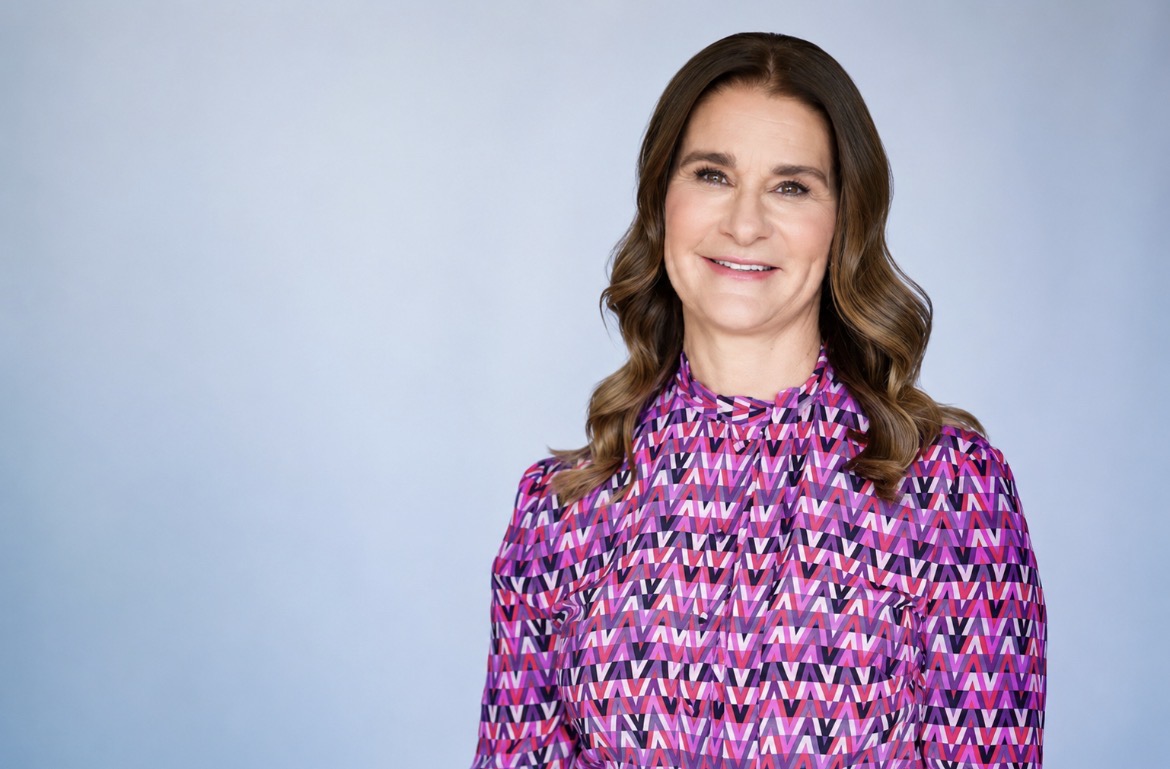
Melinda French Gates is betting that a concentrated burst of capital — and attention — can do what decades of fragmented efforts have not: drag women’s health, especially in midlife, out of the margins and into the center of global health and innovation.
Her latest move is a $215 million commitment to women’s health, just announced, that stretches from contraception access in low‑income countries to a “menopause revolution” in the United States and beyond. It is her first major investment aimed squarely at midlife women, and it pushes her total giving for women’s health to more than $600 million over the past two years, part of roughly $2 billion she has directed toward women and families since 2019.
French Gates, 61, has spent much of her public life associated with the sprawling Gates Foundation, which she co‑founded with then‑husband Bill Gates, a behemoth that has deployed over $100 billion, much of it into global health, infectious disease, and maternal and child health.
But since leaving the foundation in 2024 and shifting her focus to Pivotal—the constellation of entities that includes Pivotal Ventures and the Pivotal Philanthropies Foundation—she has increasingly trained her firepower on women’s lived experience, from reproductive rights after Dobbs to the quiet emergencies of midlife health.
That trajectory accelerated in 2024, when, in the wake of the Supreme Court’s Dobbs decision overturning Roe v. Wade, she pledged $1 billion over two years “to advance women’s power globally,” channeling hundreds of millions into reproductive rights, women’s economic security, and political representation.
As part of that broader pledge, Pivotal launched “Action for Women’s Health,” a $250 million global open call that has since awarded grants of $1 million to $5 million each to 80‑plus organizations in 22 countries working on women’s mental and physical health.
The new $215 million package is both a continuation and a pivot. Roughly speaking, one major plank is global: a $40 million grant to Co‑Impact to embed mental health support into maternal and primary care systems, particularly in African countries where postpartum depression and untreated mental illness remain tightly bound to maternal mortality and morbidity.
Another plank is distinctly midlife and domestic: a $10 million grant to The Menopause Society to scale up training for clinicians—from ob‑gyn residents to primary‑care doctors and nurses—in a country where an estimated 6,000 counties have critically low access to menopause‑competent providers.
“Menopause remains one of the most overlooked and underserved areas in medicine,” said Dr. Stephanie Faubion, medical director of The Menopause Society and director of the Mayo Clinic’s Center for Women’s Health, noting that many residency programs still offer little or no formal menopause education and that only about two-thirds of menopause-certified providers report taking insurance.
The society plans to use Pivotal’s money to expand the menopause curriculum into far more ob‑gyn and primary‑care training programs and to extend continuing‑education resources to regions that currently lack specialized care.
French Gates’ decision to zero in on menopause is rooted as much in lived reality as in spreadsheets. She has spent years visiting women’s clinics in places like Tuscaloosa, Alabama, and schools in Malawi, collecting stories that sharpened her sense of the gaps—women turned away from contraception in one setting, midwives improvising with almost no mental health support in another.
At home in Seattle, she found that even among her own circle of friends—women with excellent insurance and, in her words, “incredible access”—the menopause journey was confusing and often lonely: long waits for diagnoses, hot flashes that derailed dinners, and multiple physicians consulted before anyone could name what was going on.
She has recounted how, on a ski trip, one friend had to abruptly leave the table because of a sudden hot flash; others cycled through doctor after doctor before being offered evidence‑based treatment.
Surveys back those anecdotes up: one U.S. study found that women seeking help for perimenopause or menopause sometimes saw double‑digit numbers of clinicians before receiving effective care, while another survey suggested that significant numbers of women go a year or longer before their menopause is formally recognized.
Even French Gates says her own physician was late to start her on hormone therapy—a striking admission from someone who sits at the very top of the healthcare-access ladder.
“We are way behind what we ought to know about this phase of life for women,” she has said. “We’re way behind on knowing exactly how the hormones change and at what time. We’re way behind on sharing information with women.”
The data on investment underscores that sense of lag. A new World Economic Forum report, produced with Boston Consulting Group, finds that women and girls make up nearly half of the world’s population yet attract only about 6% of private healthcare investment, with most of that still concentrated in a narrow slice of reproductive and maternal health and women’s cancers.
Within the broader landscape of medical research, only about 5 cents of every dollar spent on research and innovation globally goes to women’s health, and less than 1% of aging‑related research is focused on menopause.
French Gates has seized on those numbers, framing women’s health not just as an equity issue but as a colossal missed opportunity. The same WEF analysis suggests that just four therapeutic areas—cardiovascular disease, osteoporosis, menopause, and Alzheimer’s disease in women—could represent a $100‑billion‑plus market opportunity in the United States alone by 2030 if properly addressed.
To her, the fact that the capital has not followed that logic is evidence of structural bias. “Man is the default in medicine,” she has said. “That’s where the research has been done.”
Her answer is to treat philanthropy as both capital and a megaphone. The Co‑Impact grant is designed to be catalytic: by showing that maternal health programs can integrate mental‑health screening and treatment, she hopes to “crowd in” bilateral donors and ministries of health that have historically siloed those issues.
Similarly, the Menopause Society funding aims not just to train thousands more clinicians but to normalize the idea that menopause care belongs in mainstream medical education and primary-care practice, not as a boutique specialty for a privileged few.
This is not her first foray into overlooked corners of women’s health. Last year, as part of the broader $600 million women’s health commitment, Pivotal partnered with Wellcome Leap on a multi‑year initiative to address heart disease in women, emphasizing how often women’s symptoms differ from men’s and how frequently they are misdiagnosed or dismissed. Pivotal’s $250 million Action for Women’s Health open call, now fully awarded, is backing organizations that range from rural midwife networks to startups developing new diagnostics and digital tools tailored to women’s health needs.
The throughline, French Gates says, is a determination to stop asking women to solve systemic failures on their own. Whether the issue is maternal depression or brain fog and insomnia in perimenopause, women are often left to quietly troubleshoot their bodies while keeping jobs, caregiving, and household responsibilities afloat.
That dynamic resonates with a broader pattern she has spoken about publicly: when men or institutions fail, women are frequently asked to answer for it. Earlier this year, when renewed attention to Jeffrey Epstein’s network of associates raised fresh questions about Bill Gates’ past meetings with the financier, French Gates said plainly that accountability should rest with the men involved—not with ex-wives or the teenage girls who first reported abuse.
“Sometimes on these societal issues we’re using the women by default to either answer or to solve a problem,” she told one interviewer. “I think we need to rethink that as a society and say, ‘Who’s responsible for which pieces?’”
In health, reassigning responsibility means pushing systems — medical schools, insurers, research funders, governments — to shoulder more of the load. It also means arguing that women’s health is a leadership issue. An estimated 1 in 10 women leave the workforce because of menopause symptoms, and another 1 in 5 consider retiring early, draining talent from leadership pipelines at precisely the moment many women are poised for senior roles.
Women still hold fewer than one‑third of top corporate jobs globally, a representation gap that menopause‑related attrition only exacerbates.
“They are at the prime of their career,” French Gates has said of women in their 40s and 50s. “Just when the woman’s about to step into the CFO role or step into the CEO or president role, she has all this training and knowledge and experience. I think we want that put into the workforce, not taken out.”
The $215 million commitment is also coming at a harsher time for funding. Recent cuts to U.S. medical research budgets have already begun to ripple through labs and clinical trials, squeezing areas—like menopause—that were underfunded even in better times.
Dr. Faubion believes philanthropy will now have to carry a larger share of the load in seeding new research and care models.
“We are just not going to have the same type of government funding that we’ve had before,” she said. “Funding is hard to come by these days — much, much harder than it was before.”
French Gates talks about this period of her life with an almost mischievous optimism. She describes her 50s and early 60s as among her most satisfying and productive years, the time when—as her youngest child joked—”Mom is living her best life now.”
That personal vantage point makes it all the more galling to her that so many women hit the same age and find themselves sidelined by untreated symptoms or made to feel invisible.
“I want women’s health issues to not be invisible,” she has said. “I don’t want the default to be that women are expected to deal with pain and suffering. I want them to be seen for what they’re going through, their real-life experiences, and have those issues addressed so they can live their very best lives.”
For now, the $215 million is both a continuation of a long philanthropic arc and a bet that menopause—the phase of life most people have been taught to whisper about—could get its own “Susan G. Komen moment,” as one advocate put it: a tipping point where a once‑ignored condition becomes impossible to overlook.
Whether this burst of funding and visibility can force that kind of inflection is uncertain.
But French Gates is making it harder—and more expensive—for the rest of the health system to pretend that the needs of half the population are a niche concern.