
$130 million latest gift from Dee and Jimmy Haslam sets new philanthropic benchmark at university—their giving to the school alone surpasses $195 million, part of a far larger philanthropic portfolio spanning education, youth sports and health
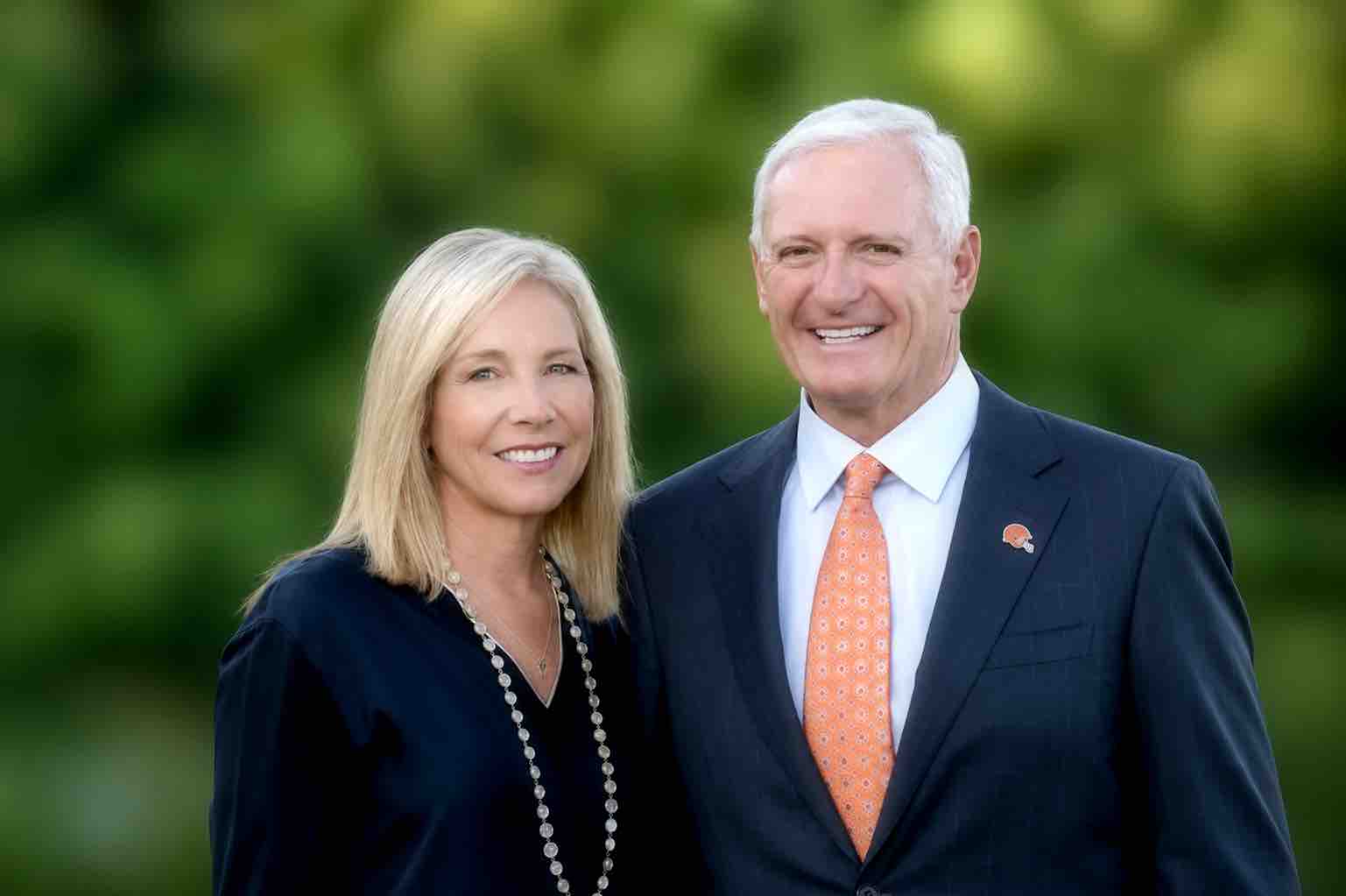
Dee and Jimmy Haslam’s latest act of generosity toward their alma mater is staggering even by the standards of modern higher education philanthropy.
The University of Tennessee, Knoxville, has announced that the Knoxville-born couple will give $130 million to the institution, the largest gift in the flagship’s history and a capstone on a decades-long pattern of Haslam family giving that has quietly reshaped both the campus and the civic landscape in the communities where they live and work.
Of the new commitment, $100 million is earmarked for the Haslam College of Business, already the university’s largest undergraduate college, serving more than 30% of UT’s undergraduates.
University officials say the funds will underwrite student success initiatives, graduate scholarships, and a new undergraduate honors program, with a particular emphasis on strengthening ties between the college and UT’s Division of Student Success so that business students are more likely to graduate on time and better prepared for the workforce.
The remaining $30 million will be directed toward recruiting leading faculty across several disciplines, giving Tennessee’s land‑grant institution new firepower in the national competition for academic talent.
In announcing the gift, Chancellor Donde Plowman cast the Haslams’ latest commitment as a vote of confidence in the university’s trajectory and a lever for its ambition. She recalled sharing a vision with Dee and Jimmy Haslam to “take UT to the next level” and said they immediately grasped the possibilities.
Their investment, she argued, would help fuel a higher standard of excellence and expand the university’s impact across Tennessee and beyond. Stephen L. Mangum, dean of the Haslam College of Business, echoed that framing, noting that the college’s mission has been to attract motivated students and top‑flight faculty and bring them together in world‑class programs and facilities.
“Excellence attracts,” he said in the university’s announcement, suggesting that the new funds will directly support the college’s ability to deliver on quality, relevance, and expanded opportunities in both teaching and research.
With this gift, UT reports that Dee and Jimmy Haslam’s lifetime giving to the university now exceeds $195 million, underscoring how central the institution has become to their philanthropic identity.
The $130 million commitment does not emerge in isolation. It sits atop a decade of transformative Haslam‑family philanthropy that has turned UT’s business school into one of the most heavily endowed units in the state. In 2014, three generations of the Haslam family—including Jim and Natalie Haslam, Jimmy and Dee Haslam, and Bill and Crissy Haslam—joined together on a $50 million donation to the College of Business Administration.
That landmark gift led to the naming of the Haslam College of Business, the first named college in the university’s history, and was explicitly aimed at recruiting and retaining faculty, expanding research activity, bolstering economic development and improving student success through scholarships and program enhancements.
Six years later, the family followed up with a $40 million commitment to the college, again focusing on faculty support, program growth, and student outcomes. Layered with prior gifts to athletics, scholarships, and various colleges and programs, these investments collectively laid the groundwork for the institution the Haslams are now doubling down on with their record-setting 2026 pledge.
To understand the scale and direction of the Haslams’ giving, it helps to see the University of Tennessee as both a personal touchstone and a proving ground.
Dee Bagwell Haslam earned her degree in education from UT in 1986 before building a career in television production, eventually serving as CEO of RIVR Media Companies and winning an Emmy as a producer.
She now remains an executive producer with RIVR while serving as CEO and managing partner of Haslam Sports Group. After attending UT, Jimmy Haslam joined Pilot Corporation, the fuel and travel‑center business founded by his father, James A. Haslam II, in 1958.
He became CEO in 1996 and presided over its growth into the country’s largest travel center company, a trajectory that culminated in the sale of a majority stake to Berkshire Hathaway and, ultimately, full ownership by Warren Buffett’s conglomerate.
Today, Jimmy Haslam serves as executive chairman of Gate City Energy, and Forbes pegs his net worth in the ten‑billion‑dollar range, financial capacity that underwrites the family’s increasingly visible philanthropic footprint.
In parallel with the expansion of Pilot and the family’s subsequent ventures, the Haslams have systematically built a portfolio of civic influence anchored in higher education, K–12 schools, youth sports, and, more recently, health and medical research.
At home in Tennessee, that has meant not just endowing business‑school chairs and scholarships in Knoxville but also backing UT’s intercollegiate athletics program and multiple campus initiatives aimed at improving student outcomes.
In public statements, they have framed these gifts as investments in leadership and opportunity for the state’s young people, emphasizing their desire to elevate the university’s national reputation while “keeping the best and brightest here in Tennessee.”
That language echoes a theme that runs through their philanthropy: a belief that talent pipelines, whether in classrooms or on playing fields, are essential to the long‑term vitality of the regions where they live and do business.
Outside Knoxville, the Haslams’ giving has increasingly focused on Cleveland, where their ownership of the NFL’s Browns and a controlling stake in Major League Soccer’s Columbus Crew have made them prominent figures in the region’s sports and civic landscape. The couple has been major backers of Breakthrough Public Schools, a network of charter schools serving largely low‑income students in Cleveland.
Their support there has included multi-million-dollar commitments designed both to stabilize the network’s finances and to challenge other donors to invest in expanding access to high-quality public education. In interviews with local media, the Haslams have described themselves as “extremely passionate about youth programs in education and sports in our communities,” indicating that their focus on student success at UT is part of a broader philosophy rather than a one‑off act of alumni loyalty.
The couple’s philanthropic reach extends into health care as well, a dimension that has become more visible in the last several years. This spring, they announced a $12.5 million gift to University Hospitals in Cleveland that will support cancer and rare disease research.
The funds are intended to accelerate work on chronic lymphocytic leukemia and other rare blood cancers and to fuel the Oxford-Harrington Rare Disease Center, a transatlantic partnership between University Hospitals and the University of Oxford that aims to move promising therapies into clinical use for conditions with few or no treatment options.
For a family best known in philanthropic circles for its stewardship of a state flagship university and local school networks, the move into rare disease and oncology research suggests an evolving strategy that pairs their long-standing interest in young people and opportunity with investments in the health systems that serve their communities.
Structurally, the Haslams channel much of their giving through family‑aligned foundations and entities that have coalesced around a small set of priorities. Public reporting on Haslam‑related philanthropy describes grantmaking that clusters around education, youth sports, health and human services, arts and culture, and parks and public spaces, with an explicit emphasis on social justice and equal access to upward mobility.
Rather than building a large, independent operating foundation with a strong individual brand, they have tended to partner with existing institutions—public universities, hospital systems, charter school networks—and to fund targeted projects within those settings.
That approach has allowed them to leverage existing infrastructure while still attaching the Haslam name to major initiatives, as with the Haslam College of Business and high-profile research efforts at University Hospitals.
Their platform for this kind of institutional partnership extends beyond conventional business wealth into the visibility and reach of professional sports.
Through Haslam Sports Group, Dee and Jimmy Haslam own the Cleveland Browns, have a controlling interest in the Columbus Crew and are significant stakeholders in the Milwaukee Bucks.
The combination of NFL, MLS and NBA assets gives them access to fan bases, corporate partners, and civic leaders across multiple markets and has increasingly been used to support philanthropic messaging around education, community development, and health.
In Cleveland, for example, Browns‑branded community initiatives often intersect with the family’s interest in youth sports and neighborhood life, blurring the lines between corporate social responsibility and personal philanthropy.
Taken together, the $130 million pledge to the University of Tennessee, the prior $50 million and $40 million gifts to the business school, and their investments in Cleveland schools and medical research point toward a philanthropic profile that is both focused and expansive.
Focused, because the Haslams have repeatedly returned to a core set of themes—education, youth, leadership, opportunity, and community health—and have directed large sums into a relatively small number of anchor institutions that can absorb and deploy that capital.
Expansive, because within those themes they have ranged from scholarships and faculty chairs to rare‑disease drug development, from local charter‑school networks to big‑time college athletics, and from campus naming gifts to cross‑border research collaborations.
As the University of Tennessee begins to translate this latest record-setting gift into new programs, endowed positions, and student opportunities, the Haslams’ influence on the institution will only deepen.
For observers of modern philanthropy, the story unfolding in Knoxville and Cleveland offers a case study in how a family with deep regional roots, a multigenerational business legacy, and a diversified sports portfolio can use high-profile, high-dollar giving to shape the educational and health infrastructure of the places they call home.
For the Haslams themselves, the $130 million commitment is both a continuation of a lifelong relationship with the university where their story began and a signal that their philanthropic ambitions, like their business interests, continue to expand.