
$125 million gift to university: Taner Halıcıoğlu powers new era in data science and computing
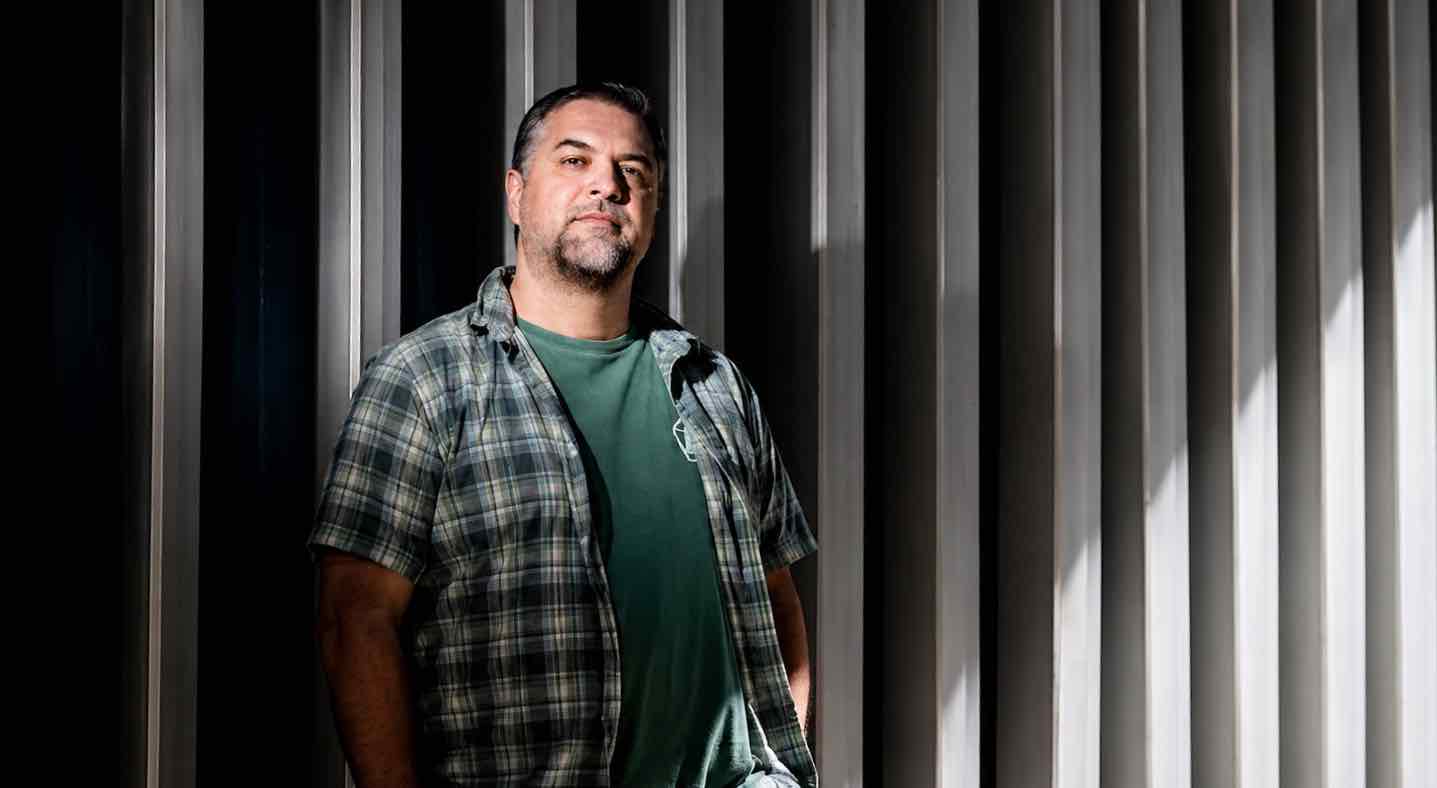
UC San Diego has announced that a combined $125 million in philanthropy from alumnus and technology entrepreneur Taner Halıcıoğlu will establish the Halıcıoğlu School of Data Science and Computing, a move that both cements his status as one of the university’s most influential benefactors and signals how central data and AI have become to its future direction.
The new school grows out of his long-standing commitment to his alma mater: in 2017,
Halıcıoğlu made a landmark $75 million gift to found the Halıcıoğlu Data Science Institute, and his latest $50 million pledge elevates the original institute into a full-fledged school that unites advanced data science with the university’s supercomputing strength.
Together, these gifts are designed not just to expand a single program but to reshape how UC San Diego teaches, researches, and applies data, computing, and artificial intelligence across disciplines.
For Halıcıoğlu, the announcement is deeply personal.
A 1996 UC San Diego computer science graduate, he has often described his undergraduate years as formative—an environment where he discovered both the intellectual rigor of computing and the collaborative spirit that would later define his career.
After leaving campus, he built his reputation in the heart of the internet’s scale-up era, holding key engineering roles at high-growth companies and becoming one of Facebook’s earliest employees, where he helped architect the operational backbone that enabled the platform to scale globally.
That experience—taking systems from small and experimental to vast and indispensable—now mirrors the trajectory he is enabling for data science at UC San Diego.
His philanthropy reflects an engineer’s instinct to build infrastructure rather than one-off projects. The original investment in the Halıcıoğlu Data Science Institute created an interdisciplinary home for data science when the field was still coalescing.
It helped UC San Diego recruit faculty, launch degree programs, and seed research that bridged computer science, statistics, and domain fields from biology to political science.
This new commitment builds on that foundation by bringing data science and the San Diego Supercomputer Center together under a single umbrella, aligning curriculum, research, and computing power in a way few universities can match.
In practical terms, that means students and researchers will work in an environment where modern AI, large-scale data analytics, and high-performance computing are tightly integrated rather than scattered across campus.
At the heart of Halıcıoğlu’s giving is a clear view of the stakes. Data and AI now shape decisions in everything from medicine and climate science to finance and public policy, and he has been explicit about wanting UC San Diego to train people who can navigate that landscape with both technical depth and a strong sense of responsibility.
His support aims to enable the university to recruit top-tier faculty, fund graduate fellowships and undergraduate scholarships, and design programs that welcome students from a wide range of backgrounds into the data and computing ecosystem.
He has consistently emphasized that data science should not be a closed club, and that broadening participation is essential if the technologies shaping society are to reflect society’s full diversity.
Halıcıoğlu’s relationship with UC San Diego is unusually multifaceted for a major donor.
He is not only an alumnus whose name now defines a school; he is also an active lecturer in the Computer Science and Engineering Department, sharing practical industry insights with students just starting their own journeys. In the classroom, he is known for a hands-on, approachable style—less interested in grandstanding than in making sure students understand how theoretical concepts play out in production systems.
That combination of front-line teaching and large-scale philanthropy gives him a rare vantage point: he can see, on a weekly basis, how institutional investments translate into student experience and opportunity.
His generosity also extends beyond data science and computing. Halıcıoğlu has made significant contributions toward the creation of a new alumni and welcome center on campus, helping to underwrite a facility that will serve as a gathering place for students, alumni, and visitors and as an architectural focal point for a rapidly growing university.
He has supported earlier renovations of core computing facilities, and his philanthropic footprint includes roles and gifts in the broader nonprofit world, underscoring a pattern of engagement with institutions that, in his view, create leverage for long-term impact.
In each case, however, the common thread is investment in durable platforms—buildings, institutes, schools—that will continue serving communities for decades.
The establishment of the Halıcıoğlu School of Data Science and Computing comes at a moment when UC San Diego is ascending as a major research powerhouse and expanding its campus to match its ambitions.
The new school is expected to be a magnet for additional public and private funding, for partnerships with industry, and for collaborations across the University of California system and beyond. It will stand at the nexus of AI research, data-intensive science, and workforce development, sending graduates into sectors that are hungry for talent capable of both building and interrogating sophisticated computational systems.
For Halıcıoğlu, the school’s creation is less a capstone than a continuation of a long-term project: ensuring that the institution that launched his career remains at the forefront of the fields now reshaping the world.
By committing $125 million to data science and computing at UC San Diego, he has effectively given the university both the mandate and the means to lead.
For students arriving on campus in the coming years, the Halıcıoğlu name will signify not just a benefactor but a living example of how technical expertise, entrepreneurial success, and sustained philanthropy can come together to build something larger than any single career—a lasting engine for discovery, education, and public good.