
$100 million effort to expand hospital gets major impetus from philanthropist Stuart Miller, redefines the scale at which local donors can be encouraged to support public health infrastructure
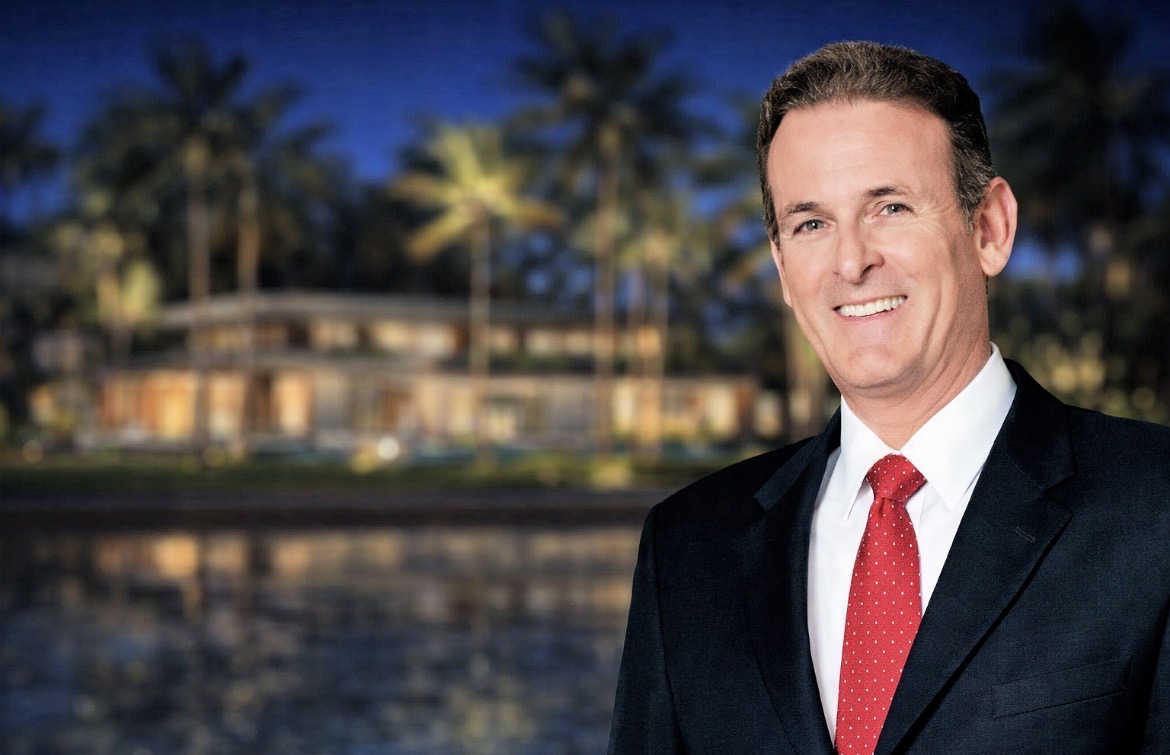
Stuart Miller’s latest gift to Jackson Memorial Hospital is the culmination of a decades‑long campaign to bend the arc of Miami’s healthcare infrastructure toward equity and scale — and it may be the most visible expression yet of how a homebuilder quietly became one of South Florida’s most consequential health philanthropists.
On a warm April evening in Miami, the crowd filing through the new emergency department at Jackson Memorial saw the future of public‑hospital medicine before it officially opened to the public.
The numbers alone are staggering: a 178,000‑square‑foot emergency room stretching across two city blocks, triple the size of Jackson’s existing ER and designed to handle between 110,000 and 120,000 patients a year, making one of the busiest emergency departments in the country even larger and more sophisticated.
Built at a cost of roughly $400 million, the project had long been on Jackson’s wish list, but the $100 million philanthropic push that ultimately made it possible — led and heavily underwritten by Miller — reset the ceiling of what Miami’s donor community believed was plausible at its safety‑net hospital.
For Jackson Health Foundation, the fundraising arm of the county’s public health system, the $100 million figure was once unimaginable.
Retiring CEO Carlos Migoya noted that before this campaign, the foundation had never received a single gift larger than $10 million; suddenly, through a set of coordinated pledges anchored by Miller’s $35 million contribution via the Lennar Foundation and the Miller Foundation, the institution was playing in nine‑figure territory.
The donors’ roster reads like a who’s who of South Florida business families and corporate players: the Lennar and Miller foundations, Benjamín León Jr. and his charitable foundation, Related Group, Royal Caribbean Group Foundation, the Kadre, Milton, Batchelor, Codina and Gorson families, Trish and Dan Bell, Harold Marzouka Jr. and the Françoise Marzouka Family Trust, along with additional support from the Guiribitey family, David Pyle and Chaim Katzman.
In that constellation, Miller is both instigator and gravitational center — the “visionary” of the campaign, as Migoya described him, the person many of his peers point to when explaining why a $100 million target no longer felt impossible.
Miller’s role at Jackson is not simply that of a deep‑pocketed donor; it is also of a systems thinker intent on re‑engineering how health care is accessed in Miami‑Dade.
The new ER has been conceived as a one‑stop front door for emergency care: private rooms for greater privacy and infection control, a dedicated “fast track” zone for lower‑acuity patients expected to be treated and discharged within two hours, and in‑house imaging and pharmacy capacity — X‑ray, MRI, other diagnostics and medication dispensing — designed to shorten the time between arrival and disposition.
For patients who arrive in crisis, from strokes to heart attacks to complex trauma, the goal is to compress decision‑making and treatment into a tighter, tech‑enabled window, and then either move them into the hospital or safely send them home more quickly.
As Migoya put it, “The emergency room is the front door to Jackson Memorial, so the best experience has to happen here” — and Miller’s money is underwriting a very public bet that design and scale can change that experience for everyone, not just the privately insured.
The rollout of the facility is phased, another detail that underscores both its ambition and its civic purpose. On April 23, the first phase — the adult emergency department at 1026 NW 19th Street — opens its doors, allowing Jackson to migrate adult cases into the new space while keeping pediatric emergencies in the existing ER via the 17th Street entrance.
By 2027, when renovations and expansions are complete, Jackson’s emergency complex is expected to include more than 200 patient rooms, 57 observation rooms, 30 pediatric rooms under the UHealth Jackson Children’s Care banner, six resuscitation rooms, dedicated spaces for mental health patients and even an autism‑friendly room tailored to children with sensory needs.
Those design decisions — particularly the mental health and autism‑sensitive elements — mirror a broader shift in philanthropic healthcare projects from bricks‑and‑mortar naming rights toward more nuanced, specialized care environments, the kind of features that are often the first to fall off the list without subsidy.
If the new emergency department is the most recent and visible manifestation of Miller’s philanthropy, it is far from his first intervention in Miami’s medical landscape.
The Miller family’s relationship with the University of Miami’s medical enterprise is already etched in stone: in 2004, the family made a $100 million gift to UM’s medical school, resulting in its renaming as the Leonard M. Miller School of Medicine, honoring Lennar founder Leonard Miller.
At the time, it was the largest donation in the university’s history and a defining moment in Miami’s evolution as a medical and research hub.
That commitment deepened in 2015, when Stuart Miller and his family pledged $55 million to UM, including $50 million for a new state‑of‑the‑art medical education building at the Miller School and $5 million to the Frost School of Music; together with a separate $50 million naming gift from the Lennar Foundation for a UHealth outpatient center in Coral Gables, Miller‑aligned giving to UM had surpassed $221 million by that point.
Those earlier gifts provide useful context for Jackson’s new emergency department: Miller has been funding the training pipeline, the research engine and the clinical infrastructure of Miami medicine for two decades, and this latest public‑hospital investment effectively links his private‑university philanthropy to the county’s safety‑net system.
As chair of the University of Miami Health System’s board of directors, he sits at the junction of academic medicine and public service; his Jackson gift, made both through the Lennar Foundation and his family’s own philanthropic vehicles, in some ways completes a triangle between UM, UHealth‑Jackson partnerships and the communities that rely on Jackson as a backstop.
At the preview, Miller framed the project in explicitly civic terms, telling the assembled donors and officials, “This is what we’re all about. This is who we are as a community,” language that reflects a long‑running pattern of positioning philanthropy as an expression of Miami’s identity rather than simply a line item on a balance sheet.
Beyond his institutional titles, Miller has spent years cultivating an identity as a civic leader whose commitments extend beyond healthcare into education, community development and sports.
As executive chairman (and former CEO) of Lennar Corporation, one of the nation’s largest homebuilders, he oversees a company that has helped shape the physical contours of metropolitan Miami and beyond, and his personal and family foundations have paralleled that business footprint with a grant portfolio focused heavily on the region.
The Stuart A. Miller Family Foundation, formed in 2003 and based in Miami, steers much of that activity, emphasizing Jewish community organizations, educational institutions, women’s athletics and medical education — a set of priorities that aligns neatly with his support of UM, Jackson and other local causes.
He also serves as co‑chair of the Miami Dolphins Foundation, which supports education, health and youth athletic programs throughout Florida, further reinforcing his reputation as a benefactor of both elite and grassroots institutions.
That duality — a corporate titan with a hyper‑local philanthropic lens — was on display at the Jackson event, where the guest list skewed heavily toward Miami’s institutional leadership.
Miami‑Dade County Mayor Daniella Levine Cava, Miami‑Dade Supervisor of Elections Alina Garcia, city officials and members of the Public Health Trust, which governs Jackson, moved through the new ER alongside longtime donors and emerging philanthropists, underscoring the degree to which the project had become a civic rallying point.
The evening also doubled as the kickoff for “One Day for Jackson,” the foundation’s annual giving campaign, which CEO Flavia Llizo said was on track to surpass last year’s $1 million record as donations continued to arrive through the end of the month.
In practical terms, Miller’s lead gift did more than fund walls and equipment; it set a benchmark and created a halo effect that smaller donors, corporate partners and first‑time givers could orient around.
Royal Caribbean Group provided a case in point. The Miami‑headquartered cruise company used the preview to announce a $5 million donation through its newly launched Royal Caribbean Group Foundation, earmarked to help establish a new emergency medicine residency program at Jackson Health System.
The pledge is the first act of the foundation, which has been framed publicly as a vehicle to support “ocean communities” and global humanitarian causes; by choosing Jackson and emergency medicine as its initial investment, the company signaled a desire to root that global mission in its own backyard.
It also dovetails with Miller’s long‑standing interest in medical education, creating a pipeline in which physicians trained in state‑of‑the‑art environments at the Miller School can now gain residency experience in a cutting‑edge public emergency department that his dollars helped build.
The Jackson ER project also fits a broader pattern in Miller’s philanthropy: a preference for large, catalytic commitments that unlock institutional transformation rather than incremental improvements. The 2004 naming gift to UM’s medical school helped the university position itself as a serious player in biomedical research and physician training at a time when Miami was still emerging on the national radar in those fields.
The 2015 gift funded a new medical education building designed to modernize how students learn, from simulation labs to collaborative classrooms, while the Lennar Foundation’s naming gift for the outpatient center in Coral Gables expanded UHealth’s clinical reach into a higher‑income neighborhood.
At Jackson, his philanthropy is less about prestige and more about capacity and access: the emergency room of “this magnitude,” as fellow donor Benjamín León Jr. put it, will serve anyone who walks through its doors, day or night, regardless of immigration status, insurance coverage or income.
There is also a generational thread running through Miller’s giving that influences how observers interpret this latest gift. The Miller family has been intertwined with South Florida’s civic fabric since Leonard Miller steered Lennar from a local homebuilder into a national force, and the siblings — including Stuart, Leslie Miller Saiontz and Jeffrey Miller — have been publicly honored for their joint philanthropy, notably by United Way of Miami‑Dade, which has recognized them with its highest philanthropic honor.
That 2004 recognition coincided with the $100 million gift that named the Miller School of Medicine, a milestone that signaled the family’s intention to place healthcare and education at the core of its legacy.
Two decades later, Stuart’s leadership on the Jackson ER campaign can be read as the continuation of that legacy, adapted to the current moment’s pressures on public health infrastructure and emergency care.
At the preview, as donors posed for photos with Migoya, incoming CEO David Zambrana and Jackson Health Foundation chief executive Flavia Llizo, there was an undercurrent of transition extending beyond the hospital’s C‑suite. Zambrana described the new ER as a “gamechanger for emergency medicine in our community” and “the next era of care,” language that casts the facility as not just a building but a pivot point for how Miami understands and finances its public institutions.
For Miller, who has already stamped his name on one major medical school and whose family foundation continues to fund Jewish communal life, athletics and education in Miami‑Dade, the Jackson gift suggests an increasingly expansive view of what counts as his philanthropic neighborhood.
It is a statement that the front door to a county hospital can be just as worthy of nine‑figure ambition as the façade of a private university.
Yet the scale of his giving has also brought scrutiny in other arenas. In recent years, Miller has faced regulatory attention over political contributions, including allegations of channeling funds through limited liability companies to support Republican committees; federal election regulators ultimately chose not to impose fines, a decision that sparked debate but left his philanthropic work untouched.
For some observers, the juxtaposition of aggressive political giving and marquee philanthropy is a familiar one in American public life, raising questions about influence, access and how business leaders shape the policy and physical landscapes of their cities.
In Miller’s case, his sustained, large‑scale investments in healthcare and education have given him an outsized role in steering Miami’s institutional priorities, even as his day job at Lennar keeps him firmly embedded in the region’s growth machine.
For Jackson’s patients, however, those debates may feel academic the moment they arrive at the new emergency entrance.
The expanded capacity, the faster triage, the dedicated mental health and autism‑friendly spaces and the prospect of a robust residency program feeding fresh talent into the system all amount to tangible, near‑term changes in how care is delivered.
For Miami’s philanthropic community, the $100 million campaign — and Miller’s $35 million share of it — redefines the scale at which local donors can be asked to support public health infrastructure, especially when a seasoned “visionary” is willing to put his balance sheet and social capital on the line first.
And for Miller himself, the opening of one of the nation’s largest emergency rooms adds another chapter to a philanthropic narrative that has moved steadily from building homes to building the institutions meant to keep the people in those homes alive, educated and part of a functioning civic whole.