
$80 million new gift from philanthropist Connie Snyder Ballmer is poised to reshape public broadcasters’ digital future and sustain its nationwide network
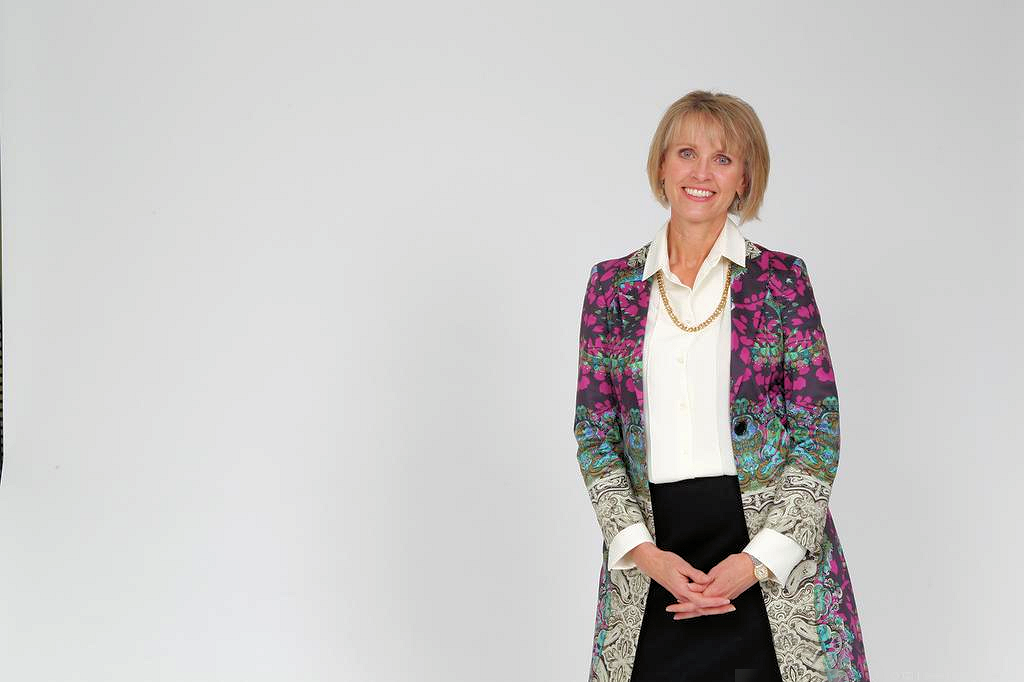
NPR has received two transformative gifts totaling $113 million, led by an unprecedented $80 million commitment from philanthropist Connie Snyder Ballmer and a separate $33 million donation from an anonymous benefactor, in a show of private support that is poised to reshape the public broadcaster’s digital future and sustain its nationwide network.
The gifts represent one of the largest philanthropic infusions in NPR’s history and come at a moment when the organization is under pressure to reinvent how it reaches audiences while also stabilizing its finances in the wake of steep federal funding cuts to public media approved during President Donald Trump’s current term.
At the center of the announcement is Connie Snyder Ballmer, co-founder of the Ballmer Group and a longtime civic and political donor, whose $80 million pledge is the largest gift ever made to NPR by a living individual.
Ballmer, a former NPR Foundation board member and the wife of former Microsoft CEO and Los Angeles Clippers owner Steve Ballmer, has in recent years emerged as one of the country’s most prominent megadonors to causes ranging from economic mobility to democracy-strengthening institutions.
Together, the couple have given away more than $3 billion, according to prior reporting in the Chronicle of Philanthropy, and they have increasingly focused their philanthropy on systems-level change—efforts aimed at bolstering core civic infrastructure rather than one-off projects.
In a statement released by NPR, Connie Ballmer framed her investment in explicitly civic terms, tying the public broadcaster’s fortunes to the resilience of American democracy.
“I support NPR because an informed public is the bedrock of our society, and democracy requires strong, independent journalism,” she said, casting the gift as both a stabilizing force and a catalyst for change inside the newsroom and across the NPR Network.
“My hope is that this commitment provides the stability and the spark NPR needs to innovate boldly and strengthen its national network.”
Ballmer’s $80 million is earmarked for what NPR is describing as “digital innovation,” a broad mandate that encompasses overhauling the technology underlying its journalism, expanding its reach on emerging platforms, and building products that can serve audiences on whichever devices and services they use to seek news and audio content.
In practical terms, that could mean investment in everything from podcast and on-demand audio infrastructure to mobile and smart-speaker experiences, data and personalization tools, and back-end systems that help local stations better understand and serve their communities.
NPR leaders have framed this as an evolution rather than a departure from the organization’s public-service mission: a push to ensure that its reporting and cultural coverage remain accessible and relevant as listening habits fragment and younger audiences, in particular, gravitate to digital-first formats.
The second major gift, $33 million from a donor who has chosen to remain anonymous, is aimed at sustaining the NPR Network—the constellation of more than 240 member stations whose local newscasts, talk shows, and cultural programming knit public radio into the fabric of communities across the country.
According to NPR, those funds will be used to build and acquire tools and services that can be shared system-wide, giving stations access to technology and support they might not otherwise be able to afford on their own.
That could include audience analytics, fundraising and membership platforms, marketing and branding resources, and shared content or production tools designed to help small and mid-sized stations maintain robust local reporting even as traditional revenue streams come under strain.
NPR CEO Katherine Maher cast both gifts as a vote of confidence in public media at a time when its financial model is in flux. “This remarkable investment will enable NPR to continue to deliver the nation’s finest public service journalism, meeting audiences where they are today and will be in the years to come,” Maher said, underscoring that the dual gifts are intended not just to plug immediate budget gaps but to underwrite a long-term strategic pivot to digital.
She added that NPR is “deeply grateful to Connie Ballmer and our anonymous donor for their extraordinary philanthropic leadership and belief in our work,” expressing hope that their commitments will inspire additional donors to step forward in support of public media’s future.
The timing of the gifts is as consequential as their size. Last year, Congress eliminated federal appropriations for public broadcasting, stripping away more than $1 billion that had helped support hundreds of NPR and PBS stations nationwide and leaving many licensees scrambling to replace lost operating support.
For NPR, which relies on a mix of member-station dues, corporate underwriting, individual giving, and previously some federal funds distributed through the Corporation for Public Broadcasting, the cuts intensified pressure to raise private money and to find new ways to generate revenue from its journalism and programming.
Against that backdrop, Ballmer’s high-profile intervention and the anonymous donor’s network-focused support send a signal that at least some major philanthropists see public media as a critical part of the country’s information ecosystem worth shoring up at scale.
Connie Ballmer’s decision to focus her largest gift to NPR on digital transformation also reflects a broader pattern in her philanthropy, which has emphasized long-term capacity-building and data-driven solutions. Through Ballmer Group, she and Steve Ballmer have invested heavily in organizations working to improve economic mobility for children and families in the United States, often by strengthening the “plumbing” of systems—technology, data, and infrastructure—rather than only funding frontline services.
By applying a similar approach to NPR, she is effectively betting that a stronger technical backbone and more sophisticated digital products will allow the organization’s journalism to reach more people and have greater impact, even as traditional broadcast listening plateaus or declines.
Her ties to NPR are also personal and longstanding. Ballmer previously served on the board of the NPR Foundation, which supports the network’s fundraising and endowment efforts, giving her an insider’s view of both the opportunities and vulnerabilities facing the organization.
She has also been a notable political donor, aligned with Democratic candidates and causes, and currently sits on the board of the Obama Foundation, further underscoring her interest in institutions that promote civic engagement and democratic participation.
That profile has already sparked some partisan commentary about the ideological leanings of major supporters of public media, but NPR maintains that editorial independence is safeguarded through governance structures, firewalls between news decisions and fundraising, and a diversified base of support.
Little is publicly known about the anonymous donor who is underwriting the $33 million network sustainability initiative, and NPR has not disclosed details about their background or prior giving.
What is clear is the gift’s strategic focus: rather than funding specific shows or beats, the donor is directing resources toward shared tools that can help member stations adapt to rapidly changing audience behavior and financial pressures.
In that sense, the anonymous donor’s priorities echo Ballmer’s systems-oriented approach, but applied squarely at the local level—supporting the ecosystem that carries NPR’s reporting into cities and rural communities across the country every day.
Together, the two gifts form a kind of twin-track strategy for the future of public radio: one is focused on NPR’s central digital infrastructure and national reporting, and the other on the health and modernization of its member-station network.
For audiences, the effects may be felt gradually—in a more seamless podcast app, smarter recommendations, stronger local news coverage, or new formats that blend national and local stories across platforms.
For the donors, the hope is more immediate: that their money will give a flagship civic institution the breathing room and tools it needs to innovate, rather than retrench, at a time when the economics of journalism are under severe strain.
In her statement, Ballmer made clear that she sees this as a beginning rather than an endpoint, expressing the expectation that others will follow her lead. Maher echoed that sentiment, positioning the gifts as a “remarkable” down payment on a broader campaign to secure the future of public media through philanthropy and new forms of partnership.
Whether this moment becomes an inflection point for NPR’s funding model will depend not only on how deftly it executes its digital ambitions but also on whether the example set by Connie Ballmer and her anonymous counterpart persuades more donors that the public’s access to trusted, independent news is a cause worthy of nine-figure commitments.