
$74 million new gift by W. Nicholas “Nick” Howley will fuel sweeping reconfiguration of 160‑year‑old preparatory school
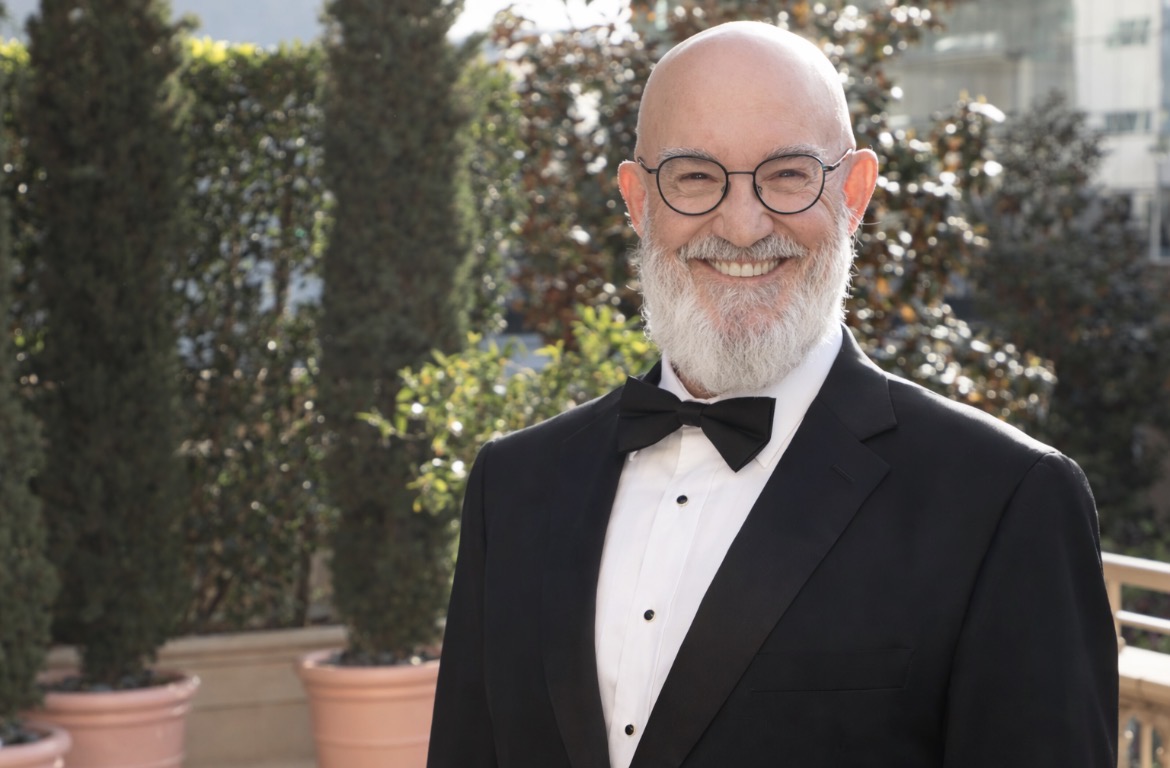
Billionaire aerospace entrepreneur W. Nicholas “Nick” Howley stood before a packed gym at St. Joseph’s Preparatory School and did something that will permanently alter the trajectory of the Jesuit institution that helped shape his life: he pledged $74 million, the largest gift ever made to a Catholic high school in the United States, to transform both its campus and its reach into Philadelphia’s underserved neighborhoods.
Howley, a 1970 graduate of St. Joe’s Prep who went on to found TransDigm Group, one of the world’s largest producers of highly engineered aircraft components, has built a multibillion‑dollar fortune in the aerospace industry; now he is deploying that wealth in keeping with a simple conviction he repeats often in private conversations and public remarks: talent is everywhere, but opportunity is not.
From his vantage point as founder and chairman of TransDigm and chair of wildfire‑protection company Perimeter Solutions, he has spent the past two decades quietly constructing a parallel legacy as a philanthropist focused almost obsessively on educational mobility for low‑income students in cities like Cleveland and Philadelphia.
The new $74 million commitment to his alma mater is both the culmination of that long‑running strategy and a decisive escalation, tying his name permanently to the Prep’s physical footprint and to the lives of generations of students who would never otherwise set foot on its North Philadelphia campus.
For St. Joe’s Prep President John Marinacci, who called the donation “transformative,” the gift is a once‑in‑a‑century opportunity to reimagine what a 175‑year‑old urban Jesuit school can be in a city wrestling with inequity and disinvestment.
Plans call for a sweeping reconfiguration of the 160‑year‑old campus footprint along Girard Avenue, creating what will be known as the Howley Campus and Howley Athletic Complex—language that underlines just how intertwined the donor’s story is now with that of the school. Existing Prep‑owned parcels will be stitched together with newly acquired land to push the campus two blocks north, where a below‑ground parking structure will support new athletic fields designed to host everything from rugby and Ultimate Frisbee to lacrosse and soccer for the school’s 900‑plus boys.
Above the parking deck, architects will carve out an outdoor classroom, a prayer garden, an amphitheater, and an open‑air dining terrace, turning what had been a dense, largely hard‑scaped block into a layered environment where academic life, spiritual formation, and athletics bleed into one another.
The vision is less about gilding an already comfortable campus than about creating spaces where students from vastly different neighborhoods—many of them traveling long distances each day—can linger, decompress, and build the kind of informal networks that often define a Prep education as much as calculus or Latin. In that sense, the physical plan reflects Howley’s own memories of the school: as a launching pad that married demanding coursework with a tight‑knit culture of expectation, competition, and camaraderie.
Yet bricks and turf are only part of the story—and not the part that most animates the donor. At the heart of the $74 million package is a dramatic expansion of the Howley Scholars Program, a scholarship initiative that he and his family seeded at the Prep with a $5 million gift in 2021 and then boosted again with a $12 million commitment in 2024.
Those earlier gifts built a pipeline of high‑achieving students from families who cannot begin to afford the school’s roughly $28,300 annual tuition, underwriting their full four‑year journey through the Prep. With the new funding, the school expects to support 80 Howley Scholars at any given time—roughly 20 in each grade—placing scholarship students not at the margins but at the center of the student body.
The move is entirely consistent with the broader strategy of The Howley Foundation, which Nick founded with his wife, Lorie, and daughter, Meg, and which today funds scholarships for approximately 1,500 students nationwide, with a particular emphasis on Catholic and inner-city schools.
In Cleveland and across the Cristo Rey Network of work‑study Catholic high schools, Howley‑backed scholarships follow students from high school into college and are coupled with retention programs designed to ensure they not only matriculate, but graduate. At Drexel University, his alma mater, he and his family have committed at least $15 million to expand access to scholarships, a gesture that deepens the arc from working‑class student to aerospace magnate to education philanthropist.
The Prep gift, in turn, closes a loop: the son of Philadelphia who built his fortune supplying parts for aircraft around the globe is now effectively underwriting runway after runway for young strivers who share his zip codes but not his resources.
Within the Prep community, the scale of the commitment has been met with a mixture of astonishment and a sense of responsibility. Faculty members note that the gift not only upgrades facilities but also obliges the school to think more ambitiously about outreach to middle‑schoolers in parochial and charter schools who might never have considered a Jesuit education within reach.
Alumni talk about the Howley Campus as a visible symbol that major philanthropy is no longer the sole province of universities and hospitals; here is a high school, their high school, attracting a gift on par with those that have recently reshaped elite colleges.
For Howley, who has typically avoided the spotlight despite receiving national recognition such as the Singleton Prize for CEO Excellence, the public nature of this announcement appears to be a calculated choice: a way to model, especially for other successful Prep graduates, that transformative giving is both possible and necessary in the secondary‑school space.
That modeling extends to the way he has structured his philanthropy as a family enterprise. The Howley Foundation lists Nick as founder and chairman, but Lorie as president of the board and executive leader, overseeing the expansion from a handful of high‑school scholarships to a multi‑city portfolio that reaches into elementary, high school, and college programs.
Their daughter Meg, herself a Drexel graduate, serves as executive director, ensuring intergenerational continuity and embedding philanthropy as a lived family value rather than a post‑career hobby.
The prominence of the Howley name on the redesigned Prep campus will, in that sense, be more than an honorific; it will be a kind of case study in how one family has chosen to convert concentrated wealth into concentrated opportunity across decades and institutions.
There is, of course, an unmistakable symbolism in a billionaire’s name being etched into a campus in North Philadelphia, a community that has long sat at the intersection of urban grit and civic aspiration. St. Joe’s Prep has occupied its site for 160 years, weathering demographic shifts, school‑funding crises, waves of suburban flight, and the recent pressures of pandemic‑era learning loss.
A $74 million infusion will not resolve those larger structural challenges for the city’s youth, but it will position the Prep as an increasingly powerful engine of mobility—one that, if Howley’s vision holds, will pull more students from overlooked neighborhoods into a network of college and career opportunities that often extends far beyond Philadelphia.
The outdoor classroom, the prayer garden, and the expanded athletics complex: each is a visible amenity. The invisible infrastructure, however, is the widening bridge between raw potential and realized possibility that the Howley gift intends to secure.
In the end, the story of this record‑setting donation is as much about continuity as it is about disruption.
A 17‑year‑old Nick Howley once walked the Prep’s corridors as a scholarship kid with an engineer’s mind and a city kid’s drive; decades later, having mastered the mechanics of aerospace and capital markets, he is effectively writing a massive, multi‑line extension of his own origin story for others to inhabit.
It is a statement that the most important thing a successful alumnus can build is not a company or even a foundation bearing his name, but a durable, self‑renewing pipeline of opportunity—one that starts, quite literally, in the classrooms and playing fields where his own journey began.