
$47 million gift to university from Chuck and Jackie Frasier
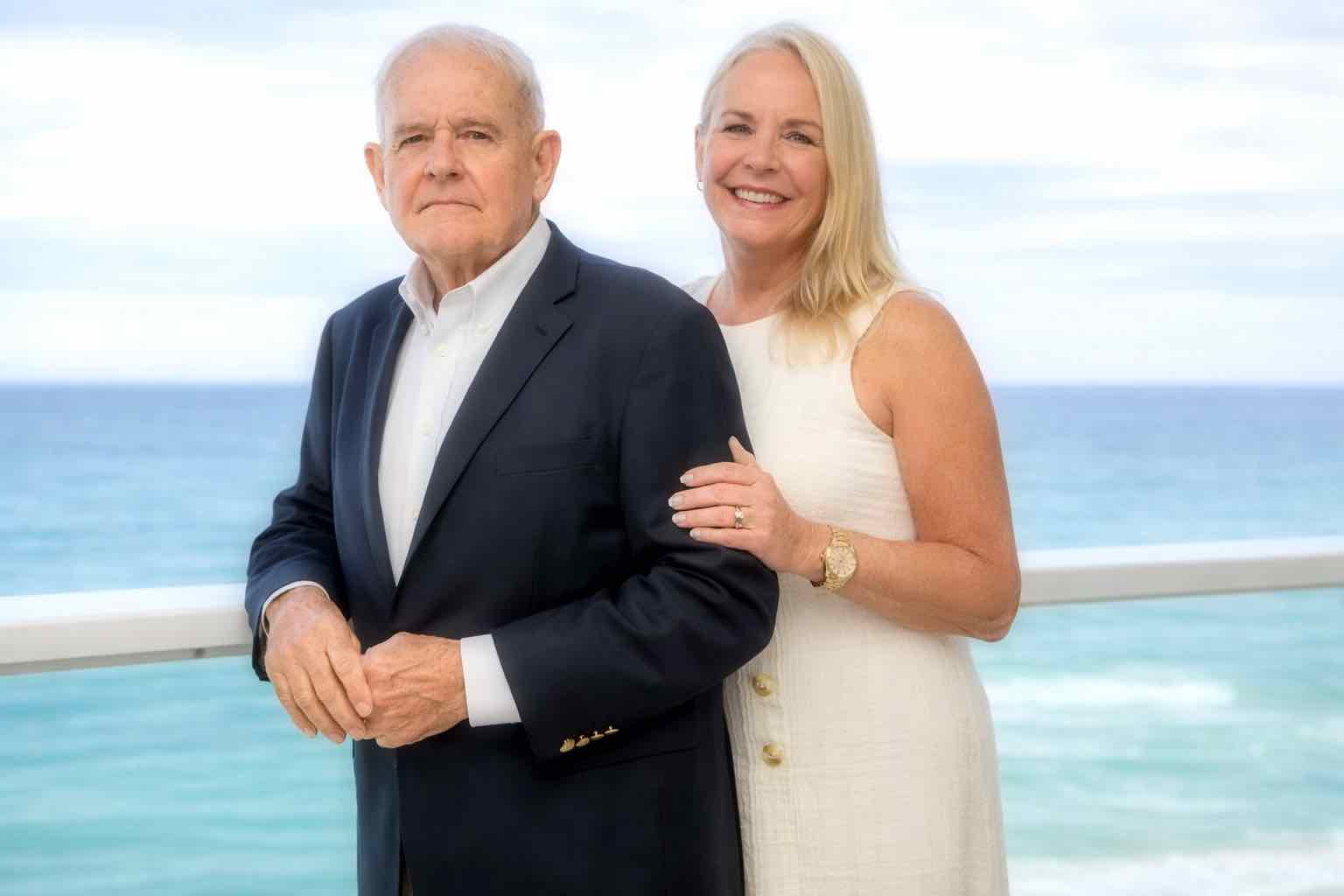
Michigan State University’s School of Packaging is entering a new era following a record-setting $47 million commitment from alumnus Charles “Chuck” Frasier and his wife, Jacqueline “Jackie” Frasier, a gift that university leaders say will reshape packaging education and research for generations.
The pledge is the largest in the school’s history and one of the most significant investments ever made in Michigan State’s College of Agriculture and Natural Resources, home to the world’s first and still one of the most influential academic packaging programs.
For the Frasiers, the announcement caps a long, steadily deepening relationship with the university and with the field that defined Chuck’s professional life. A 1970 graduate of MSU’s packaging program, he has often described his bachelor of science degree as his “ticket to ride,” saying it opened doors around the world and “changed my life” in ways he never anticipated as a student.
Packaging, he likes to point out, may sound like a narrow specialty, but in practice it touches everything from global logistics and manufacturing to marketing, consumer behavior, and sustainability.
Frasier began his career as a packaging engineer for GE International in Manhattan, gaining early exposure to the complexities of international shipping and supply chains.
He moved into sales roles that broadened his understanding of customer needs and global markets before striking out on his own as an entrepreneur, founding Dixie Box and Crating Company to serve the demanding requirements of international transport.
He later launched American Box and Crating, building on that experience and cementing a successful career that ultimately allowed him to retire in 2019.
Jackie Frasier’s connection to Michigan State grew alongside her husband’s. Although she did not attend MSU, university leaders say she quickly became a full partner in shaping the couple’s philanthropy and an engaged advocate for the School of Packaging, its students, and its broader mission.
Over years of campus visits, conversations with faculty and students, and involvement in philanthropic planning, she has come to be regarded as an “honorary Spartan,” helping to orient their giving around both student opportunity and the environmental stakes of packaging decisions.
The new $47 million commitment is not the Frasiers’ first major investment in the school, but it is by far the largest. Earlier in the decade, when MSU embarked on the first comprehensive renovation of the School of Packaging building since it opened in 1964, the couple stepped up with leadership gifts that helped launch and complete Phase 1 of the project.
In 2022, the university announced more than $3.8 million from the Frasiers to support the renovation and an endowed faculty position, a level of support that helped push the school past key fundraising milestones and encouraged additional gifts from alumni and corporate partners.
Their generosity during that first phase is now visible in the updated facility. MSU named the Charles L. and Jacqueline C. Frasier Sustainability Lab, which focuses on data-driven research in areas such as life-cycle assessment, materials innovation, and waste reduction, and the Charles L. and Jacqueline C. Frasier Atrium, a central gathering space that has become a hub for students, faculty and industry visitors.
University leaders say these spaces not only recognize the couple’s philanthropy but also reflect their priorities: connecting students directly with real-world sustainability challenges and nurturing a sense of community within the school.
The newly announced $47 million gift builds on that foundation and is structured as what MSU calls a “sophisticated blended gift,” combining immediate cash support with a significant charitable bequest designed to secure the school’s long-term strength.
Rather than being confined to a single project, the funds are spread across several strategic priorities that, taken together, aim to future-proof the School of Packaging. A substantial portion will fuel the next stage of the Packaging 2.0 expansion, which will nearly double the size of the existing building and significantly enlarge both teaching and research environments.
Plans for this expansion include flexible, technology-rich classrooms that can support interactive, team-based learning and adapt to new teaching methods as the field evolves. Shared laboratory spaces are designed to bring packaging faculty together with researchers from across the university—chemists, engineers, agricultural scientists, and data experts—to tackle complex problems such as sustainable materials, food safety, and circular economy models. Additional laboratory and administrative space will enable more researchers to be housed within the building itself, a change MSU believes will accelerate collaboration and innovation.
Beyond bricks and mortar, the Frasiers have directed part of their gift to create an endowed director’s fund for the School of Packaging, providing flexible support for strategic leadership.
This pool of permanent funding will enable current and future directors to recruit top academic and administrative talent, respond quickly to emerging industry trends, and invest in promising new programs or partnerships without waiting for separate fundraising campaigns.
Another major focus of the commitment is graduate excellence. The couple is establishing a fellowship endowment to support master’s and doctoral students whose work addresses pressing challenges in packaging, from next-generation materials to intelligent packaging systems that improve safety and reduce waste.
By easing financial pressures on graduate students and allowing them to devote more time to research, MSU expects the fellowships to strengthen the school’s role as a source of cutting-edge ideas and talent for the global packaging industry.
Finally, the gift includes a mix of endowed and expendable funds intended to provide the school with broader institutional agility. University officials say these dollars will be used to address the most urgent day-to-day needs and to seed emerging initiatives—whether that is piloting a new curriculum module on regulatory changes, launching a rapid-response research project with an industry partner, or supporting students as they compete in international design competitions.
The goal is to ensure that the School of Packaging has the capacity to move quickly as the field changes, rather than being bound to long budgeting cycles.
MSU President Kevin M. Guskiewicz has framed the Frasiers’ latest commitment as not only transformative for the university but also consequential for the broader packaging sector. He has said it is “difficult to envision the future of the packaging industry without the MSU School of Packaging” and that this gift will shape that future by enhancing facilities, bolstering leadership, and expanding the pipeline of highly trained graduates. College of Agriculture and Natural Resources leaders echo that view, pointing to the school’s large global alumni network, its long history as a pioneer in packaging education, and its growing portfolio of collaborations with consumer goods companies, manufacturers, and material innovators.
The Frasiers’ philanthropy has already drawn recognition on campus. Earlier this year, they were named recipients of the 2026 CANR Dean’s Pinnacle of Excellence Award, one of the college’s highest alumni honors, in recognition of their sustained support and their influence on the school’s direction.
In communications surrounding the award and the new gift, MSU officials have emphasized not just the size of the commitment but the personal story behind it: a first-generation packaging engineer whose education at Michigan State launched a global career and a couple who chose to channel the rewards of that journey back into the program that started it all.
As planning accelerates for the next phase of Packaging 2.0, the Frasiers remain closely involved. Their earliest rallying cry at the outset of the renovation—“Let’s get it going!”—helped spur fellow alumni and corporate partners to give during Phase 1, and MSU leaders hope their example at this new level will once again inspire others to follow.
For Chuck and Jackie, the motivation, as they and the university describe it, is straightforward: to make sure that future students see a degree in packaging not as a narrow specialization but as their own “ticket to ride” into a world where how products are protected, moved, and presented has never mattered more.