$251 million new gift to university from billionaire Chris Rokos will create a new School of Government carrying his name
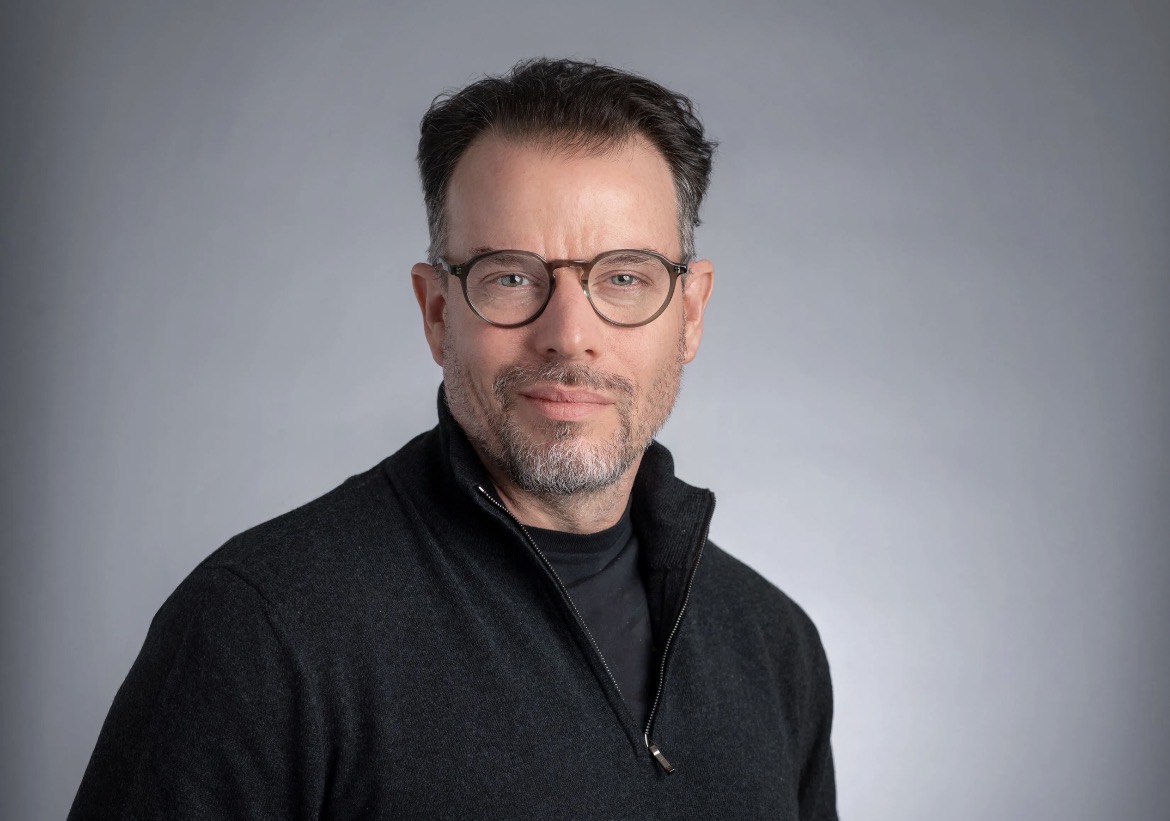
The University of Cambridge has unveiled one of the most eye‑catching acts of educational philanthropy in modern British history: a $251 million commitment from hedge fund billionaire Chris Rokos that will create a new School of Government carrying his name and firmly entrench him among the country’s most consequential donor‑investors in higher education.
For Cambridge, the gift is a financial and symbolic watershed; for Rokos, it is a public statement about how he wants his trading fortune to translate into long‑term “soft power” for Britain and a pipeline of leaders trained to navigate a world he believes is entering a period of structural upheaval, with the new school positioned from the outset as a transatlantic player rather than a purely British institution.
The bare numbers are stark. Cambridge describes the commitment, denominated at about $251 million, as the largest individual donation to a British university in modern times, eclipsing previous big‑ticket gifts in the UK sector and instantly turning the planned Rokos School of Government into one of the most heavily endowed units in the collegiate university.
Structurally, the money will flow through Cambridge’s established US‑UK charitable infrastructure, with the funds routed via Cambridge in America (UK) Ltd, a vehicle that sits within the broader Cambridge in America framework used to channel tax‑efficient donations from and through the United States to the university, underlining that this record‑breaking commitment is anchored in a transatlantic fundraising pipeline.
The structure of the commitment underscores both ambition and leverage: an initial tranche of roughly $172 million from Rokos, and up to a further $79 million that will be unlocked alongside matching contributions from Cambridge itself, with the university also contributing undeveloped land at its West Innovation District to host the new institution.
For a man who has long cultivated a low public profile, the Cambridge announcement is a rare and deliberate moment of visibility for Rokos, and the language he has chosen to attach to it is revealing.
The 55‑year‑old investor has spoken of having “benefitted substantially” from a transformative education and framed his philanthropy as a way to “give something back to Britain,” positioning the school’s eventual influence on global governance as an “important element” of the soft power that he argues has long been one of the UK’s key assets. His comments suggest a donor who sees education not just as a private good or a vehicle for personal legacy, but as a strategic asset in competition between states and systems, including with American peers whose schools of government already feed Washington, global institutions and major US‑based corporations.
Born Christopher Charles Rokos in London in 1970, he studied at Oxford before building a reputation as one of the standout macro traders of his generation, first as a founding partner at Brevan Howard and later as the driving force of his own firm, Rokos Capital Management.
His eponymous fund, which manages on the order of tens of billions of dollars, has delivered the kind of volatile but often spectacular performance that characterizes the upper echelon of macro hedge funds, and in recent years he has been reported to have paid himself the equivalent of hundreds of millions of dollars in a single year as profits surged.
It is this highly financialized, global‑markets wealth – earned through big, concentrated bets on interest rates, currencies and geopolitics across the world’s major financial centers – that is now being re‑deployed into the slower‑burn world of academic institution‑building and elite leadership education, with Cambridge in America providing one of the key channels through which the capital is formally committed.
The Cambridge gift does not come out of nowhere; rather, it crystallizes a philanthropic trajectory that has been developing quietly over many years and in which the university already plays a central role. At Girton College, his Cambridge anchor, Rokos has previously endowed Girton Rokos Internships and a Rokos Fellowship in STEM fields – early‑career bets on scientific talent that reflected his long‑standing interest in the interface between quantitative training and real‑world problem‑solving.
In 2026, alongside the headline commitment to the School of Government, he added an additional gift of about $6.6 million to Girton to support the college’s broader vision, signaling that his engagement is not just with a new standalone school but with the collegiate fabric that underpins Cambridge’s ecosystem.
What distinguishes the new commitment is the way it invites comparison with other “schools of government” that have become global brands in their own right, from the Harvard Kennedy School to Oxford’s Blavatnik School. Cambridge’s Rokos School of Government is explicitly framed as a response to “a new and complex world of great structural change”, with a mission to train leaders who can handle domestic and international politics shaped by technological disruption, geopolitical fragmentation and climate risk.
The university says the school will draw directly on Cambridge’s strengths in technology and the sciences, as well as social sciences, arts and humanities, creating an interdisciplinary environment in which future ministers, civil servants and advisers rub shoulders with engineers, data scientists and ethicists; critically for a US readership, the model is not confined to Westminster but is conceived as producing graduates who could just as readily move into roles in Washington, New York, Silicon Valley or multilateral organizations headquartered in the United States.
For a donor whose fortune was built on synthesizing signals across macroeconomic and political systems, the design of a school that prizes cross‑disciplinary thinking over siloed expertise appears aligned with his own intellectual instincts.
Rokos’s emphasis on British soft power is not incidental rhetoric; it is at the heart of how he is choosing to define the social return on a gift of this size. In his published remarks, he links the school’s work to the long‑term projection of Britain’s influence, expressing the hope that, over time, the Rokos School’s graduates will themselves become vectors of UK soft power in international institutions, national governments and major corporations around the world – a map that, in practice, will inevitably include the United States as a central arena.
At a time when universities are increasingly drawn into geopolitical competition – from research security to student recruitment – the presence of a major new school of government funded by a domestic financier, yet embedded in US‑facing fundraising structures and explicitly positioned alongside leading American schools of public policy, gives Cambridge a distinctly British‑branded platform in a space where US institutions have often dominated.
The governance architecture around the gift sheds further light on how both donor and university are attempting to balance influence and independence. The school’s finances are to be overseen by a dedicated charity trust, with a board that intentionally mixes university figures and donor‑linked appointees, including Cambridge Pro‑Vice‑Chancellors Sir John Aston and Kamal Munir on one side and lawyer‑alumnus Christos Nifadopoulos and Girton Mistress Elisabeth Kendall – an Oxford contemporary of Rokos – on the other.
This structure, which remains subject to Charity Commission approval, is designed to reassure stakeholders that while the gift is transformative, the school’s academic autonomy and institutional accountability will be anchored in Cambridge’s governance culture rather than in any single benefactor’s whim, even as the institution itself reaches out aggressively to international – including American – constituencies for students, faculty, partners and additional funding.
Within the UK’s wider philanthropic landscape, the timing and scale of the donation are likely to be read as both a challenge and an invitation to Rokos’s peers in finance and industry. University leaders have been frank in recent years about the need for private capital to fill gaps left by constrained public funding, but gifts near the quarter‑billion‑dollar mark remain vanishingly rare and often come with intense scrutiny of donors’ backgrounds, motives and expectations.
By making what Cambridge and multiple outlets are calling the single biggest university gift in modern British history, and tying it to a school that is intended to open as soon as this autumn on a prominent new site, Rokos is effectively setting a new benchmark for how a single UK‑based investor can move the needle on institutional capacity in one stroke – and he is doing so through a vehicle that is already familiar to American alumni and philanthropists, potentially paving the way for future US‑sourced capital to flow into the school alongside his own.
For the man himself, the gift consolidates a transition from “star trader” to institution‑builder without requiring him to abandon the discretion that has long characterized his public persona. Outside financial circles, Rokos has remained far less of a household name than some of his billionaire contemporaries, but the naming of a Cambridge school – and the global cohort of students and faculty who will pass through it – guarantees a quieter, more durable form of recognition than splashy consumer‑facing philanthropy.
As the first students arrive and the Rokos School of Government starts to produce research, policy ideas and alumni networks that will circulate through London, Brussels, Washington, New York and beyond, it is that enduring association – between a highly leveraged macro trading career and a long‑view wager on the next generation of public leaders on both sides of the Atlantic – that will define how this gift is remembered in university, philanthropic and transatlantic policy history.