
$40 million gift from Arthur and John Labatt and family to children’s hospital focuses on child health, brain science, and mental illness
The Labatt family has marked a new chapter in Canadian philanthropy with a $40‑million gift aimed at transforming how children and adolescents access mental‑health care in Toronto, extending a multi‑decade pattern of major giving focused on child health, brain science, and mental illness.
The latest commitment is both a capstone and a catalyst: it builds on nearly $40‑million in previous donations to The Hospital for Sick Children (SickKids) and earlier landmark support for the Centre for Addiction and Mental Health (CAMH), while explicitly targeting the bottlenecks and fragmentation that have left most young people without timely, appropriate treatment.
At the center of the announcement is the Labatt Family Thriving Minds Program, a new integrated initiative that formally unites SickKids, CAMH, and The Garry Hurvitz Centre for Community Mental Health at SickKids (GH‑CCMH) around a shared architecture for youth mental‑health services.
The program is designed to accelerate access to outpatient care so that children and youth can receive support “when and where they need it,” avoiding unnecessary hospital visits, long or multiple wait‑lists, and missed opportunities for early intervention.
The urgency is underscored by the statistics driving the gift: mental illness affects up to 20 percent of Canadian youth, yet only about one in five receive the services they need, and Toronto‑area youth are reporting worsening mental health as demand rises and wait times grow.
Within that context, the Labatts’ donation is structured less as a traditional capital project and more as a systems‑change investment, explicitly focused on building a connected continuum of care spanning hospital- and community‑based settings.
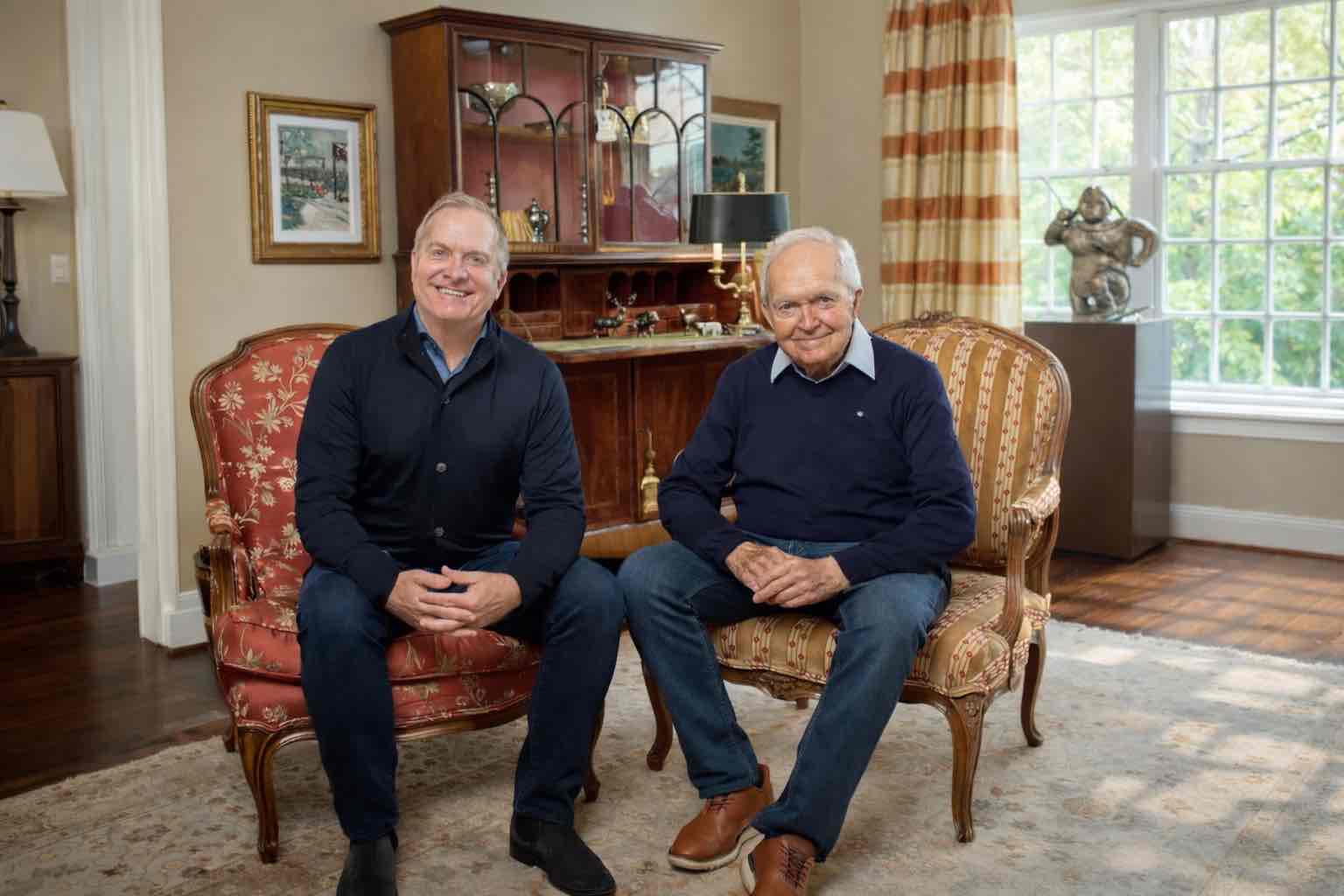
Behind the new program are Arthur Labatt and his son John, who have framed the $40‑million donation as both an honor and an obligation, consistent with Arthur’s longstanding public stance that significant private wealth carries a responsibility to enable institutional excellence in Canada.
Their latest contribution is described by partner institutions as “transformative,” because it is earmarked to support several interlocking priorities: designing a more coordinated access point so that children and youth are matched quickly with appropriate services; building and testing new treatment models informed by research and by the lived experience of young people; and knitting together hospital and community teams into a more seamless experience for families.
As Dr. Louise Gallagher, Chief of the Child and Youth Mental Health Collaborative at SickKids and CAMH and lead of the Thriving Minds Program, put it, the initiative is about what can be achieved collectively, with the donation bringing “the vision of seamless, integrated mental health care for every child and youth in Toronto closer to reality.”
Leaders at each partner institution have framed the Labatt gift as a pivotal moment in child and youth mental‑health care. CAMH Foundation president and CEO Anne‑Marie Newton emphasized that families routinely describe the difficulty of finding the right support for young people; she argued that the Labatt Family Thriving Minds Program will create a clearer, more connected path to care that reflects youth voices and the diversity of their experiences.
SickKids president and CEO Dr. Ronald Cohn characterized the donation as fuel for “innovative care models” that help children and youth access the right supports in the right place at the right time, with an impact that will extend across all partner organizations.
At the Garry Hurvitz Centre for Community Mental Health, executive director Neill Carson linked the gift directly to a strategic imperative to build seamless pathways between hospital and community, calling the Labatt investment a “quantum leap” toward collaborative, shared‑care approaches for young people with complex or severe needs.
This is not the first time the Labatt family has been ahead of the curve on mental health philanthropy. In 2005, at a time when public support for mental‑health care lagged, and stigma remained entrenched, the family made pledges of $1 million and $4 million to CAMH that the organization has described as “historic” and seminal to its evolution.
Their name has been visible on the CAMH campus for more than a decade, serving as a signal of community backing and, in CAMH’s own account, encouraging other philanthropists to step forward. Beyond clinical care, the Labatts have been major investors in understanding the biology of mental illness: a $20‑million gift to the University of Toronto enabled the creation of the Labatt Family Network for Research on the Biology of Depression, supporting endowed chairs, a professorship, a city‑wide research program and fellowships aimed at building a more complete biological model of the disease.
That network, developed in partnership with CAMH and SickKids, set a template for the kind of cross‑institutional collaboration that the new Thriving Minds Program will now bring into front‑line youth services.
The family’s broader philanthropic record reveals a consistent focus on child health, brain science, and institutional capacity building, with a particular emphasis on SickKids. In 2007, CBC reported that Arthur and Sonia Labatt made a $30 million donation to Toronto’s Hospital for Sick Children, then the largest gift in the hospital’s history.
Of that total, $25 million established the Labatt Family Heart Centre, now a globally recognized program for children with congenital heart disease, while the remaining $5 million supported an expanded Brain Tumor Research Centre that the family had already helped to seed with an earlier $5‑million donation.
SickKids donor archives describe the Labatts’ vision as the creation of an institution where scientists and clinicians from SickKids, the University Health Network, and the University of Toronto could work side by side, integrating laboratory discoveries with clinical practice.
The Labatt Family Heart Centre opened in 2007 and has been cited as an example of how targeted philanthropy can accelerate the development of specialized, multidisciplinary pediatric services.
Beyond SickKids and CAMH, the Labatt family appears across the Rolls of Major Benefactors at other Canadian institutions, illustrating a philanthropy that is broad but thematically coherent. At St. Michael’s Hospital, the family’s name is attached to the Labatt Family Centre of Excellence in Brain Injury and Trauma Research, reinforcing the family’s pattern of investing in brain- and trauma‑related care.
At Western University, they endowed the Labatt Family School of Nursing, another long‑term commitment to health‑care human capital and education. The University of Toronto highlights not only the depression network but also the Labatt Family Innovation Fund in Brain Health and the Sonia and Arthur Labatt Fellowships in the Not‑for‑Profit Sector, the latter aimed at strengthening leadership in civil‑society organizations.
The family has also directed significant support to environmental and conservation causes, including the World Wildlife Fund, underscoring an interest in global sustainability alongside domestic health‑care priorities.
Taken together, these commitments place the Labatts among Canada’s most prominent philanthropic families, a status the University of Toronto explicitly acknowledges by describing them as “one of Canada’s most generous philanthropic families.”
The pattern that emerges is one of large, often naming‑level gifts to anchor institutions, repeated over time, with a clear preference for initiatives that combine research, clinical care and education under a single umbrella.
Their philanthropy is also notably collaborative: whether in the depression network linking U of T, CAMH and SickKids, or in the new Thriving Minds Program spanning hospitals and community services, the family tends to fund cross‑institutional platforms rather than stand‑alone projects.
In public‑facing materials, partner organizations consistently frame the Labatts not only as benefactors but also as “visionary” donors who were willing to step into stigmatized or underfunded areas such as mental illness and brain tumors ahead of wider public support.
The newly announced $40‑million for child and youth mental health effectively knits these strands together into a single narrative about the family’s philanthropic identity. It fuses their long‑standing commitment to children’s health with their investments in mental‑health research and infrastructure, and it positions integrated, equitable youth mental‑health care as a defining legacy.
For the institutions involved, the gift arrives at a moment when demand for services is outpacing capacity and when system leaders are under pressure to reduce fragmentation; for families in Toronto, the true test will be whether, over time, it becomes easier for a young person in crisis—or at risk—to find the right door and receive the right care early.
For the broader philanthropic community, the Labatts’ decision to direct another major, unrestricted gift toward mental health signals that the field is no longer peripheral but central to any serious conversation about child and youth well-being in Canada.