
$20 million new gift to college from Chuck and Marna Davis is the latest expression of a long, steadily expanding philanthropic portfolio
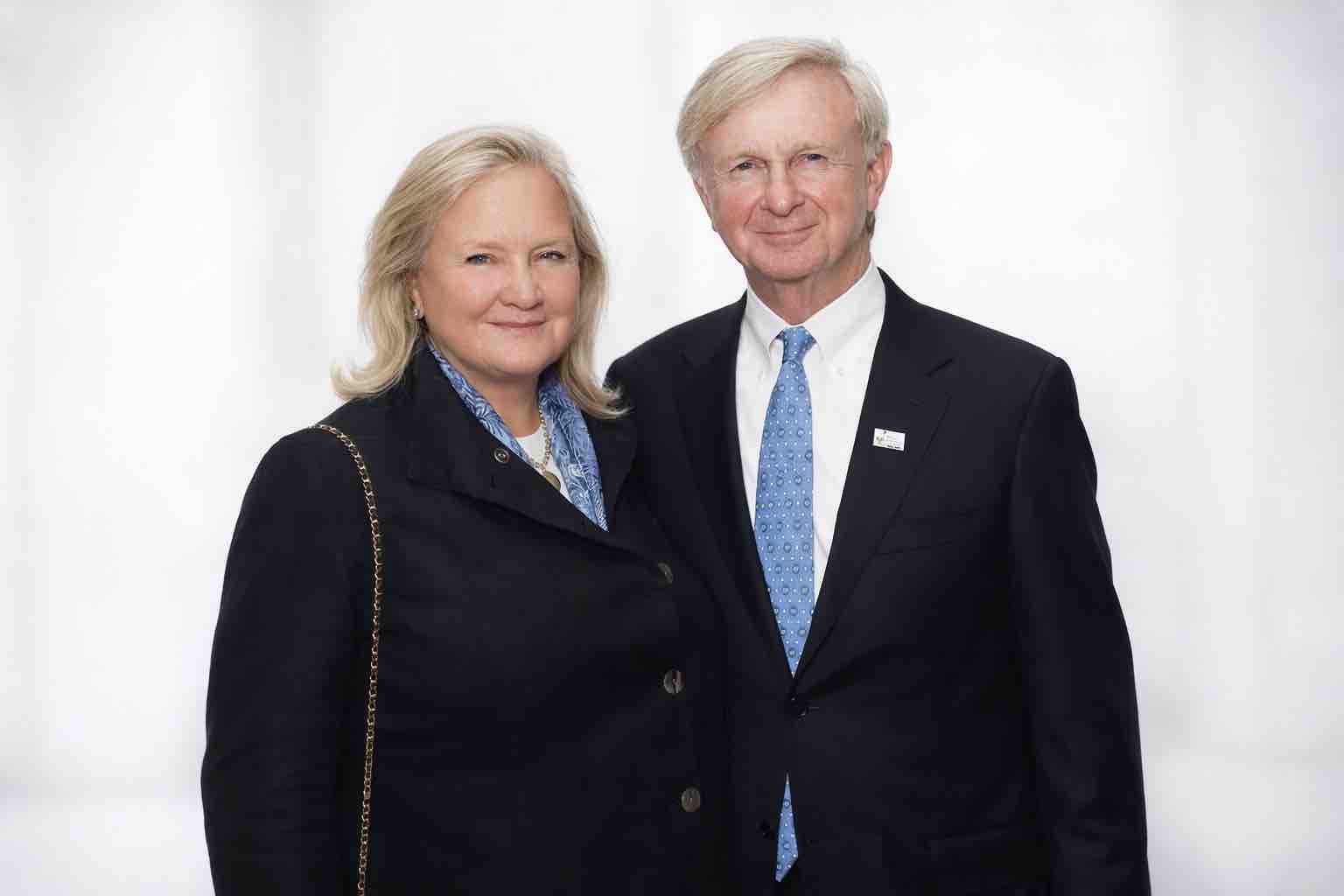
Middlebury College has announced a landmark $20 million commitment from Chuck and Marna Davis that will underwrite a new 35,000‑square‑foot teaching museum of art—an anchor for a reimagined arts quad and the latest expression of a long, steadily expanding philanthropic portfolio that has made the couple among Vermont’s most consequential donors.
The gift, made through the Chuck and Marna Davis Foundation, will fund the Marna O. Davis Museum, to be built near the current Battell Hall site, across from the Johnson Memorial Building, and is projected to open around the end of the decade.
Envisioned as a hub for teaching, research, exhibitions, and community engagement, the museum will house Middlebury’s approximately 7,000‑object art collection, future “world‑class” acquisitions, multipurpose classrooms, and event space, positioning the arts alongside the sciences and humanities at the center of the residential liberal arts experience.
College leaders have described the contribution as “transformative,” noting that it helped push the institution’s For Every Future campaign past its $600 million goal more than two years ahead of schedule, while fundraising for the museum and broader campaign continues through June 2026.
For the Davises, the museum is a new high point in a giving history that began decades ago and has grown into a focused, Vermont‑centric philanthropic strategy with national extensions. Their philanthropy is organized chiefly through the Chuck and Marna Davis Foundation, a private foundation originally created in 1987 with assistance from Goldman Sachs and renamed in 2022.
The foundation reported total assets of roughly $148.6 million as of December 2024, with annual giving of about $1.68 million in 2023, figures that indicate both substantial endowment strength and consistent grant-making capacity. Its mission is to support other tax‑exempt organizations rather than operate programs directly, with a geographic emphasis on Vermont and selective support for national causes that align with the family’s values.
Over time, the Davises have refined that mission. Around 2020, they made a deliberate decision to concentrate foundation resources more heavily on Vermont, reasoning that although the state has unusually high rates of volunteerism, residents’ financial capacity to support local nonprofits lags behind that civic spirit.
Today, the foundation identifies four priority areas—education, community development, sustainability, and arts and culture—while maintaining flexibility to respond to emerging needs. Within those priorities, the Davises have used their capital to make what observers describe as “transformational” gifts to flagship institutions, often pairing bricks‑and‑mortar investments with a long-term governance and leadership presence.
Higher education has been a particular throughline in their giving. Chuck Davis grew up in Burlington, Vermont, attended Middlebury for two years, and then transferred to the University of Vermont (UVM), where he majored in physical education, competed in tennis and soccer, and was later inducted into the UVM Athletic Hall of Fame.
After a 23‑year investment‑banking career at Goldman Sachs and leadership of Stone Point Capital, he returned to his alma mater as a major donor and trustee, helping fund the Dudley H. Davis Center—named for his father—and serving on UVM’s Board of Trustees from 1996 to 2002. The family also made a $4 million gift to support UVM’s Multi‑Purpose Center project, a campus hub for recreation, wellness, and fitness; that facility is named for his mother, Phyllis “Phiddy” Davis, who graduated from UVM in 1945.
Taken together, the Dudley H. Davis Center and the Multi-Purpose Center gifts have positioned the Davises among UVM’s most significant benefactors, with their philanthropy literally shaping the university’s physical campus.
Their support for Middlebury has followed a different but complementary trajectory, reflecting Chuck Davis’s formative years there and his later prominence in finance. In addition to the new $20 million museum gift, Middlebury has recognized the couple with honorary degrees and invited Chuck Davis to deliver the 2025 Commencement address, underscoring the institution’s view of him as both a business leader and a model of civic engagement.
Middlebury officials have emphasized that the Davises have “dedicated their lives to becoming the largest philanthropists in the history of the state,” framing the museum gift as part of a sustained relationship rather than a one-off act of generosity. The museum itself, named for Marna O. Davis, highlights her own identity as a cultural volunteer and arts advocate, and cements the couple’s long‑term imprint on the college’s academic and cultural life.
Beyond campus borders, the Davises’ giving history reveals a broad portfolio of Vermont‑based institutions and initiatives, often rooted in community, culture, and youth development. Their foundation has supported the Shelburne Museum, a major regional art and Americana museum where Marna serves on the board; Shelburne Farms, a National Historic Landmark and nonprofit focused on sustainability education; Spectrum Youth and Family Services; the Lake Champlain Community Sailing Center; and the Vermont Youth Conservation Corps.
They have also backed Hack Club, a network of high school computer science clubs, aligning their giving with education and workforce development themes. These commitments, which range from anchor cultural institutions to youth-serving organizations, illustrate a pattern of reinforcing Vermont’s civic infrastructure at multiple levels—from marquee museums to grassroots programs.
The family’s philanthropy also extends to highly specialized national causes, most notably the Fibrolamellar Cancer Foundation, which funds research into a rare liver cancer. Public reporting indicates that the Davises and Stone Point Capital cover all of that foundation’s overhead and administrative costs, allowing outside contributions to flow fully into research and patient‑focused initiatives.
This model—using private wealth to absorb operating expenses, thereby maximizing program dollars—mirrors a broader trend among high‑capacity donors seeking leverage and efficiency in disease‑specific philanthropy. It also underscores how the Davises’ giving, while centered in Vermont, can be catalytic in fields that extend far beyond state lines.
Marna Davis’s biography helps explain the couple’s consistent interest in arts and cultural institutions, including Middlebury’s new museum. She has served as a docent at the Museum of the City of New York and as an English-language teacher, and she holds a board seat at the Shelburne Museum, giving her hands‑on exposure to the educational role of museums and the operational demands of cultural nonprofits.
Her volunteer work and governance roles complement Chuck Davis’s financial and strategic expertise, creating a partnership that blends programmatic insight with capital and investment acumen.
The decision to name Middlebury’s new facility the Marna O. Davis Museum mirrors the couple’s earlier pattern at UVM, where gifts have honored members of the Davis family and highlighted intergenerational ties to the state’s flagship institutions.
At Middlebury, the new museum is intended to operate as a “teaching museum,” integrated directly into coursework and research rather than functioning solely as a showcase for visiting exhibitions. The facility will anchor a new arts quad, complementing existing spaces such as the Johnson Memorial Building and creating a cluster where students can move seamlessly between studio work, classroom learning, and encounters with the college’s permanent collection.
Administrators have framed the project as expanding access to the arts not only for Middlebury students, faculty, and staff, but also for the broader Vermont community, echoing the Davises’ long-stated goal of improving quality of life across the state.
The $20 million gift, while substantial on its own, also signals the couple’s comfort in underwriting cornerstone pieces of larger capital efforts. At UVM and now Middlebury, their naming-level contributions have unlocked or accelerated multi-year campaigns, either by serving as lead gifts or by arriving at key moments in a campaign’s trajectory.
At Middlebury, officials credit the Davises’ support with helping the For Every Future campaign reach its $600 million target two and a half years ahead of schedule, even as fundraising continues to round out the museum and other strategic priorities. That pattern—stepping in at pivotal moments with gifts that change both timelines and ambitions—has become a hallmark of the Davises’ giving history.
As their foundation’s assets and annual outlays continue to grow, the arc of Chuck and Marna Davis’s philanthropy points toward a deepening, rather than a narrowing, engagement with Vermont and its anchor institutions.
Their combined record—major gifts to UVM, sustained support for community and cultural organizations, full underwriting of a national disease foundation’s overhead, and now a $20 million investment in a teaching museum at Middlebury—has already secured their place among the most influential philanthropic families in the state.
The Marna O. Davis Museum, scheduled to open toward the end of this decade, will stand not only as a new home for art on campus but also as a visible, long‑term testament to a giving strategy that weds hometown loyalty, institutional partnership, and a belief in education and culture as engines of public good.