$27 million backs bold bet on Ben Delo’s science‑first philanthropy
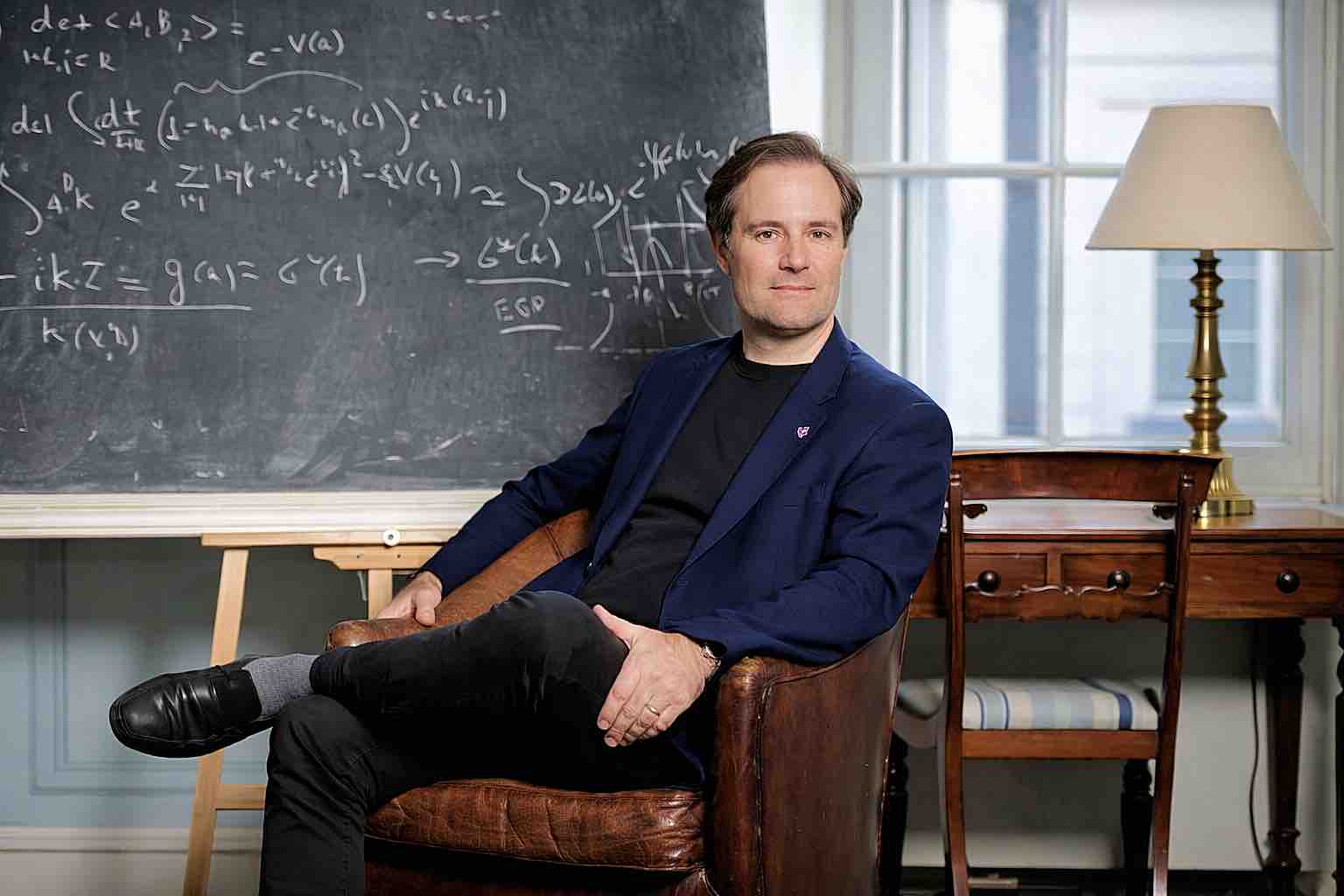
Bitcoin billionaire Ben Delo is making a big bet on the future of science that runs straight through the United States—even as his headline gift lands in London. His 20 million pound pledge, roughly 27 million dollars, to the London Institute for Mathematical Sciences (LIMS) is designed to turn a small European research outfit into a global player capable of producing Nobel‑ and Fields Medal–level work, but the logic behind it is the same one already driving his multimillion‑dollar support for high‑stakes research at leading American universities.
Structurally, the LIMS pledge looks a lot like an anchor round in a US‑style capital campaign. About half of the money—around 13.5 million dollars—is already committed, with the remaining 13.5 million due to come in as other donors join the effort.
The aim is to build an endowment in the neighborhood of 80 million dollars, giving the institute a permanent capital base to fund long‑term projects in theoretical physics, pure mathematics and adjacent areas like artificial intelligence. That focus on endowment, runway and research‑only positions LIMS more like a US independent institute or a private lab than a traditional British university department.
The model will be familiar to an American audience. LIMS is housed in London’s historic Royal Institution, but it runs as a pure research centre: three‑year fellowships, no teaching load, minimal bureaucracy. Senior and early‑career scientists alike are hired to work full‑time on big theoretical questions rather than juggle classes, committees and constant grant cycles.
For donors steeped in the culture of US tech, venture capital and private research institutes—from Silicon Valley labs to East Coast think tanks—that kind of institutional design is a feature, not a bug. Delo’s gift effectively asks whether a lean, privately backed institute can join the same intellectual circuits as the top US math and physics departments and compete for the same global prizes.
For many in US higher education and policy circles, the more interesting part of the story may be how tightly this new UK commitment is woven into Delo’s distinctly American‑inflected philanthropy portfolio.
Over the past several years, he has quietly become a significant backer of research programs at US universities that focus on what he sees as “civilizational‑scale” risks—engineered pandemics, advanced AI, nuclear war and extreme climate scenarios. That includes support for AI safety and human‑compatible AI work at the University of California, Berkeley, and collaborations involving Johns Hopkins’ Center for Health Security on pandemic and biosecurity risk. Even when the cheques are written offshore, the intellectual and policy conversations they fund often play out on US campuses, in US conferences and ultimately in Washington.
The numbers surrounding his other gifts are comparable in scale to mid‑sized US university endowments and named centers. In 2024, Delo endowed the Sheila Coates Foundation, a charity he created in 2020 to support autistic young people in England, with 25 million pounds—about 33 million dollars—to secure its future. The foundation now works with hundreds of schools and colleges and tens of thousands of young people, functioning in practice much like a specialized US educational nonprofit with a guaranteed corpus and a clear mandate around neurodiversity and inclusion.
An earlier 5 million pound (roughly 6.2 million dollar) gift to Worcester College, Oxford, his alma mater, strengthened math teaching and fellowships in a way that echoes countless named chairs and scholarships on American campuses.
What makes Delo particularly noteworthy to a US audience is not just the sums involved, but the philosophy of tying them together. In 2019 he joined the Giving Pledge, standing alongside prominent American billionaires but framing his commitment in unusually stark terms: he pledged the majority of his wealth to “safeguarding the long‑term future of humanity.”
Rather than supporting a wide array of civic and cultural institutions, he has concentrated on a relatively small set of entities—some in the UK, some in the US—that work on advanced theoretical science and long‑term risk mitigation. The intellectual scaffolding for that approach comes from effective altruism, a movement with deep roots in US and UK academic circles and growing traction among tech founders on both coasts.
From a US policy perspective, Delo’s transatlantic strategy speaks to a broader shift in how frontier research is being financed. As debates rumble in Washington over federal science budgets, industrial policy, AI regulation and pandemic preparedness, a new class of tech and crypto fortunes is opting to route money directly into specialized institutes and university labs on both sides of the Atlantic. The LIMS gift can be read as part of that pattern: a cryptocurrency‑made billionaire placing a long‑horizon bet on basic math and physics in London, while continuing to fund US‑based researchers working on AI safety and biosecurity. The underlying thesis is that nimble, well‑capitalized institutions—whether in Mayfair, Berkeley or Baltimore—will drive the breakthroughs and risk‑mitigation tools that governments will later rely on.
Delo’s 27-million-dollar pledge to LIMS is not just a story about British science philanthropy.
It is a case study in how globally mobile, technology‑derived wealth is reshaping the research landscape, with money, talent and ideas flowing continuously between US universities, independent institutes and their emerging European counterparts.
If LIMS succeeds in turning that capital into world‑class theoretical advances and, eventually, Nobel‑caliber recognition, it will strengthen a model of science funding that is already deeply embedded in the US—and increasingly defined by the strategic choices of a small club of globally minded, data‑driven donors.