$10 million gift from philanthropist Kenneth C. Griffin to bring eminent Gastroenterologist to Miller School and UHealth as Division Chief
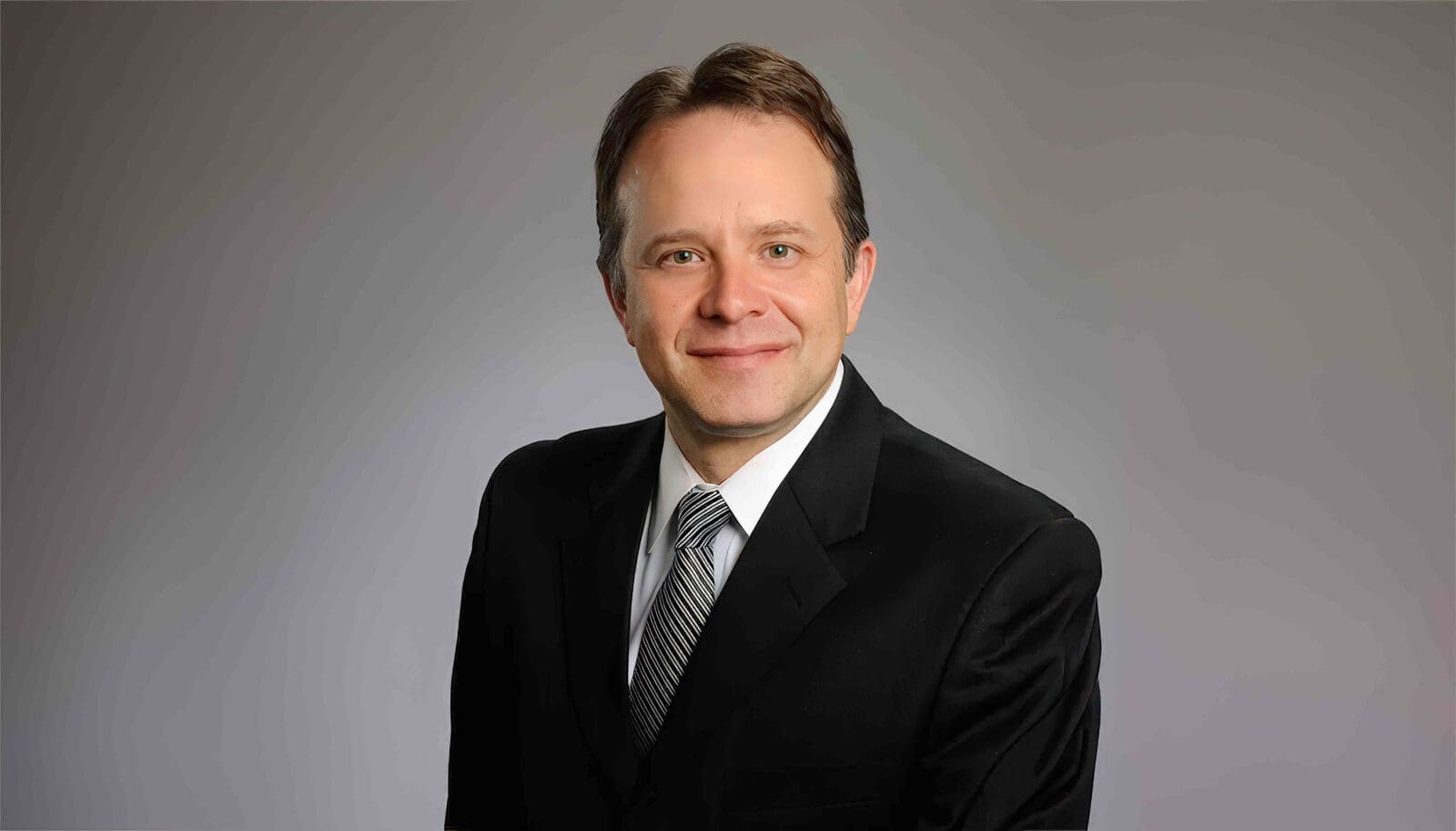
The $10 million donation will enable Dr. Field F. Willingham to advance the growth of a division focused on innovation, research and training, building on Griffin’s prior support for UHealth.
Field F. Willingham, M.D., M.P.H., will join the University of Miami Miller School of Medicine and UHealth — University of Miami Health System as endowed professor and chief of the Division of Digestive Health and Liver Diseases in the Department of Medicine.
Prior to the move, Dr. Willingham had a distinguished career at Emory University, where he served in many roles, including professor of medicine, director of endoscopy, and associate division director for academic affairs in the Division of Digestive Diseases.
Dr. Willingham, who was recruited thanks to a $10 million gift to the department from Kenneth C. Griffin, founder and CEO of Citadel and founder of Griffin Catalyst, will oversee the strategic growth of digestive health and hepatology programs across UHealth.
Dr. Willingham plans to optimize UHealth clinical systems, deliver leading patient care across subspecialty areas and expand the research enterprise, making the division a preeminent center in endoscopy, inflammatory bowel disease, the microbiome, motility and hepatology.
He will lead efforts to advance educational excellence by fostering collaborative, innovative training programs.
Faculty recruitment, support, and development will be a key priority.
Dipen J. Parekh, M.D., chief executive officer for UHealth, executive vice president for health affairs for the University of Miami, the Magnier Endowed Chair in Urology, and the Victor A. Politano Endowed Chair in Urology, extolled the new hire and gift that made it possible.
“Recruiting someone of Dr. Willingham’s stature demonstrates that UHealth’s foundation is built within a robust clinical environment and research powerhouse,” said Dr. Parekh.
“Under his leadership and vision, Ken’s defining gift puts us in a position to make even more seminal discoveries in the gastrointestinal field and accelerate treatments that can save patients in our region and beyond. We couldn’t be more grateful.”
Henri R. Ford, M.D., M.H.A., dean and chief academic officer for the Miller School, shared a similar feeling.
“Dr. Willingham is another star in the Miller School’s growing array of luminary division leaders,” Dean Ford said. “His arrival will clearly elevate all aspects of our GI program. We thank Mr. Griffin for his gift that positions us to take this next step.”
“It is with great enthusiasm that we welcome Dr. Willingham to the University of Miami,” said Roy E. Weiss, M.D., Ph.D., the Rabbi Morris I. Esformes Endowed Chair in Medicine and Endocrinology, the Kathleen & Stanley Glaser Distinguished Chair, professor and chair of the Miller School’s Department of Medicine, and chief medical officer for ambulatory services at UHealth.
“Over the past 15 years, he has built one of the nation’s most respected programs in therapeutic and interventional endoscopy, known for its innovation, multidisciplinary collaboration, and commitment to excellence in patient care, education, and research.”
“I am a champion for gastroenterology,” says Dr. Field Willingham. “We can save lives with minimally invasive endoscopic procedures.”
“I can’t tell you how excited I am to be joining the University of Miami, and especially so on the centennial anniversary,” Dr. Willingham said.
“I am incredibly grateful to be chosen at a time when digestive health has been designated as a luminary area. I am a champion for gastroenterology. It is one of the most exciting and dynamic specialties and is seeing this incredible growth right now. We can save lives with minimally invasive endoscopic procedures. For example, we can now endoscopically ablate tiny insulin-secreting pancreatic tumors. That’s life-changing for patients. We are curing diseases with new medications. My colleagues are eradicating hepatitis C and turning off inflammation for IBD patients. Think about standard procedures like colonoscopy. We now know that screening colonoscopy can reduce colon cancer incidence by more than 50%.”
Dr. Willingham praised the existing strengths in the institution he is about to join as “a large and diverse faculty with deep expertise in many areas, located in a vibrant city growing by leaps and bounds, a nationally regarded fellowship program, the Sylvester Comprehensive Cancer Center, the Crohn’s and Colitis Center, and the Miami Transplant Institute.”
These are key pillars already in place in the university. This is coupled with approval to build a new cutting-edge endoscopy complex in the UHealth Tower, where the most sophisticated endoscopic procedures will be performed.
“In my own practice, I have devoted much of my career to working with diseases of the pancreas. We have seen the gold standard for diagnosing pancreatic cancer change. It is now diagnosed using endoscopic ultrasound, with accuracy rates of 90 to 95%.We can relieve obstructions caused by pancreatic cancer by placing stents without any incisions or external tubes. Management of severe pancreatitis has completely changed. We now avoid surgery for most patients and can manage the life-threatening cases with minimally invasive endoscopic procedures. We’ve developed technologies that allow us to drain massive fluid collections without incisions.”
“More recently, we’re studying emerging technologies that enable us to ablate tumors in the pancreas endoscopically. We hope to offer a new category of endoscopic ablation procedures for patients with GI tumors in the pancreas and other organs. I am particularly excited to partner with Sylvester Comprehensive Cancer Center to bring these approaches to patients at UHealth.”
Griffin’s gift to the Division of Digestive Health and Liver Diseases reflects the philanthropist’s continued investment in medicine and research excellence. In 2024, his landmark $50 million gift named the Kenneth C. Griffin Cancer Research Building.
The 12-story, 244,000-square-foot facility on the medical campus is accelerating efforts at Sylvester, the region’s only NCI-designated cancer center, to develop new therapies, enhance care for patients, and expand access to clinical trials.
This new gift provides the resources necessary to support Dr. Willingham’s ambitious goals for the division, including recruiting and training the best researchers and clinicians.
“I’m so grateful for the support and opportunities it provides,” Dr. Willingham said.
“It’s a transformative gift, and it will catalyze our most ambitious goals. We plan to optimize the health care delivery systems in our division. We will attract the stars in the field across subspecialty areas, people who will provide leading-edge care, people at the forefront of research, people who can lead our key programs to new levels.”
Griffin’s generosity will also provide key support for fellows and faculty.
“Trainees are the lifeblood of academic programs,” Dr. Willingham said. “I believe that supporting and developing fellows and fellowship programs is fundamental to success. Trainees are the next generation of any field. We are fortunate to have a very well-developed and thriving gastroenterology fellowship program at UM. I look forward to mentoring them, to hearing about their goals, to understanding their visions for the future and helping bring those into the light. Junior faculty need support to compete for grants, to bring a concept into the mainstream, and to pursue additional training. Your time is your most valuable commodity. Philanthropic support translates into time, and time is what allows a faculty member to pursue something extraordinary.”
Dr. Willingham also hopes Griffin’s gift will inspire other donors to support gastroenterology’s outsized impacts on human health.
“We are hoping that this is the beginning of a partnership. There is so much we can realize together,” he said. “We are seeing technology in the field move at an incredible pace. As the editor of an endoscopy-focused electronic journal, I reviewed procedures every day that were pushing the boundaries of what we can do with endoscopy. I am seeing superficial GI cancers being resected from the inside, swallowing being restored, previously untreatable infections eradicated, and new organs being placed for patients with end-stage liver disease. We are reducing colon cancer nationwide by getting everyone screened. It is a remarkable time to be in the field. To have that vision shared by a leading institution like the University of Miami and to have it supported so strongly by this philanthropy makes it a once-in-a-lifetime opportunity.”
Dr. Willingham will mark his first day at the University of Miami on June 29.