
$175 million megadonor philanthropist Gerald Chan will deliver 2026 commencement address at medical school
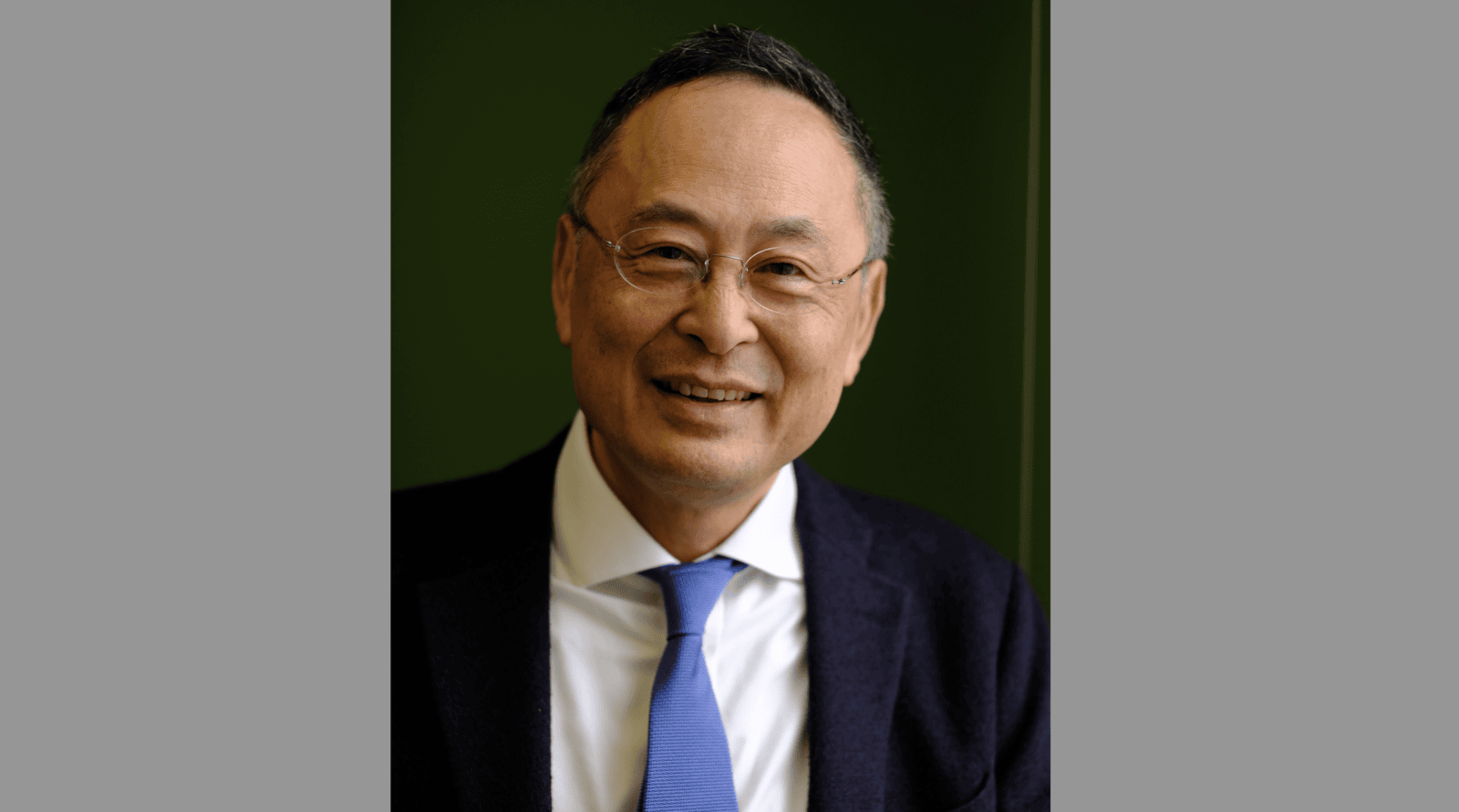
Philanthropist and biomedical investor Gerald Chan will return to the Worcester campus that bears his family’s name this spring, delivering the 2026 Commencement address at UMass Chan Medical School on Sunday, May 31, in a ceremony that doubles as a celebration of his quietly consequential role in reshaping the institution’s future.
The appearance marks a new public chapter in a relationship that formally crystallized earlier, when The Morningside Foundation— the charitable arm of the Chan family—made a $175 million naming gift to what was then the University of Massachusetts Medical School, the largest donation in UMass history and one that permanently rebranded the school as UMass Chan Medical School.
With that commitment, the medical school, its nursing graduate program and its biomedical sciences graduate school were renamed the T.H. Chan School of Medicine, the Tan Chingfen Graduate School of Nursing, and the Morningside Graduate School of Biomedical Sciences, signaling that the Chan family’s philanthropy was not a one‑off benefaction but a long-term bet on public academic medicine, workforce training and basic science in Massachusetts.
For the Class of 2026, many of whom began their studies in the shadow of the pandemic and trained through volatile years for both health systems and higher education, the presence of Gerald Chan on the Commencement platform is emblematic of the way private philanthropy has underwritten a new era of public medical education in the Commonwealth. T
The ceremony, the 53rd annual Commencement exercises for UMass Chan, will unfold on the campus green in front of the Medical School building, with more than 300 students from the three graduate schools expected to receive degrees as their families, faculty, and donors look on.
Guest seating opens at 10:30 a.m., the academic procession steps off at 11:45 a.m., and the program begins at noon, with the proceedings broadcast live on Facebook and YouTube to alumni, collaborators, and partners beyond Worcester.
Chan, who co‑founded the global investment firm Morningside and today serves as chairman of Apellis Pharmaceuticals, occupies an increasingly rare intersection of roles: trained scientist, active venture capitalist, and global philanthropist whose giving is insistently focused on the hard problems of biomedicine and public health.
After earning a master’s degree in medical radiological physics and a Doctor of Science in radiation biology from Harvard University, he built a career that threads basic science, translational innovation, and capital formation; his investments and board roles have backed research in autoimmune disease, infection, cancer, and other conditions that account for a large share of global morbidity and mortality.
Through the Morningside Group and The Morningside Foundation, Chan has helped steer resources toward universities and research institutions on three continents, combining a global investor’s appetite for risk with a clinician‑scientist’s appreciation for the incremental, often painstaking nature of discovery.
The UMass Chan relationship is rooted in that worldview.
When The Morningside Foundation announced its $175 million gift, Chan framed the commitment within the land‑grant university tradition, emphasizing that a well-resourced public medical school can deliver both scientific advances and a diverse, practice‑ready physician and nursing workforce for its home state.
Naming the T.H. Chan School of Medicine after his late father, and the Tan Chingfen Graduate School of Nursing after his mother extended a family pattern of philanthropy that had already included a record $350 million gift to Harvard’s School of Public Health and support for Morningside College at the Chinese University of Hong Kong, all designed to “enable education, support science and fund medical research.”
In Worcester, those same motivations translate into endowed programs, strengthened research capacity and enhanced training pipelines in fields from primary care and rural health to complex biomedical science.
Chan’s forthcoming Commencement address will arrive at a moment when UMass Chan is leaning into that philanthropic capital to expand its reach.
The medical school has used the Morningside gift, along with other public and private funding, to accelerate its research agenda, deepen community partnerships across Massachusetts, and widen access for students from varied socioeconomic and geographic backgrounds.
For graduating physicians, nurses, and scientists, many of whom will remain in New England’s hospitals, labs, and clinics, Chan’s presence underscores that their education is part of a larger ecosystem that depends on donors willing to endow scholarships, support faculty and underwrite long‑horizon scientific work that federal grants alone cannot sustain.
The Commencement will also recognize two other national figures whose careers echo UMass Chan’s emphasis on science‑driven, patient‑centered care. Monica M. Bertagnolli, MD, who will become the first woman president of the National Academy of Medicine in July, will be honored for a career that bridges surgical oncology, cancer research, and health policy.
A former director of the National Institutes of Health, Bertagnolli holds the title of Richard E. Wilson Professor of Surgery Emerita at Harvard Medical School and serves as a senior fellow in health care policy at the Harvard Kennedy School, bringing deep experience from Brigham and Women’s Hospital and Dana‑Farber Cancer Institute, where she built her reputation in gastrointestinal cancer and sarcoma care.
Her presence on the Commencement stage underscores the alignment between UMass Chan’s training mission and the broader federal and academic push to integrate cutting‑edge cancer science with more equitable, value‑driven care.
Robert A. Harrington, MD, dean of Weill Cornell Medicine and provost for medical affairs at Cornell University, rounds out the trio of honorees, tying UMass Chan’s story back to its own alumni pipeline.
A native of nearby Somerville, Massachusetts, Harrington graduated magna cum laude from the College of the Holy Cross in Worcester, earned his medical degree at Tufts University School of Medicine, and completed his internal medicine residency—serving as chief resident—at UMass Chan, before going on to a nationally recognized career in cardiology and academic leadership.
His return to Worcester in a leadership role at one of the country’s premier academic medical centers illustrates the kind of professional arc UMass Chan aims to enable: local roots, elite training, and national influence in both patient care and institutional strategy.
Still, it is Chan’s involvement that gives this year’s Commencement its distinctive philanthropic resonance.
For an institution that has historically relied on a mix of state funding, federal grants, and clinical revenues, the Morningside gift—and the expanded relationship with the Chan family—has signaled to other donors that UMass Chan is prepared to steward nine‑figure philanthropy with strategic discipline and public‑minded purpose.
Within philanthropy circles, Gerald and his brother Ronnie Chan have become emblematic of a new breed of global donors who combine low personal profiles with high‑impact, institution‑shaping gifts, particularly in science, engineering, and design education, as evidenced by their major commitments to Harvard, MIT, and multiple institutions in Hong Kong.
For UMass Chan, hosting Gerald Chan as commencement speaker is both a symbolic thank‑you and a public statement that the school intends to stand in the same league of ambition as the private elite universities that have long been the primary beneficiaries of such mega‑gifts.
As May 31 approaches, the campus green in Worcester will function as a kind of living diagram of that changing landscape in medical education: rows of new graduates about to enter residencies, postdocs, and nursing roles; faculty whose research portfolios rely on both federal funding and philanthropic risk capital; families whose own economic stories underscore why scholarships and public institutions matter; and, at the podium, a scientist-investor donor whose name is now woven into the institution’s identity.
For Gerald Chan, the address will be an opportunity to articulate how science, philanthropy, and public universities can work together in an era of rising biomedical complexity and fiscal constraints; for UMass Chan and its Class of 2026, it will be a reminder that their work is taking shape at the intersection of individual vocation and large‑scale strategic giving.