$20 million low-key help: Sergey Brin quietly backs new effort to ease California’s housing squeeze
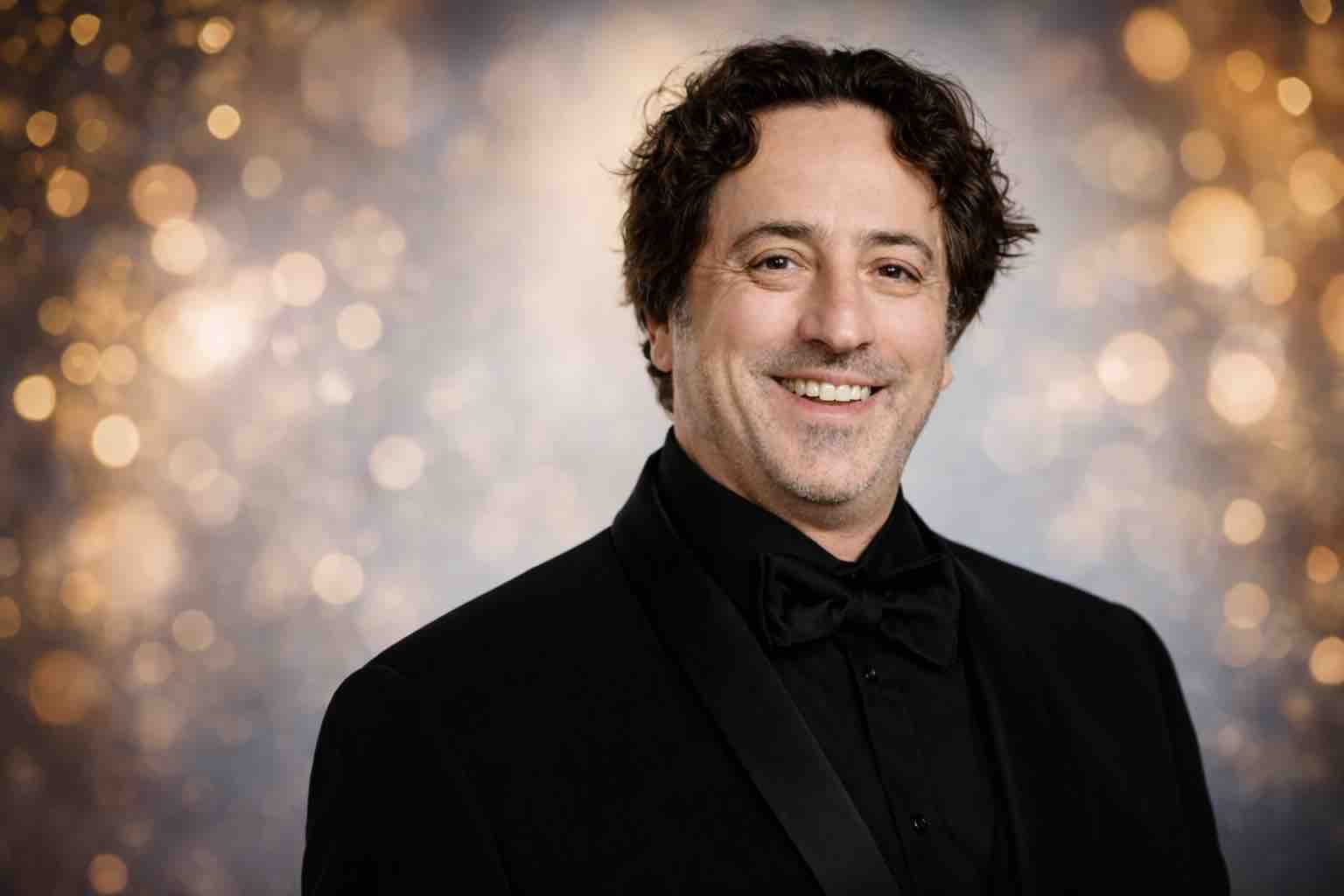
Google co-founder Sergey Brin has quietly stepped into a new leadership role in American philanthropy and civic life with a record $20 million commitment to tackle California’s housing emergency through a new coalition, Building a Better California.
Brin’s $20 million quiet gift, forms the backbone of a $35 million launch fund for Building a Better California, making him the anchor donor among a group of prominent business leaders and technologists who have joined the effort.
The new organization is structured as a political and policy vehicle designed to confront the state’s worsening housing affordability crisis by supporting ballot measures and legislation that can accelerate homebuilding and streamline approvals across California.
The $35 million start-up war chest for Building a Better California reflects a broader, coordinated push from Silicon Valley and business leaders who see stable, attainable housing as foundational to California’s long-term economic and social health. Current filings and reports show that roughly $15 million on top of Brin’s contribution has been committed by eight other high-net-worth donors, including former Google CEO Eric Schmidt and venture capitalist Michael Moritz, who have each given $2 million, alongside additional seven-figure commitments from other tech and investment figures.
This early coalition funding is already being deployed into statewide ballot campaigns and legislative advocacy that aim to unlock new housing supply, modernize environmental review where it has become a bottleneck, and expand homeownership opportunities for the middle class.
Brin’s move comes at a moment when California’s tax and fiscal debates are intensifying, including a proposed wealth tax aimed at the state’s richest residents that has prompted vigorous organizing on both sides.
Other high-profile tech investors, such as Peter Thiel, have recently made multi-million-dollar political donations to business coalitions opposing a billionaire wealth tax in the state, underscoring how central questions of wealth, mobility, and opportunity have become in California’s public life.
Brin’s decision to channel such a large sum into housing-focused policy and ballot work positions him not only as a key player in those debates but as someone explicitly tying long-term economic resilience to inclusive, attainable housing.
The $20 million California initiative is part of a much larger and rapidly expanding philanthropic footprint built on the back of Alphabet’s remarkable market performance and the broader artificial intelligence boom.
Brin reportedly transferred more than $1.1 billion worth of Alphabet stock, with about $1 billion going to Catalyst4, the nonprofit he founded in 2021. Catalyst4 operates with a dual mission: funding research into central nervous system diseases such as Parkinson’s, Alzheimer’s, and multiple sclerosis, and backing innovative solutions to the global climate crisis.
The remainder of that 2025 stock transfer included approximately $90 million to his family foundation and $45 million to the Michael J. Fox Foundation for Parkinson’s Research, further cementing Brin’s long-standing commitment to neuroscience and patient-focused research.
Those gifts built on an earlier roughly $700 million allocation of Alphabet shares in May 2025 to the same trio of recipients—Catalyst4, the family foundation, and the Michael J. Fox Foundation—making 2025 one of the most consequential years of Brin’s life in terms of philanthropic outflows.
Analysts of large-scale giving noted that, taken together, Brin’s vehicles disbursed on the order of $1.1 billion in 2025 alone, placing him in the very top tier of active big-money donors in the United States.
The surge has been powered by a dramatic appreciation in Alphabet’s stock price during the recent AI-driven rally, which has significantly increased the value of Brin’s holdings and enabled him to convert that windfall into long-term capital for science, climate, and social problem-solving.
Brin’s philanthropic architecture reflects a strategic blend of science, systems change, and targeted policy engagement. Catalyst4, borne out of his family’s direct experience with genetic risk for Parkinson’s disease, is explicitly designed to move the needle on some of the most underfunded and technically challenging areas of medicine by backing ambitious research into the central nervous system and its disorders. At the same time, Catalyst4’s climate portfolio finances work ranging from renewable energy and carbon-removal technologies to other efforts aimed at cutting greenhouse gas emissions and helping communities adapt to a warming planet.
His family foundation provides flexible capital across broader scientific, environmental, and humanitarian priorities, while programmatic grants and gifts like the one to the Michael J. Fox Foundation are intended to accelerate tangible progress in disease understanding, clinical trials, and treatment development.
By stepping forward as the anchor donor for Building a Better California, Brin is extending that same results-oriented mindset into the civic arena, committing not only to research and philanthropy but to the hard, often unglamorous work of modernizing laws and public systems.
The coalition’s early agenda—simplifying approvals, expanding housing supply at scale, and advancing pro-housing statewide measures—illustrates a belief that California’s housing crisis is neither inevitable nor intractable, but rather a design problem that can be solved with sustained investment, regulatory reform, and broad public support.
In the context of rising economic anxiety and contentious debates over how to tax and govern extreme wealth, Brin’s latest commitment stands out as a distinctly constructive model: leveraging a historic personal fortune into long-term investments in health, climate, and a more livable California for the millions of people who call the state home.