$65 million raised by 23-year-old content creator Patryk Garkowski, hoping to give sick children a better chance to live
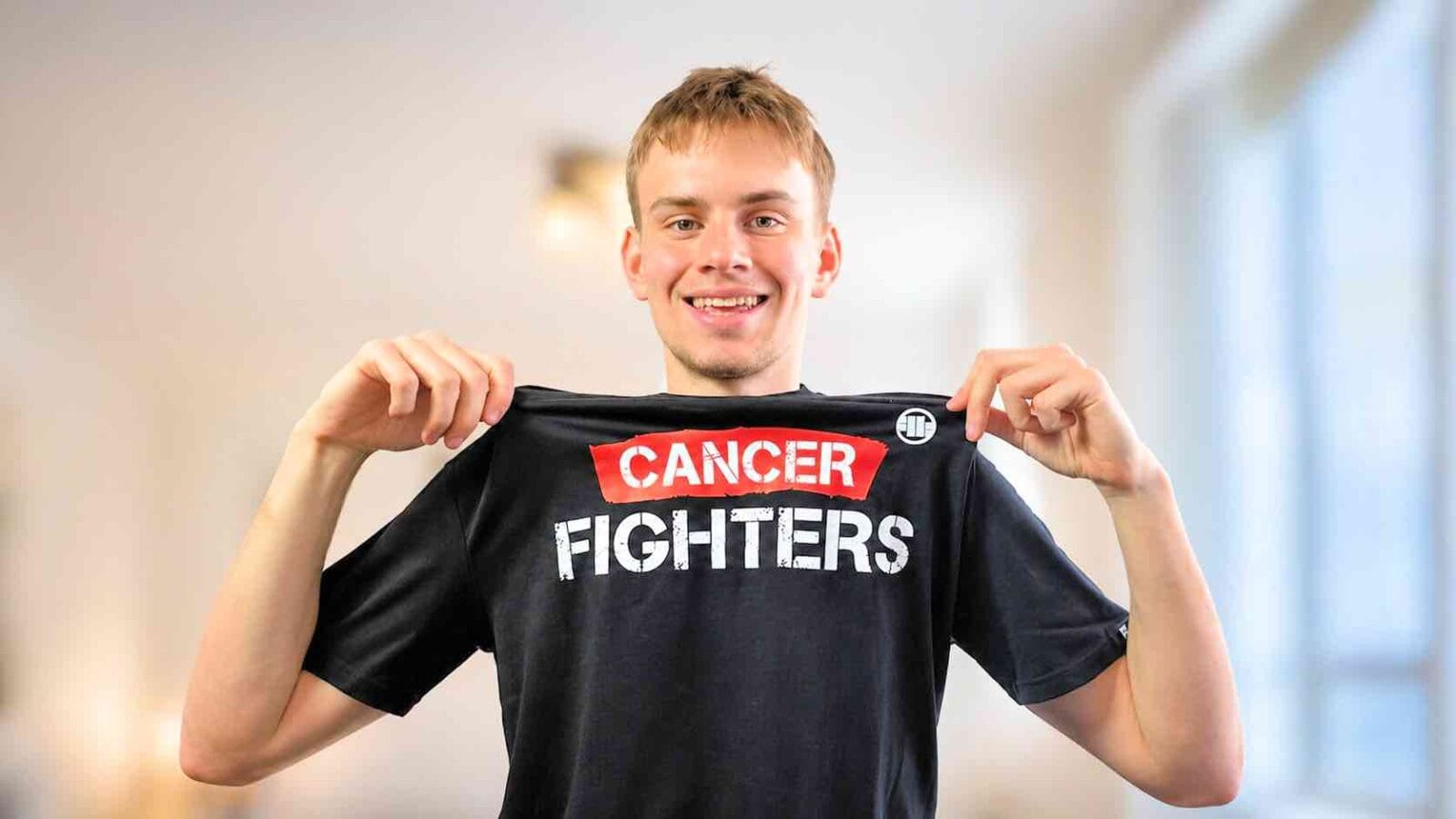
A 23-year-old Polish content creator sat in front of a camera for nine days, listening to the same song on repeat, and raised more money for children with cancer than many established foundations grant in a year.
The numbers are almost numbing: more than $65 million, gathered in real time from phones, laptops, and corporate bank accounts, all pointed toward one purpose—giving sick children a better chance to live.
But the story that lingers isn’t just the total on the fundraising counter. It’s the young man who decided that his online persona, built on jump‑cut videos and viral collaborations, had to carry a different kind of weight.
His name is Patryk Garkowski, though millions know him only by his pseudonym, Łatwogang.
Until this spring, he was a familiar face in Poland’s online ecosystem: the guy your teenager follows on TikTok, the one who always seems to be in on the latest meme a few minutes before everyone else.
He already enjoyed what passes for mainstream success in the creator world.
He had filmed with global names like Ed Sheeran, appeared at big cultural events, and built a following that looked enviable on any dashboard.
But he was still, in essence, an entertainer—a digital native riding the same currents as every other influencer hoping to stay one step ahead of boredom and the algorithm.
The turn came from something disarmingly small. A song. A child. An idea.
When Polish rapper Bedoes 2115 released a track in support of cancer patients, he invited an 11‑year‑old girl named Maja, undergoing treatment for leukemia, to be part of it.
Her presence turned a good song into something closer to a plea, and it spread through Polish social media with that uneasy mix of hope and hurt that accompanies any story about a sick child.
It reached Łatwogang not as a briefing or a partnership proposal, but the way everything else reaches him: on his phone, as content.
He could have done what many do—share the link, write a caption about “raising awareness,” move on to the next trend. Instead, he made a promise that, at first, sounded like a joke.
He told his followers that he would run a charity livestream for Cancer Fighters, the organization supporting kids like Maja, and that the stream’s length would depend entirely on them.
For every like on his TikTok announcement, he would stream for one second, while the song that had moved him played on a loop in the background. It was part dare, part stunt, part act of faith.
He had no way of knowing how far his own audience would push him.
They pushed harder than anyone expected. The likes climbed into the hundreds of thousands, then beyond. When the math finally settled, the commitment was staggering: more than nine days of continuous livestreaming.
Nine days in front of a camera, under lights, subjected to the unblinking scrutiny of the internet, all of it tethered to a cause that now bore his face.
Stripped of the filters and cuts that make short‑form video so forgiving, he was going to have to simply exist in front of millions of people and trust that his conviction held their attention.
The fundraiser’s initial target was modest—$130,000.
That’s not nothing, but it’s the kind of number that sits comfortably in the realm of “ambitious but doable,” a stretch goal rather than a moonshot. It fell almost immediately.
The counter ticked upward so quickly that the original goal began to look like an underestimation of what his audience and his country were willing to do when given a focal point.
At its peak, as many as one and a half million people were watching simultaneously, turning what began as a one‑man challenge into something closer to a shared national event.
What emerged on screen over those nine days was not a polished telethon with tightly scripted segments and celebrity handlers. It was raw, occasionally chaotic, and strangely intimate.
At one moment, you might see a famous footballer like Robert Lewandowski joining the stream, donating a million złoty with his wife and talking about solidarity.
In another, an actor or singer would sit down next to this visibly exhausted 23‑year‑old and offer a song or a shaved head as a sign of support for children losing their hair to chemotherapy.
Brands—those omnipresent arbiters of seriousness in modern philanthropy—began to appear as names attached to enormous transfers: millions from a brokerage house, millions more from a fintech company, each corporate donation landing with a visible jolt in the scrolling chat.
Yet through every cameo and every major gift, the axis of the stream didn’t move. It stayed fixed on this young man who had locked himself into an absurd bargain with his own audience.
The song that inspired the whole effort kept looping in the background like a heartbeat.
Viewers watched him wear down: the darkening circles under his eyes, the sag of his shoulders at four in the morning, the way his voice would crack when he read out messages from parents of sick children.
They also watched him come back, again and again, pulled upright by another wave of donations, another story from a family, another reminder that this wasn’t a challenge he could tap out of without consequence.
What made him compelling wasn’t charisma in the conventional sense—though he clearly has that—or even the mechanics of the event. It was his insistence on decentering himself in a spectacle that could easily have become a coronation. Time and again, when journalists asked him about the magnitude of what he was doing, he reached for the same word: miracle.
Not achievement, not milestone. Miracle. He refused the hero narrative with a stubbornness that felt almost old‑fashioned, insisting that the only people who should be spoken of as having done something great were the children themselves, the “little warriors” who endure chemical burns in their veins and still manage to smile at nurses.
It’s tempting, especially from an American vantage point, to slot him into a familiar comparison: the “Polish MrBeast,” the new face in a growing pantheon of creators who turn philanthropy into content.
The numbers encourage the parallel. Last year, when the U.S. YouTube colossus led a livestream effort that raised around 12 million dollars for clean water projects, it was widely reported as a high point for creator‑led digital generosity.
This young man from Poland raised nearly five times that amount for pediatric cancer care, on a stream built more on persistence and sincerity than on cinematic production.
But the comparison, while useful as shorthand, misses something essential about what happened.
The American model of creator philanthropy tends to be constructed like a blockbuster: meticulous planning, brand integrations, a sharply defined narrative arc designed to maximize spectacle and shareability.
The Polish livestream felt more like an open‑ended vigil that a whole country wandered into.
There was no single hook beyond the promise itself. There was just a creator who refused to leave the frame, a song that refused to stop playing, and a tally that refused to stop climbing.
At some point, the event stopped belonging to him. It became Poland’s stream. National media tracked its progress in real time. Clips ricocheted across platforms. People who had never heard of Łatwogang a week earlier found themselves checking the feed between shifts, watching celebrities cry, laughing at improvised bits, and then quietly pulling out their bank cards.
The Great Orchestra of Christmas Charity, a fixture of Polish civic life, had earlier in the year raised about 263.5 million złoty to equip children’s hospitals. Now, this 23‑year‑old with a ring light and a promise was suddenly in the same financial league.
Every donation widened the circle of responsibility. For Cancer Fighters, the foundation received a large windfall that could transform its operating capacity.
The question became how to ensure that the generosity of millions didn’t get lost in the fog that sometimes attends rapid, high‑profile fundraising.
They responded by promising radical transparency: a dedicated website where donors could see how the money is allocated, an explicit commitment to prioritize children in urgent need. For them, the miracle came fused with obligation.
For the streamer at the center of it all, the responsibility was of a different, more interior kind. He has stepped across an invisible line. Before, he was someone who could make people laugh or keep them scrolling a little longer.
Now he is, whether he likes it or not, a symbol of what can happen when influence is pointed squarely at the most vulnerable people in the system. The night the stream ended, as he tried to take in the final total, there was a brief, almost stunned silence before the cheering began.
You could see in his face that the number, for all its size, landed not as a trophy but as something heavier—a burden he had chosen and that would now shape how he is seen.
It is easy to speak about “digital philanthropy” in abstract terms: engagement funnels, creator partnerships, conversion rates. What this nine‑day experiment offered instead was a demonstration of something simpler and older.
People give when they are moved, when they believe their contribution matters, when they sense that the person asking is not holding anything back. Over and over, viewers watched this young man choose discomfort over ease, persistence over self‑preservation, vulnerability over slickness.
They saw him fight sleep, crack jokes through exhaustion, and choke up reading messages from parents. They saw a person, not a campaign.
Somewhere in that mix of sincerity, spectacle, and shared purpose, a record fell. A Guinness threshold that once belonged to professional telethons and sophisticated charity operations was surpassed by a kid who tied the length of his effort to the most frivolous of metrics: a like button.
There is something almost poetic about that inversion. The same mechanism that usually drives empty virality became the engine of one of Europe’s largest social‑media charity drives.
When the cameras finally turned off, the questions began. What will this do to him? Will he try to do it again, bigger, higher, longer? Will brands and institutions descend, eager to harness or replicate the magic?
Those are fair questions for the industry, but they may miss the point for the person. Watch his interviews carefully, and you get the sense of someone slightly overwhelmed, deeply grateful, and incredibly clear about one thing: this was never supposed to be about building a franchise. It was about responding to a song he couldn’t shake and a girl he couldn’t forget.
There is a tendency, especially in American conversations about influence, to assume that scale naturally breeds cynicism—that the bigger the platform, the more transactional the motives behind every act.
The quiet revelation of this story is that earnestness can scale too. A 23‑year‑old who calls children in cancer wards “little warriors” without irony, who insists that the only greatness worth talking about is theirs, can hold the attention of millions long enough to change the trajectory of their care.
He did not just raise money; he raised the bar for what it looks like when one person decides their reach must be measured in more than impressions.
Somewhere, months from now, a parent will stand by a hospital bed in Poland and listen as a doctor explains that a certain treatment, a certain piece of equipment, a certain option is available because of money that did not exist before nine days in April.
That parent will probably never watch the archived stream or scroll through the comments that egged a stranger on through the small hours. They may never hear of Łatwogang at all.
But their child’s life will bear the imprint of a decision made by a young man who decided, in front of millions of strangers, that he was willing to be tired, exposed, and endlessly on‑camera if it meant more “little warriors” got a fighting chance.
In the end, that is the most enduring image: not the confetti of a broken world record or the headlines comparing totals, but a solitary figure on a live feed, eyes red with fatigue, listening to the same song for the thousandth time, and refusing to log off because somewhere out there an 11‑year‑old girl is still in treatment.