
$600 million modern art museum to unveil “Reimagined: The Fisher Collection at 10” — a complete reconception of the collection featuring nearly 250 works by 35 artists assembled by philanthropists Don and Doris Fisher
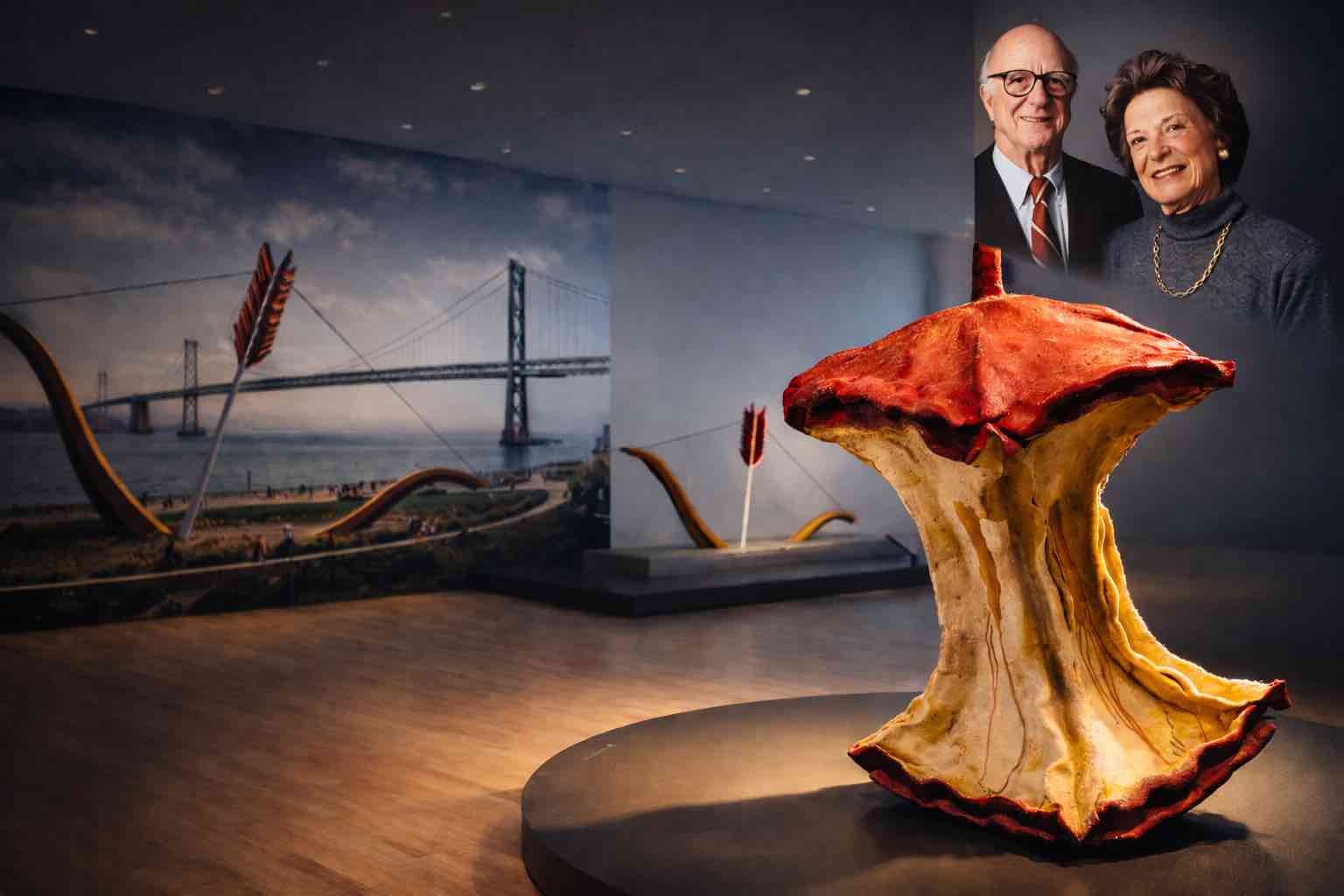
San Francisco Museum of Modern Art (SFMOMA) and the Fisher family have forged a landmark, 100‑year partnership that turns one of the world’s foremost private collections of postwar and contemporary art into a civic treasure for San Francisco and its visitors.
On April 18, 2026, SFMOMA will unveil Reimagined: The Fisher Collection at 10, a complete reconception of the collection’s presentation featuring nearly 250 works by 35 artists across about 60,000 square feet and four floors.
What began in the 1970s with Don and Doris Fisher buying prints for Gap Inc.’s offices grew into a focused collection of hundreds of works by about 100 artists—among them Alexander Calder, Ellsworth Kelly, Agnes Martin, Gerhard Richter, Roy Lichtenstein, Andy Warhol and Richard Serra—assembled with the same discipline that built their San Francisco–born clothing company into an international brand.
In 2009, the family placed the heart of this collection on a long‑term loan to SFMOMA through a Fisher‑controlled trust and foundation, an unprecedented 100‑year agreement (with renewal options) that keeps ownership with the family while ensuring that the art remains together, on view, and anchored in the city that shaped their success.
The family has served on SFMOMA’s board since the 1980s, and the museum describes the arrangement as a “partnership” that aligns the Fishers’ passion for art with the institution’s mission to share outstanding modern and contemporary work with the widest possible audience.
Financially, the partnership became the catalyst for an equally ambitious effort to strengthen the museum for the long term. In early 2010, SFMOMA announced that it had secured more than $250 million in “landmark contributions” from board leadership and other core supporters, comprising just over half of a projected $480 million campaign to expand the building and grow the endowment.
Of that initial $250 million, roughly $100 million was dedicated to doubling the museum’s endowment—providing ongoing support for operations, acquisitions and programs—while the remaining funds helped underwrite design and construction of a major new wing that would house the Fisher Collection and create additional galleries and public spaces.
Framed as challenge money, these leadership gifts were intended to inspire a broader community of donors, and they set the stage for a campaign that would ultimately exceed $600 million, covering construction costs, significantly enlarging the endowment and supporting transitional programming while the building was closed.
To house the Fisher Collection and expand its own programming, SFMOMA moved ahead with a Snøhetta‑designed expansion that opened in 2016 and nearly tripled the museum’s gallery space.
The growth enabled SFMOMA to interweave Fisher works with its permanent collection of tens of thousands of objects and to stage special exhibitions devoted entirely to the Fisher holdings every decade, giving art lovers around the world new reasons to visit San Francisco.
The family’s commitment also helped inspire a wave of additional promised gifts from other Bay Area collectors, broadening the museum’s holdings and underscoring that the Fisher partnership sits within a larger community of generosity.
Today, our collaboration continues to evolve and invites fresh engagement.
The museum describes the new installation as a storytelling‑driven experience that illuminates how the collection was formed, who made it possible, and how it connects to a wider range of artistic voices, complemented by a new studio space that welcomes families and visitors of all ages into hands‑on activities.
As a result, a collection born from one couple’s enthusiasm for contemporary art has become a lasting part of San Francisco’s cultural fabric, offering a century‑long invitation for residents and visitors to encounter major works of our time in a setting shaped by both private vision and public purpose.