$600 million in new funding earmarked to philanthropy, supporting more than a thousand organizations working on homelessness, education, and community resilience, announced by Nageeb Sumar
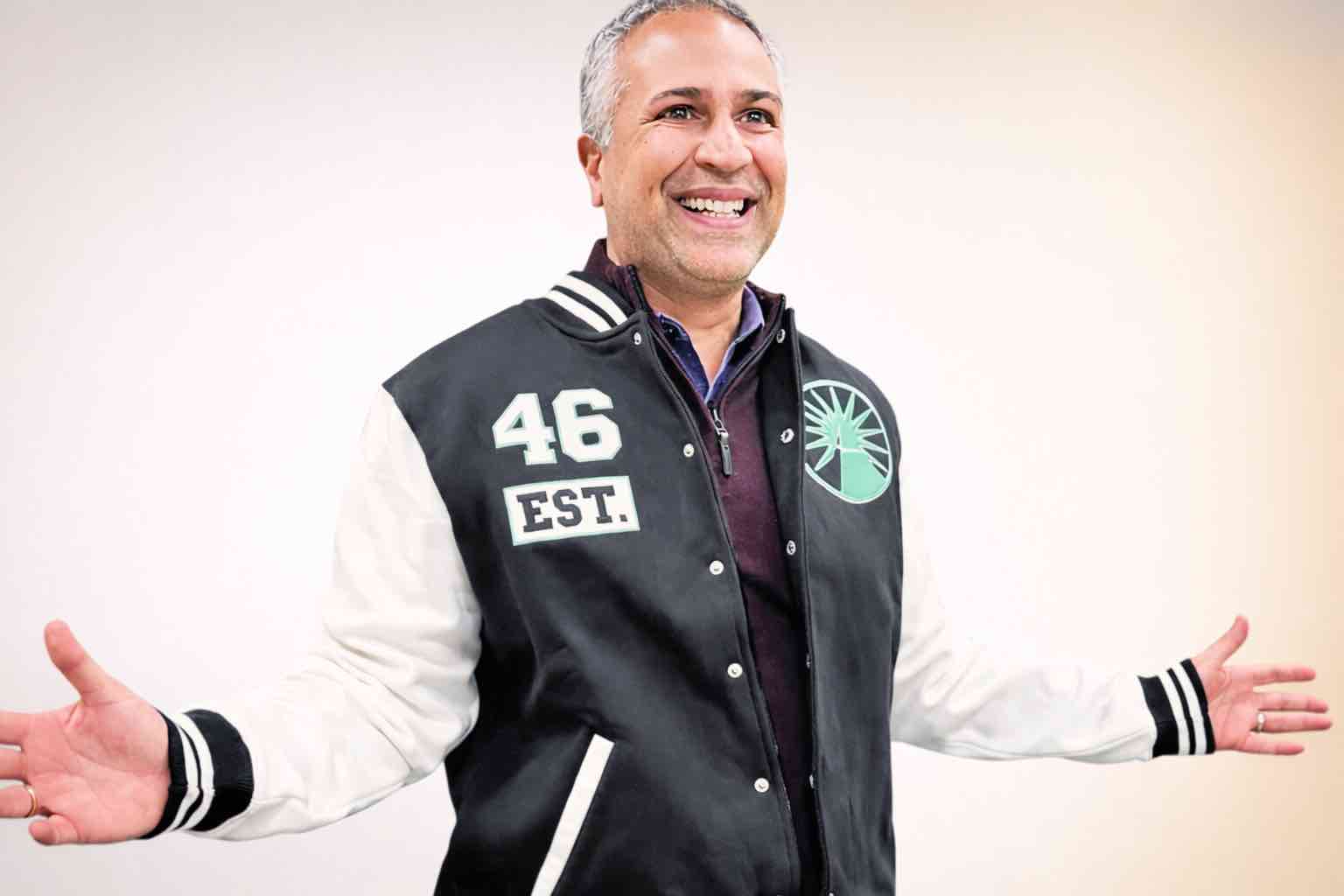
Nageeb Sumar is the moving force behind Liberty Mutual’s new $600 million new endowment for its foundation, which is, at its core, the story of a few people inside a big insurance company deciding that their commitments to local communities shouldn’t rise and fall with the stock market.
In a moment when many companies are quietly trimming donations, they’ve chosen to carve out a permanent pot of money that can’t be easily walked back, even when budgets get tight.
At the center is Nageeb Sumar, president of Liberty Mutual Foundation, whose job just got a lot bigger. Instead of haggling every year over how much money the foundation will get, he now has an endowment meant to last for generations and, with it the responsibility to make sure those dollars actually move the needle.
He’s the one who will sit across from leaders of homeless shelters, youth programs, and climate-resilience groups and say, “We’ll be here in five, ten, twenty years”—or not. It puts him in the rare position, in corporate America, of being able to think like a long‑view foundation chief rather than a year‑to‑year budget manager.
Just above him on the org chart is Francis Hyatt, Liberty Mutual’s chief community investments and sustainability officer, who has been pushing for the company to treat community work as more than a side project. Hyatt is the strategist who helped sell this endowment internally as a way to make Liberty Mutual’s promises stick, even when the economy turns.
His argument, boiled down, is that helping stabilize housing, jobs, and neighborhoods isn’t just “giving back” — it’s a way to reduce the social and climate shocks that can tear communities apart. He’s effectively turned what could have been a marketing line into a structural decision that will outlast his tenure.
Behind Nageeb Sumar and Francis Hyatt is a board and senior leadership team that agreed to take real money off the table and wall it off for public purposes.
That is not a routine decision in a public company.
Directors had to be comfortable saying, in effect, “This 600 million dollars is no longer there to juice quarterly numbers; it’s there to fund shelters, after‑school programs, and climate readiness long after we’re gone.”
It’s a bet that shareholders, customers, and employees will ultimately reward a company that nails its colors to the mast in this way. It’s also a bet that people will notice if Liberty Mutual later tries to wriggle out of the commitment.
There’s another group whose fingerprints are on this, even if they never appear in a press release: the investment team that will manage the endowment. Their world is usually measured in basis points and benchmarks, but now their decisions will determine how many grants the foundation can make after a recession or a bad hurricane season.
If they do their jobs well, the endowment will keep generating enough income to support thousands of families, even when the market is ugly.
If they don’t, nonprofits that have come to count on Liberty Mutual’s checks will feel the pain almost immediately.
For the nonprofits themselves, this changes the relationship with Liberty Mutual in a very practical way. Until now, the Liberty Mutual Foundation has given out hundreds of millions of dollars since 2003, supporting more than a thousand organizations working on homelessness, education, and community resilience—important, but still subject to the quiet “we’ll see about next year” that hangs over corporate giving.
With an endowment, groups like youth shelters, job‑training programs, and local climate initiatives can start to imagine multi‑year partnerships instead of scrambling each year to replace disappearing corporate dollars. Development directors will learn Sumar’s name quickly; he is now, for them, closer to a major foundation head than a CSR manager.
The issues Liberty Mutual has chosen to focus on say a lot about who is making the calls. Housing stability, workforce development, climate resilience—these are the places where an insurer sees the real‑world consequences of instability first‑hand.
The people around this endowment know that families on the edge of homelessness are more vulnerable when disaster strikes and that a region with shaky employment and weak infrastructure is slower to recover from floods or fires. Those insights, shaped by actuaries and claims data rather than slogans, are feeding into where the foundation’s dollars will go.
Inside the company, the move sends a cultural message that’s hard to miss. When employees see 600 million dollars locked in for community work, they understand that volunteering, giving, and neighborhood partnerships are not just side gigs tacked onto a corporate logo.
It gives internal champions of social issues more room to push, because they can point to the endowment and say, “The company has put real skin in this game.” That, in turn, can matter to young recruits who are weighing which employer actually backs up its talk.
In the wider world of corporate giving, this decision will put the leadership of Sumar, Hyatt, and Liberty Mutual in new conversations.
They’ll be sitting alongside leaders of big private foundations, answering harder questions about how their money is invested, what their payout rates look like, and whether their grants are shifting outcomes rather than just smoothing over crises.
It’s a different kind of spotlight than a one‑day check presentation. But it also gives them the freedom to attempt bolder, longer‑term collaborations—funding coalitions working for five or ten years on entrenched problems rather than sprinkling one‑year grants around.
Strip away the formal language, and the story is simple: a group of executives and board members at Liberty Mutual decided that community support should be something you can bank on, not a line item that disappears when times get tough.
They’ve handed Nageeb Sumar and his colleagues a tool that could make Liberty Mutual one of the more influential corporate players in housing, economic mobility, and climate resilience.
What happens next will depend on how bravely they use that tool — and how willing they are to listen to, and be judged by, the people whose lives this 600 million dollar promise is supposed to touch.