
$56.8 million gift to health center from Ulrika and Leif Lundblad aims to advance dementia research and other critical areas of public health
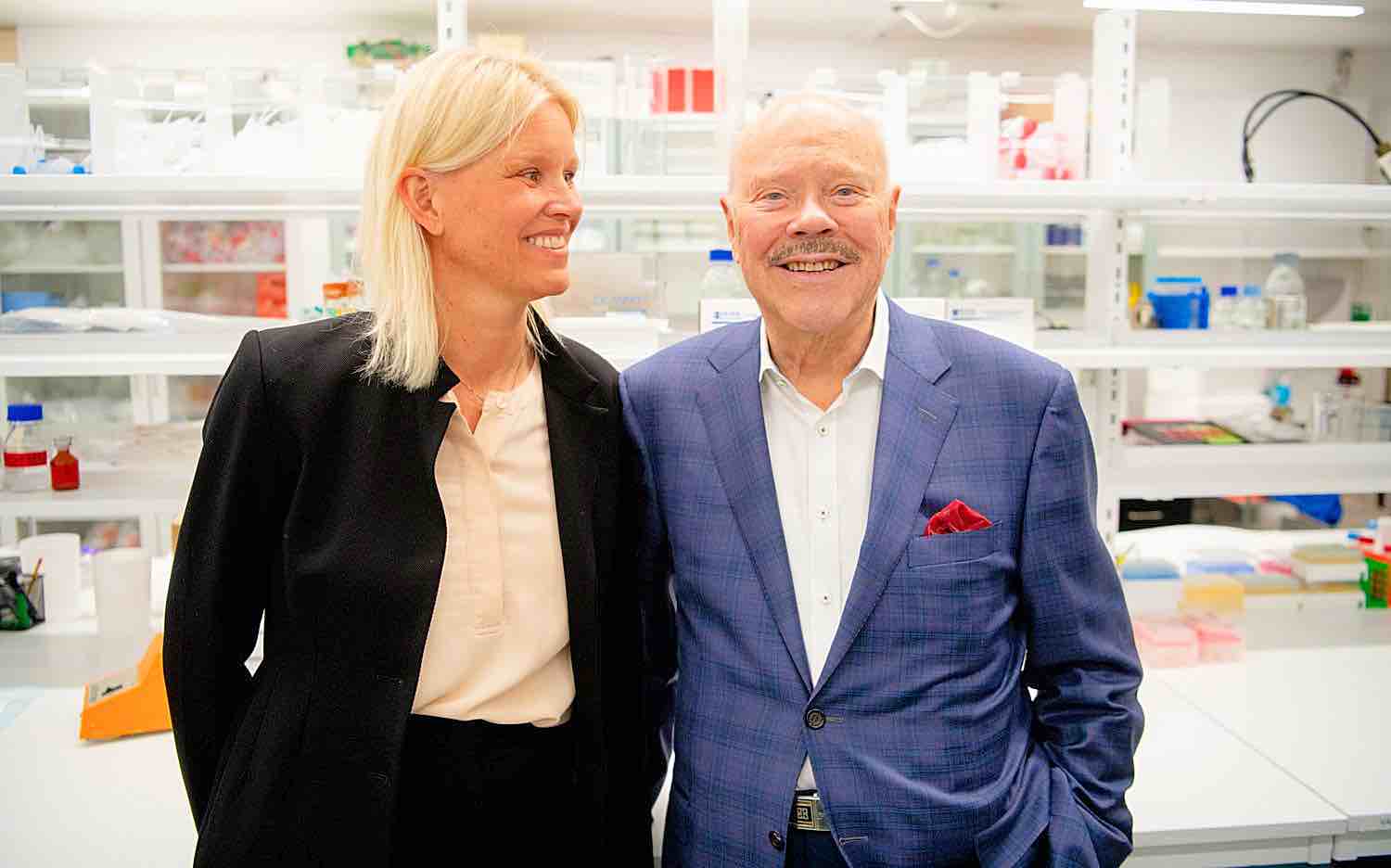
Karolinska Institute has received a landmark $56.8 million donation from entrepreneur and inventor Leif Lundblad to advance dementia research and other critical areas of public health.
The gift, described as the largest donation ever to a Swedish university in modern times, will significantly bolster efforts to understand, diagnose, and treat neurodegenerative diseases, including Alzheimer’s.
Lundblad is widely known as the father of the bank-note dispenser used in ATMs, an innovation that transformed cash handling and banking services worldwide. Over several decades, he has channeled his success as an inventor and entrepreneur into philanthropy, helping to fund a wide range of research projects at Karolinska Institute in areas such as pain, Alzheimer’s disease, COVID-19, and artificial intelligence.
Colleagues and researchers at the university often recall his recurring declaration: “I want to solve the mystery of Alzheimer’s,” a statement that encapsulates his deep personal commitment to medical science.
The $56.8 million donation is directed primarily to research neurodegenerative, or dementia, diseases, of which Alzheimer’s is the most common. It will also support research into other diseases with major public-health impact, including chronic pain and autoimmune disorders.
At a time when populations are aging and dementia cases are projected to rise sharply, the funding is expected to play a decisive role in strengthening Sweden’s research capacity in these fields.
Karolinska Institute’s president, Annika Östman Wernerson, has emphasized the magnitude of the gift for both the university and Swedish society. She describes the donation as an incredibly generous act that will be of enormous benefit to research into dementia and other widespread diseases, noting that Lundblad’s intention and long-standing engagement with the institution have left a profound legacy. The funds, she underscores, will help drive scientific progress that could ultimately improve the lives of large segments of the population.
Lundblad’s daughter, Ulrika Lundblad, highlights how closely her father’s philanthropy is tied to his identity as an inventor. She explains that he has a genuine interest in innovative scientific ideas and the concrete problems they can solve.
According to her, his enthusiasm during meetings with researchers at Karolinska Institute is palpable, and he follows their work with great curiosity and hope.
The family now looks forward to following the advances made possible by this major gift and to being part of future breakthroughs in dementia research.
Dementia diseases, an umbrella term for conditions that impair cognitive functions such as memory, language, planning, and orientation, currently affect around 140,000 people in Sweden, a number expected to double by 2050.
Against that backdrop, the need for improved diagnostics, novel therapies, and a deeper understanding of the underlying mechanisms has become increasingly urgent. Researchers at the Karolinska Institute are focusing on earlier detection, improved tools for identifying those at risk, and new treatment strategies to slow or halt disease progression.
The donation is structured to ensure long-term, strategically targeted support. The bulk of the $56.8 million will be allocated directly to research funding, to be awarded annually on a competitive basis to Karolinska Institute researchers working in relevant fields.
A portion of the funding is earmarked to endow a professorship, helping to attract and retain leading scientific talent, while another portion will support Karolinska Institute’s Prize for Innovation and Utilization, which recognizes and encourages the translation of research results into practical benefits for society.
According to Jenny Löhr, head of Karolinska Institute’s Development Office and responsible for donor relations, Lundblad’s gift not only sets a new benchmark for university philanthropy in Sweden but also reflects a broader trend. She notes a growing interest among individuals in contributing to solutions for the world’s most pressing health challenges through strategic philanthropy.
Lundblad’s donation, she adds, will enable particularly innovative and high-risk projects that might otherwise struggle to secure funding, thereby accelerating progress in Swedish dementia research and related areas.
Leif Lundblad was named an honorary doctor at Karolinska Institute in 2025, a recognition of both his professional achievements and his sustained support for medical research.
With this historic donation, his long-held ambition to “solve the mystery of Alzheimer’s” moves a significant step closer to reality, creating a powerful legacy that will shape dementia research and public-health innovation in Sweden for many years to come.