
$55 million gift from Stephen B. Ashley establishes school of global development and the environment
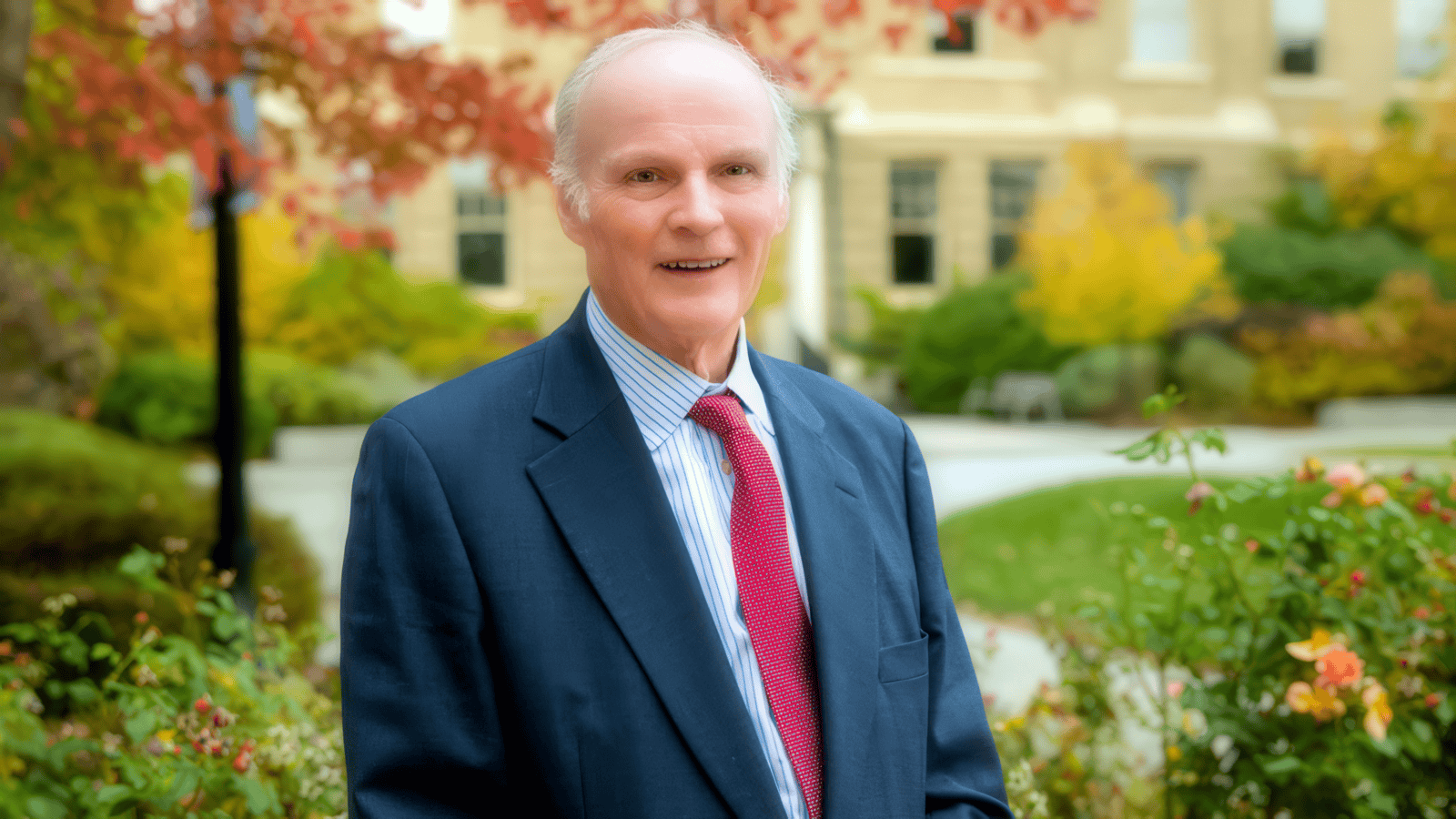
A transformative $55 million gift to Cornell University’s College of Agriculture and Life Sciences (CALS) has established the Cornell CALS Ashley School of Global Development and the Environment — a powerful new academic entity that unites the Department of Global Development and the Department of Natural Resources and the Environment.
The school, named in honor of Stephen B. Ashley represents the largest single gift in the history of CALS and marks a bold investment in the university’s commitment to advancing environmental and human well-being.
President Michael I. Kotlikoff hailed Ashley’s unprecedented generosity as both “timely and visionary,” emphasizing that the Ashley School will bring together expertise spanning the agricultural, life, environmental, and social sciences.
“Steve Ashley’s decades of leadership, advocacy, and support for Cornell have had a profound impact on the university,” Kotlikoff said. “This investment allows us to combine scientific insight with human understanding to address the intertwined challenges facing society and the planet. We are deeply grateful to Steve for his generosity, partnership, and friendship.”
Ashley, chairman and CEO of The Ashley Companies — a Rochester-based real estate management, brokerage, and investment firm — has served his alma mater for more than half a century.
His record of dedication includes 55 years on the Cornell University Council, 16 years on the Board of Trustees, and a decade as co-chair of the university’s Far Above capital campaign. In 2016, he received the Frank H.T. Rhodes Exemplary Alumni Service Award, Cornell’s highest honor for alumni service.
“My family has had a strong, multigenerational relationship with Cornell,” Ashley said. “I met my wife, Janice, at Cornell, and the university has shaped so much of my personal and professional life. I’m thrilled to support this effort, which creates new channels for collaboration between agriculture, environmental science, economics, and research — fields that, together, can improve real communities and lives.”
CALS Dean Benjamin Houlton, the Ronald P. Lynch Dean, explained that the school’s creation evolved from a growing recognition of shared research and teaching priorities among faculty in the merging departments.
“The Ashley School will foster a dynamic ecosystem for discovery, experiential learning, and innovation,” Houlton said. “By transcending traditional academic boundaries, the school will catalyze new ideas and deliver tangible benefits — from New York’s rural communities to global networks addressing climate, food, and development challenges. Steve’s vision will help bring our land-grant mission to life in powerful new ways.”
Rich Stedman, professor and former chair of the Department of Natural Resources and the Environment, will serve as interim director of the Ashley School. Over the past several months, Stedman has led extensive listening sessions with more than 75 faculty, staff, and graduate students to help shape the school’s launch and identify shared priorities.
“Our faculty are deeply committed to solving urgent problems — from global crises like famine, war-driven migration, and biodiversity loss to local issues such as siting solar projects that sustain both energy goals and rural livelihoods,” Stedman said.
“These challenges require transdisciplinary approaches that the new school is built to deliver.”
The Ashley School will continue to support the two departments’ existing undergraduate and graduate programs, including two undergraduate majors, five minors, four master’s programs, and two Ph.D. tracks. Students currently enrolled in these programs will experience no disruptions.
Future academic offerings may evolve through faculty collaboration and CALS leadership as the school expands.
Rebecca Schneider, associate professor of natural resources and the environment, and Parfait Eloundou-Enyegue, professor of global development, will serve as interim section heads during the transition.
CALS also plans to recruit at least ten additional faculty members to join the Ashley School, including three economists specializing in agricultural, development, and environmental economics.
These roles will be jointly appointed with the Charles H. Dyson School of Applied Economics and Management in the Cornell SC Johnson College of Business, reflecting the school’s cross-college and interdisciplinary nature.
Ashley expressed his gratitude to CALS Dean Houlton, President Kotlikoff, Provost Kavita Bala, and SC Johnson College Dean Andrew Karolyi for their leadership in bringing the vision to life.
“This collaboration represents what makes Cornell extraordinary,” he said. “It’s about connecting ideas and people in service of humanity and the natural world.”
The new school deepens CALS’ long-standing partnership with the Cornell Atkinson Center for Sustainability. According to Houlton, the Ashley School will be a hub where global and local perspectives converge. “
Students, staff, and faculty at the Ashley School are tackling the world’s defining sustainability challenges — from climate change and poverty to food and energy security, environmental degradation, and human migration,” he said.
“Sustained by our world-class research and land-grant values, this school will help forge a more sustainable and equitable planet for all.”