$450 million+ donor launches Wertheim Laureate Prize: Dr. Herbert Wertheim invites the world’s Nobel medicine laureates to direct his philanthropy
On a recent Monday morning in Stockholm, the Nobel Assembly at Karolinska Institutet announced that Karl Deisseroth, Peter Hegemann and Georg Nagel had won the 2026 Nobel Prize in Physiology or Medicine for their discoveries concerning light-gated ion channels and optogenetics, the science of using light to control living cells.
By Tuesday evening in Miami, a man who has spent his whole career thinking about light and the human body had found a fitting way to honor them.
The Dr. Herbert Wertheim Trust for Humanity announced the Wertheim Laureate Prize, a new program that invites the scientists the world has just honored to decide where philanthropy can do the most good and then to come and teach the next generation in person.
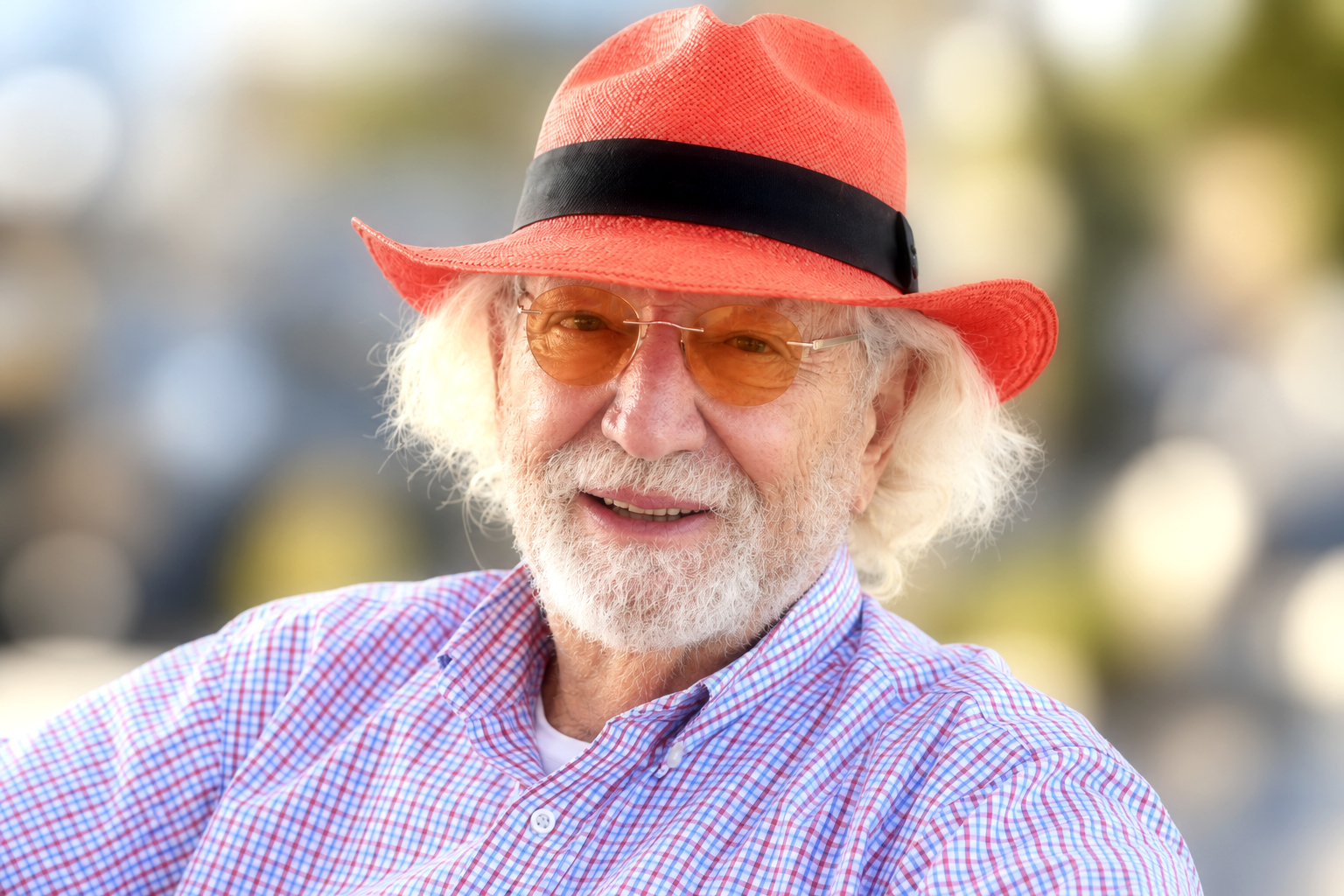
It is a fitting match. Dr. Herbert “Herbie” Wertheim, the optometric physician, inventor, and billionaire known for his signature red hat, built his fortune on understanding light.
In 1969, he was among the first to establish that ultraviolet light damages the human eye and contributes to cataracts.
He went on to invent the UV- and blue-light-absorbing tint protection now found in eyeglass lenses worldwide, work that earned him a place in the Florida Inventors Hall of Fame.
Fifty-seven years later, the first laureates of his new prize are scientists who learned to switch neurons on and off with a beam of light.
The idea behind the Wertheim Laureate Prize is beautifully simple.
Eligible laureates in physiology or medicine will be invited to direct philanthropic capital to the qualified charitable organizations of their choosing.
They will also be invited to share their knowledge with students, physicians, and researchers through an international lecture and visitation program at Wertheim institutions and affiliates.
Dr. Wertheim has been quietly developing the program for several years, and its founding cohort is extraordinary. Each of this year’s three laureates will be invited to direct $1 million over five years, the $3 million at the heart of the launch.
The Trust will also invite the ten scientists honored from 2021 through 2025 to direct $250,000 each: David Julius and Ardem Patapoutian, who revealed how we sense temperature and touch; Svante Pääbo, who decoded the genomes of our ancient human relatives; Katalin Karikó and Drew Weissman, whose mRNA discoveries made the COVID-19 vaccines possible; Victor Ambros and Gary Ruvkun, who discovered microRNA; and Mary E. Brunkow, Fred Ramsdell and Shimon Sakaguchi, honored for their work on how the immune system keeps itself in check. Together, these commitments bring the founding total to $5.5 million.
Because the laureates may send those funds wherever they believe the need is greatest, the prize’s reach will extend far beyond any one campus, into laboratories, clinics, classrooms, and communities across the world.
And because the laureates will also come to lecture, thousands of young scientists will have the rare chance to meet the people whose discoveries they have studied in textbooks. They will hear not only about the science but about the curiosity and persistence behind it. The first lectures are expected in 2027, and the Trust plans to extend the program in future years to eligible laureates in chemistry, physics, and economic sciences.
The inspiration came from friendship. Since 2021, Dr. Wertheim has served on the Board of Directors of Scripps Research in La Jolla, California, where he came to know two of the institute’s Nobel laureates: Ardem Patapoutian, and K. Barry Sharpless, the chemist who has received the Nobel Prize twice.
Watching them with students and colleagues convinced him that great scientists have more to give than their discoveries alone. “Spending time with Ardem and Barry at Scripps showed me what happens when a great scientist walks into a room of young researchers,” Dr. Wertheim said.
“The Nobel Prize honors what these scientists have already given humanity. The Wertheim Laureate Prize asks what they will give next. No one is better qualified to direct philanthropy in medicine and science than the men and women the world has just honored, and our students, faculty, and researchers will be the richer for hearing them.”
That instinct to place trust and resources in the hands of people who can multiply them, is why Dr. Wertheim is known as “the catalytic philanthropist,” and his own story explains where it comes from. He was born in Philadelphia in 1939 and raised in Florida in a working-class family that lived above a bakery.
He struggled in school with dyslexia, and at sixteen a judge gave the restless teenager a choice: join the U.S. Navy or face the consequences. He enlisted, studied physics and chemistry, and later credited the Navy with turning his life around. He went on to graduate from Brevard Community College, study electrical engineering at the University of Florida, and earn a degree in optical engineering and his Doctor of Optometry from the Southern College of Optometry.
In 1971 he founded Brain Power Incorporated in Miami, which became the world’s largest manufacturer of optical tints and ophthalmic chemicals. He invested his early profits with remarkable foresight, buying into companies such as Apple and Microsoft at their public offerings. He has been inducted into the Horatio Alger Association of Distinguished Americans, received the Ellis Island Medal of Honor and holds honorary doctorates from several universities.
“Getting up every morning and doing what you want to do, that’s success,” he once said. “It doesn’t take money to be happy. Money just gives you more choices.”
He has used those choices generously and for a very long time.
His first recorded donation was $100 to the Boy Scouts of America. In 1977, he and his late wife, Nicole, founded the Dr. Herbert and Nicole Wertheim Family Foundation, which has since supported hundreds of charities, from scholarships and lecture series to libraries, research centers, public radio, and major exhibits at Zoo Miami.
In 2015, the couple joined The Giving Pledge, publicly committing the majority of their wealth to philanthropy, with a particular devotion to strengthening public universities.
“Many of America’s private universities have more than 20 times the endowments of most public institutions of higher learning,” Dr. Wertheim wrote in his pledge letter, explaining that his family’s “talent, time and energy” would support public universities and colleges.
Today, colleges, schools, and institutes in Florida and California carry his name, and his giving record reads like a map of modern American public higher education.
Florida International University was the first great beneficiary of that vision.
Beginning in 1996, the Wertheims gave more than $1 million to FIU’s music, theatre, and dance programs to create the Herbert and Nicole Wertheim Performing Arts Center.
They later added the 4,226-pipe Sydell Ida Wertheim Concert Organ, named for Dr. Wertheim’s mother and described by FIU as the largest concert organ in the southeastern United States.
In 2009, a $20 million gift named the Herbert Wertheim College of Medicine, where he serves as Founding Chairman; with state matching funds, it grew to $40 million and established eight endowed chairs. In 2013, in a gesture of devotion to his wife of more than four decades, he gave $10 million to name the Nicole Wertheim College of Nursing & Health Sciences, adding another $1 million in 2018 at the unveiling of her portrait.
In 2022, a $10 million naming gift, matched by FIU, created the Herbert and Nicole Wertheim School of Music & Performing Arts, then the largest gift ever made to a school of music at a public university in Florida.
At his alma mater, the University of Florida, Dr. Wertheim has been equally transformative.
In 2015, the family’s $50 million commitment named the Herbert Wertheim College of Engineering and launched a $300 million public-private investment.
That investment built the Herbert Wertheim Laboratory for Engineering Excellence, where every Gator engineer now learns by building, and created the Million Dollar Horatio Alger Engineering Scholarship Program for students who have overcome adversity.
In 2022, he gave $100 million, the largest individual gift in UF’s history, to name the Herbert Wertheim UF Scripps Institute for Biomedical Innovation & Technology in Jupiter.
The gift seeded a ten-year, $1 billion campaign for biomedical research and created the Wertheim Fellowships for promising graduate students in biology and chemistry.
At the dedication, he called Florida’s young researchers “sciencenauts” and predicted Jupiter could become the next Cape Canaveral of discovery.
His generosity crossed the country to California, where he first learned science as a young sailor stationed in San Diego.
In 2018, the family foundation’s $25 million lead gift established what is now the Herbert Wertheim School of Public Health and Human Longevity Science at UC San Diego, made in honor of the couple’s 48th wedding anniversary.
In 2021, the foundation pledged $50 million to UC Berkeley’s century-old School of Optometry, now the Herbert Wertheim School of Optometry & Vision Science. The pledge is the cornerstone of a ten-year, $100 million commitment to train the next generation of eye-care leaders, a homecoming of sorts for one of optometry’s great inventors.
His most recent years have been the most generous of all. In December 2025, he made a $65 million philanthropic investment in Florida State University, the largest endowment gift in FSU’s history.
It named the Herbert Wertheim College of Business and its new home, the Herbert Wertheim Center for Business Excellence, the largest academic facility on campus.
The gift funds Horatio Alger and other scholarships, faculty development, and a Wertheim Business of Healthcare Initiative with two endowed chairs, preparing students to lead a sector that now represents more than 17 percent of the U.S. economy. This spring, students and faculty celebrated their namesake with a campus-wide Red Hat Day.
In May 2026, Baptist Health Foundation received a $100 million gift, the largest single philanthropic gift in the 66-year history of Baptist Health South Florida. It renamed Miami Cancer Institute as the Baptist Health Herbert Wertheim Cancer Institute, created the Dr. Herbert Wertheim Center for Cancer Prevention and deepened the partnership with the FIU medical school he helped found.
“Our vision is to integrate medical education, preventative care, research and clinical care into a unified environment where discovery and patient care move forward together,” he said. By July, the pledge had been fulfilled in full.
His philanthropy has a playful, glamorous side as well, one that has made him a favorite at Monterey Car Week.
In August 2025, he bid $26 million at RM Sotheby’s for a one-off Ferrari Daytona SP3, with the proceeds benefiting The Ferrari Foundation’s educational work for young people. This past August he broke his own charity auction record with a $40 million winning bid for Ferrari Luce “Chassis 0,” a one-of-a-kind example of Ferrari’s first fully electric car, with all proceeds again directed to The Ferrari Foundation.
“It will not be my personal car to go to Publix to get bananas,” he said with characteristic wit.
Taken together, the commitments he has announced to date add up to a remarkable sum.
His named gifts to Florida International University, the University of Florida and Florida State University total more than $250 million, and his Trust’s own figures place his giving to Florida higher education above $300 million.
Counting the $75 million in landmark gifts to UC San Diego and UC Berkeley, the $100 million to Baptist Health and the founding commitment of the Wertheim Laureate Prize, his major announced gifts exceed $435 million.
With his $66 million in charity auction bids for The Ferrari Foundation, the philanthropy associated with his name surpasses half a billion dollars. Just as important is the money his gifts have set in motion: a $300 million transformation of engineering at UF, a $1 billion campaign for biomedical research in Jupiter, a $100 million commitment to vision science at Berkeley and matching funds that doubled his investments at FIU.
At 87, Dr. Wertheim continues to lead his Trust with the energy of a man half his age, and the Wertheim Laureate Prize may be the purest expression yet of what drives him.
It does not ask the world’s greatest scientists to fill a Wertheim building or run a Wertheim program. It simply trusts them to find the places where a gift can change the most lives, and it brings them face to face with the students, professors, young researchers and clinicians who will make the next great discoveries.
The boy who once struggled to read, and who found his footing studying physics in the Navy, has become one of the great builders of American science and education. Now he is handing the next chapter to the laureates, and to the young people who will one day follow them to Stockholm.
The Wertheim Laureate Prize is an independent philanthropic initiative of the Dr. Herbert Wertheim Trust for Humanity. It is not affiliated with, sponsored by, endorsed by, or administered by the Nobel Foundation, the Nobel Assembly at Karolinska Institutet, or any other Nobel Prize-awarding institution.
Nobel Prize® is a registered trademark of the Nobel Foundation.